Best Day Hiking Backpacks of 2026 — hiking gear
Day Pack Buying Guide

Best Day Hiking Backpacks of 2026

Six day packs from 20 to 26 liters, ranked on published specs and what Amazon buyers say after living with them.

View Top PicksUpdated 2026-08-02 · Ranked from specs & buyer reviews
How to Choose

How to Choose a Day Hiking Backpack

Most people buy too much pack. A day hike needs water, food, a warm layer, a rain shell and the small safety stuff you hope never to open, and all of that fits in 20 liters with room to spare. Go much past 26 liters and the pack starts working against you. Half empty, it sags and swings on switchbacks. The spare room also fills up with things you'll carry all day and never touch.

Whether you enjoy the walk comes down to fit, and fit follows your torso rather than your height. Two people the same height can be two pack sizes apart. Measure from the bony bump at the base of your neck down to the top of your hip bones, and buy to that number. At these weights the hip belt is doing more to stop the pack swaying than to carry load, but getting it onto your hip bones instead of your stomach still makes the last two miles a lot better.

The ranking comes from published specs, the design choices each brand made, and what Amazon buyers report after living with these packs. I haven't carried every one of these up a mountain, and I'm not going to pretend I have. The star ratings and review counts are the real numbers off each listing on 2 August 2026. Amazon prices move constantly, so check the current one before you decide.

What Goes In It

What Actually Lives in a Day Pack

Before you pick a size, it helps to see what you're sizing around. This is the standard day-hike load. The ones marked essential are worth carrying even on a short, sunny trail you've walked twenty times.

Water (1.5 to 3L)

Essential

The heaviest, bulkiest thing you carry, and the main reason 20 liters is a floor rather than a ceiling. Two liters covers most half-day hikes in mild weather. Go up in heat or at altitude.

Rain Shell

Essential

Mountain weather turns faster than the forecast suggests. A packable shell keeps a rain shower from turning into a hypothermia problem, and it works as a windbreak on exposed ridges.

Insulating Layer

Essential

A fleece or a light puffy. Temperature drops roughly 3.5°F per thousand feet of climbing, then drops again the moment you stop moving and your sweat starts to cool.

Food & Snacks

Essential

More than you think you need. Something salty as well as something sweet, plus a spare bar that lives in the pack for the day things run long.

Navigation

Essential

An offline map downloaded to your phone at minimum, plus a paper map for anything unfamiliar. Phone batteries drain fast in the cold, and faster where there's no signal.

Headlamp

Essential

The thing people skip most and need most. A hike that runs two hours long in October finishes in the dark, and your phone's flashlight won't last the descent.

First-Aid & Repair

Essential

Blister bandages above all, because blisters end more hikes than anything else. Add tape, painkillers, tweezers, and whatever medication you personally need.

Sun Protection

Essential

Sunscreen, sunglasses, a hat. Exposure adds up above treeline and on reflective snow much faster than it does at home.

Trekking Poles

Nice to Have

Worth having on steep descents, where they take a real share of the load off your knees. Check that the pack has external loops so you can stow them on the flats.

Sit Pad

Nice to Have

A few ounces of closed-cell foam that turns a wet rock into a dry lunch spot. Cheap, and you'll use it every time.

Rain Cover

Nice to Have

Included with some packs, sold separately for others. A liner bag inside the pack does the same job for less, and it never blows off in the wind.

Camera

Nice to Have

The main reason people size up from 20 to 26 liters. If you carry a body and a spare lens, budget that space before you buy the pack.

Pack Types

Which Type of Day Pack Fits Your Hiking

Day packs come in three broad designs. Which one suits you has less to do with experience than with how long you're out and how hot it gets.

Frameless Minimalist

$40 to $90Short & fast

No internal frame, a foam or mesh back, a webbing waist strap. Light, packable, cheap, and comfortable enough up to about ten pounds. Above that the load presses into your shoulders, because there's nothing to move it onto your hips.

Framed All-Rounder

$90 to $170All-day hikes

A light framesheet or perimeter wire, a shaped backpanel, a padded hip belt. This is the category most people should buy. It carries fifteen pounds comfortably for eight hours and still packs down small enough to travel with.

Ventilated Trail Pack

$100 to $180Hot weather

A tensioned mesh backpanel arches the pack body away from your back so air moves through the gap. Much cooler in summer. The tradeoff is a slightly higher center of gravity and a little less stability when you scramble.

Quick Picks

Top Three at a Glance

Short on time? Start with these top-rated day-hiking backpacks picks.

Best Overall
Product image
4.7

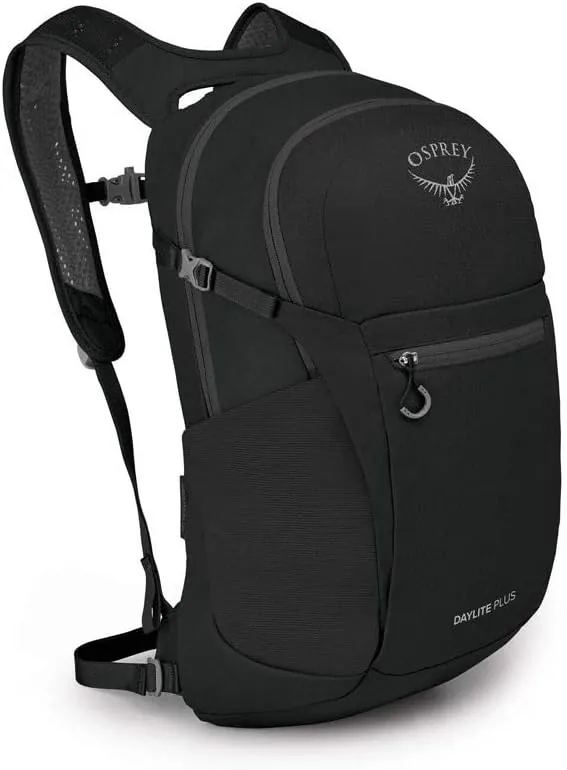
Osprey Daylite Plus 20L

The default recommendation, and the reason is boring: 20 liters is the right size for a day hike, it's light, and it has by far the biggest pool of buyer feedback here at 3,657 ratings averaging 4.7 stars. Buy this one if you don't want to think about it.

Check Price
Best for Full Days
Product image
4.5

Osprey Hikelite 26L

The pick for long days when the forecast isn't trustworthy. A tensioned mesh backpanel keeps air moving across your back, and unlike almost everything else near this price it comes with a rain cover in the box instead of as a separate purchase.

Check Price
Best Lightweight
Product image
4.6

Deuter Speed Lite 21L

Built around moving quickly rather than carrying a lot. The Speed Lite is slim and sits tight against your back, which is what you want when you're covering ground fast or scrambling. If you like to bring options, look at something roomier.

Check Price
Comparison Table

Every Pick, Side by Side

Best Overall
Best For
A first proper day pack
Difficulty
Beginner
Price
$$$
Best for Full Days
Best For
Full days in changeable weather
Difficulty
Beginner
Price
$$$
Best Lightweight
Best For
Fast, light miles
Difficulty
Intermediate
Price
$$$
Best Suspension
Best For
Heavier loads and long days
Difficulty
Intermediate
Price
$$$
Best Warm-Weather
Best For
Hot-weather hiking
Difficulty
Beginner
Price
$$$
Best Crossover
Best For
Hiking and everyday carry
Difficulty
Beginner
Price
$$$
The Lineup

6 Best Day-Hiking Backpacks, Compared

Detailed picks with verdicts, strengths, tradeoffs, and the situations where each one makes the most sense.

Best Overall
Product image
4.7 (3,657 Amazon ratings)

Osprey Daylite Plus 20L

Quick verdict: The default recommendation, and the reason is boring: 20 liters is the right size for a day hike, it's light, and it has by far the biggest pool of buyer feedback here at 3,657 ratings averaging 4.7 stars. Buy this one if you don't want to think about it.

Why It Stands Out

  • 20 liters is the size most day hikes actually need: water, food, a layer and a shell
  • The largest review base in this guide by an order of magnitude
  • Stretch side pockets plus a front shove-it pocket for a wet shell
  • Padded internal sleeve, so it doubles as a work or travel bag

Pros

  • Genuinely versatile: hikes on the weekend, commutes midweek
  • Light enough that you forget it's there on flat trail
  • Covered by Osprey's All Mighty Guarantee

Cons

  • Webbing waist strap rather than a padded hip belt, so it's happiest under about ten pounds
  • Foam backpanel sits close to your back and gets warm on summer climbs

Best Situations

Day hikesTravel carry-onEveryday useFirst-time buyers
Difficulty
Beginner
Price Range
$$$
Best for Full Days
Product image
4.5 (160 Amazon ratings)

Osprey Hikelite 26L

Quick verdict: The pick for long days when the forecast isn't trustworthy. A tensioned mesh backpanel keeps air moving across your back, and unlike almost everything else near this price it comes with a rain cover in the box instead of as a separate purchase.

Why It Stands Out

  • AirSpeed tensioned mesh backpanel holds the pack off your back for airflow
  • Rain cover included, stowed in a zippered pocket at the base
  • 26 liters handles shoulder-season layers and a packed lunch for two
  • Dual compression straps keep a part-full pack riding tight

Pros

  • Noticeably cooler than a foam-back pack on hot climbs
  • Rain cover included rather than sold separately
  • Front compression pocket and a top zip pocket with a key clip

Cons

  • The suspended backpanel pushes the load a little further from your spine
  • At 26 liters it's easy to overfill on a short hike

Best Situations

All-day hikesHot weatherWet forecastsShoulder season
Difficulty
Beginner
Price Range
$$$
Best Lightweight
Product image
4.6 (477 Amazon ratings)

Deuter Speed Lite 21L

Quick verdict: Built around moving quickly rather than carrying a lot. The Speed Lite is slim and sits tight against your back, which is what you want when you're covering ground fast or scrambling. If you like to bring options, look at something roomier.

Why It Stands Out

  • Slim profile that stays put when you move fast or scramble
  • 4.6 stars across 477 Amazon ratings, the strongest feedback of the non-Osprey picks
  • 21 liters keeps you honest about what you bring
  • Rides close to the back for stability rather than maximum airflow

Pros

  • Light and low-bulk for its capacity
  • Stable on uneven ground where a suspended pack would sway
  • Buyers rate it well for build quality

Cons

  • Trimmer cut leaves less room for bulky winter layers
  • Close-fitting back panel trades ventilation for stability

Best Situations

Fast hikingScramblingPeak-baggingLight loads
Difficulty
Intermediate
Price Range
$$$
Best Suspension
Product image
4.6 (113 Amazon ratings)

Osprey Talon 22L

Quick verdict: The most capable suspension in this guide, and the priciest listing here. A continuous-wrap harness and hip belt spread the load properly, which starts to matter once you're carrying fifteen pounds for eight hours. You pay for that, and it's sold in torso sizes rather than one-size-fits-all.

Why It Stands Out

  • Continuous-wrap harness and hipbelt move load onto your hips instead of your shoulders
  • AirScape backpanel balances airflow against a close, stable carry
  • Attachment points for trekking poles, an ice axe and a bike helmet
  • Sold in torso sizes, so the fit is dialed in rather than approximate

Pros

  • The best load carrier here once the pack is genuinely full
  • Multi-sport attachment points take it beyond hiking
  • A proper padded hip belt, not a webbing strap

Cons

  • The priciest listing in this guide at the price checked
  • Size-specific fit means you need your torso measurement before ordering

Best Situations

Long daysHeavier loadsMixed sportsSteep terrain
Difficulty
Intermediate
Price Range
$$$
Best Warm-Weather
Product image
4.6 (345 Amazon ratings)

Osprey Sportlite 20L

Quick verdict: A stripped-back 20-liter pack for people who run hot and want the simplest thing that carries a day's kit. Fewer features than the Daylite Plus, and more of a hiking pack than a crossover one.

Why It Stands Out

  • Lightweight build with a ventilated backpanel for summer trails
  • 20 liters, the same day-hike sweet spot, in a more trail-focused shape
  • 4.6 stars from 345 Amazon ratings
  • Simple layout with less to snag or fiddle with

Pros

  • Light and uncomplicated
  • Trail-shaped rather than commuter-shaped
  • Runs cooler than a flat foam back

Cons

  • Fewer organizational pockets than the Daylite Plus
  • Minimal hip support, so it prefers lighter loads

Best Situations

Summer hikesWarm climatesLight loadsMinimalists
Difficulty
Beginner
Price Range
$$$
Best Crossover
Product image
4.4 (41 Amazon ratings)

Gregory Nano 24L

Quick verdict: The crossover option, and the only Gregory here. One size fits all, with a breathable backpanel and a hydration port, so it works as a trail pack on Saturday and a normal daypack the rest of the week. The catch is the review base: 41 ratings is thin evidence next to the rest of this list.

Why It Stands Out

  • One-size-fits-all harness sidesteps the torso-measurement problem
  • Breathable backpanel and a hydration port for a reservoir
  • 24 liters bridges a day pack and a light overnight bag
  • Packs down small enough to travel with as a second bag

Pros

  • No sizing decision to get wrong
  • Works as a trail pack and as an everyday bag
  • Useful capacity without the bulk of a 30-liter pack

Cons

  • Only 41 Amazon ratings, the thinnest evidence base in this guide
  • A one-size harness is a compromise at the extremes of torso length

Best Situations

Day hikesEveryday carryTravelBetween sizes
Difficulty
Beginner
Price Range
$$$
Buying Guide

What to Check Before You Buy

Capacity: 18 to 26 liters covers almost every day hike

A 20-liter pack swallows two liters of water, lunch, a fleece, a rain shell, a first-aid kit and a headlamp without being stuffed. Go up toward 26 liters if you hike in shoulder season, carry camera gear, or pack for kids as well as yourself. Under 18 liters you start leaving the rain shell behind, and the rain shell is the wrong thing to leave behind.

Torso length is the measurement that matters

Run a tape from the C7 vertebra, the knob you feel at the base of your neck when you tip your head forward, down to the top of your hip bones. That number is what maps to a brand's S/M or L/XL sizing. Your height doesn't. Some packs in this class are one size with an adjustable harness, which is more forgiving if you're between sizes or buying without trying it on.

Backpanel and suspension: airflow versus closeness

Tensioned mesh backpanels arch the pack away from you so air moves across your back. That's worth a lot in July, and it pushes the load slightly further from your spine. Foam backpanels sit closer and feel steadier when you scramble or move fast. Neither one wins on paper, so pick the one that matches the weather and terrain you actually hike in.

How you carry water

Every pack here takes a hydration reservoir, and most have stretch side pockets for bottles. A reservoir lets you sip without stopping, but it's a chore to clean and you can't see how much is left. Bottles are easier to refill and easier to keep track of, as long as the side pocket is one you can reach with the pack on. Check that the pocket is angled or deep enough to hold a full bottle when you bend forward.

Short Local Trails
14-18L

Two to three hours, marked trail, phone signal. A frameless pack with a webbing waist strap is plenty, and it packs down small enough to travel with.

All-Day Hikes
20-24L

Six to eight hours with real elevation. This is where a padded hip belt and a shaped backpanel start paying for themselves, and where most of the picks below sit.

Winter & Big Days
26-35L

Cold weather, extra insulation, microspikes, or carrying for someone else. Size up, and look for a real frame and compression straps so a half-full pack still rides tight.

Getting Started

Setting Up a New Pack for Your First Hike

A new pack that feels wrong is usually just a pack nobody adjusted. Five minutes in the right order fixes most of it. Do this at home with the pack loaded, not at the trailhead.

  1. 1

    Load it the way you will carry it

    Put the heavy stuff, water and food, close to your back and centered between your shoulder blades. Light bulky things go low and toward the outside. A pack you adjust while it's empty tells you nothing about how it rides full.

  2. 2

    Loosen everything, then start at the hips

    Slacken every strap. Put the pack on, sit the hip belt padding over the top of your hip bones, and tighten it there. The belt should be carrying the weight, not floating above or below the bone.

  3. 3

    Snug the shoulder straps

    Pull them down and back until they wrap your shoulders with no gap, then stop before they lift the load off your hips. Their job is to steady the pack, not hold it up.

  4. 4

    Set the load lifters and sternum strap

    If the pack has load lifters at the top of the shoulder straps, pull them until they sit at roughly 45 degrees and the pack body leans in toward you. Clip the sternum strap a couple of inches below your collarbone, tight enough to stop the shoulder straps sliding outward and no tighter.

  5. 5

    Walk stairs with it before the trail

    Ten minutes up and down the stairs at home will show you hot spots, a belt that rides up, or a strap that needs another inch. Much better to find that out at home than four miles in.

  6. 6

    Start with a trail you already know

    Make the first outing with new gear a route you already know, a few miles at most. If something rubs or the balance feels off, you're close to the car and you'll know what to change before a longer day depends on it.

Plain English

Day Pack Terms, Translated

Torso length
The distance along your spine from the C7 vertebra at the base of your neck to the top of your hip bones. This is what sets your pack size. Your height doesn't.
Load lifters
The short straps that run from the top of the shoulder straps to the top of the pack body. Tightening them tips the load in toward your back so it stops pulling you backwards.
Framesheet
A thin plastic or composite panel inside the back of the pack. It keeps the pack from collapsing and lets weight travel down to the hip belt instead of hanging off your shoulders.
Hydration sleeve
An internal pocket sized for a water reservoir, usually with a hole at the top for the hose. Almost every hiking pack has one, even when no reservoir comes with it.
DWR
Durable water repellent. A surface finish that makes light rain bead up and roll off. It isn't waterproofing, and it wears off over time, though you can reapply it.
Panel loader
A pack that unzips around three sides like a suitcase instead of loading down through the top. Much easier to get at something buried at the bottom.
Shove-it pocket
The stretchy open pocket on the front of a lot of day packs. It's for the wet shell or the layer you just peeled off and don't want to pack properly.
Avoid These

Mistakes Worth Skipping

  • Buying by height instead of torso length. It's the most common reason a well-reviewed pack feels wrong on one particular person.
  • Sizing up 'just in case'. A 35-liter pack on a day hike gets filled to 35 liters, and you carry every ounce of it.
  • Wearing the hip belt on your waist instead of your hip bones, which puts the load back on your shoulders and rubs your stomach raw.
  • Leaving the rain shell and headlamp at home on a short hike. They weigh almost nothing and they're exactly what you want when the day doesn't go to plan.
  • Assuming the pack is waterproof because water beads on it. Line it, or use a dry bag for anything that has to stay dry.
  • Adjusting the straps with the pack empty and never touching them again once it's loaded.
Explore Individual Gear

Once you know which setup fits your situation, dig into the full guide library for in-depth picks and buying advice:

Full Catalog

Compare All 6 Day-Hiking Backpacks

Want to browse beyond the ranked picks? Filter and sort the full day-hiking backpacks listing below.

Best Day Hiking Backpacks of 2026 — All Products

6 Products
FAQ

Frequently Asked Questions

For most day hikes, 20 liters is the number. That covers two liters of water, food, an insulating layer, a rain shell and a small first-aid kit, with room left. Go to 26 liters or more if you hike in cold weather, carry camera gear, or pack for kids as well. Under 18 liters works for short, warm, well-marked trails where you're never far from the car.

How We Choose Products

How These Picks Are Chosen

Reader-supported and free of paid placements. Every pick is ranked on published specs and Amazon buyer ratings, not on who pays us.

Spec Research

Each pick is compared on published specs, materials, design, and category fit across the major brands.

Practical Fit

Rankings factor in how well each product matches common hiking, backpacking, and trail running needs, not just popularity.

Amazon Buyer Ratings

Star ratings and review volume from verified Amazon buyers are factored in to reflect real-world satisfaction.

Value

A pick earns its spot by delivering useful performance for the money, whether budget or premium.

PACK SORTED.
BOOTS NEXT.

Boots, poles, water filters and the rest of the day-hike kit are getting the same treatment. New guides go up as I finish them.

Browse All Guides
See Top Picks