Skip to content
Best Hiking Rain Jackets of 2026 — hiking gear
Rain Jacket Buying Guide

Best Hiking Rain Jackets of 2026

Eight shells, budget to mountaineering spec. Every one keeps rain out, so what actually separates them is how fast you can dump heat before you soak yourself from the inside.

View the top picksUpdated 13 August 2026 · Ranked from specs & buyer reviews

If you buy through a link on this page we may earn a commission, at no extra cost to you. It never changes how anything is ranked. Prices were last checked on and move around; the figure on Amazon is the one that counts.

How to Choose

How to Choose a Hiking Rain Jacket

Every jacket on this page will keep rain out. That part of the problem was solved decades ago, and the cheapest shell here and the most expensive one both hold out water on the day you buy them. What separates them is the other way you get wet. Walking uphill in a sealed plastic bag produces a startling amount of sweat, and a waterproof-breathable membrane can only move so much of it before the inside of your jacket is as damp as the outside.

So the question isn't whether a jacket is waterproof. It's how fast you can dump heat when you start working, and how well it keeps water off your face, your wrists and the back of your neck while you do.

That reframes the spec sheet. The membrane names (GORE-TEX Paclite, Pertex Shield, AscentShell, NanoPro, DryVent, BD.dry) are mostly marketing until you get to the layer count, and even then the layer count is about comfort and lifespan rather than waterproofness. A 2.5-layer jacket prints a protective pattern directly onto the back of the membrane; it's lighter and cheaper, and it feels clammy against bare skin as it ages.

A 3-layer jacket bonds a real fabric backer on instead, which costs weight and money and lasts considerably longer. The Mountain Hardwear Exposure/2 is 2.5-layer GORE-TEX. The Rab Kangri is 3-layer GORE-TEX at nearly three times the price. Both are waterproof; one of them will still be waterproof in five years. Then there's the DWR, the water-repellent finish sprayed on the outside, which is the part that actually fails.

When it wears off, the face fabric soaks through and the jacket feels like it's leaking. It isn't. It just stopped breathing, and a wash and a low tumble-dry usually brings it back.

So the eight below are ranked on ventilation first, then construction, then how well the hood and cuffs are made, with weight and price breaking ties. That order puts the Outdoor Research Foray 3L on top, because its side zips open from hem to bicep and nothing else here vents like that. Amazon review count sets none of it, and this page is a clean demonstration of why: the Marmot PreCip Eco carries 3,766 ratings, nearly nine times the next-largest pool on the page, and it finishes seventh.

That number measures how many PreCips Amazon has sold, not how well the jacket works. Worth saying plainly what isn't here. Several of the jackets reviewers rate highest don't sell on Amazon at all. Patagonia's Torrentshell 3L (around $189) is one of the most commonly recommended shells outside Amazon, the Arc'teryx Beta SL is about $500, Montbell's Versalite is around $285, and REI's own Rainier at roughly $100 is a well-known budget pick.

If you're spending real money, price those direct before you commit. One more practical note: rain jackets are sold as size-and-color combinations, and each one is its own Amazon listing with its own price and its own stock. The figures here belong to the specific listing linked, read on August 13, 2026, so expect your size to come out a little different. My dad and I haven't worn all eight through a season of storms, and I'm not going to pretend we have.

This is ranked from published specs, manufacturer fabric data and the testing other reviewers have put in print.

Quick Picks

Top Three at a Glance

Short on time? Start with these top-rated rain jackets picks.

Best Overall
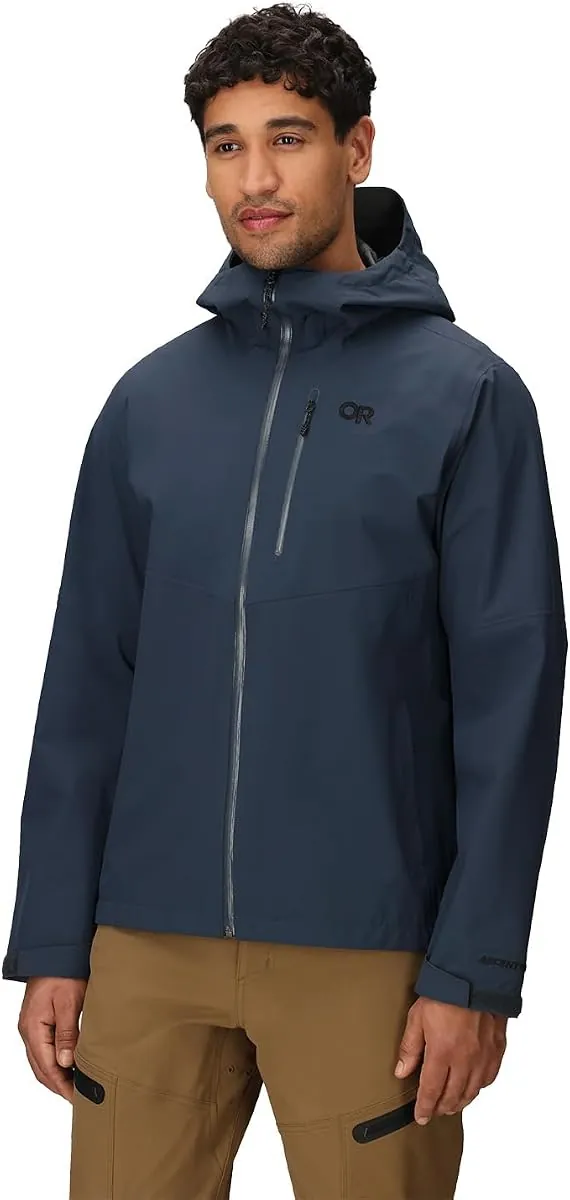
Outdoor Research Foray 3L Jacket
4.6

Outdoor Research Foray 3L Jacket

The most useful jacket here, because it fixes the thing the rest only work around. Its side zips don't stop at the armpit, they run the entire flank, so on a warm, wet climb you can shed nearly all the heat you're making without ever taking the hood off your head. 3-layer AscentShell Dry, 15.3 ounces, and a brim that holds its shape.

Check Price
The Safe Buy
Marmot GORE-TEX Minimalist Rain Jacket
4.6

Marmot GORE-TEX Minimalist Rain Jacket

The safe answer. GORE-TEX Paclite, pit zips, a proper adjustable hood, and 428 ratings at 4.6 stars behind it, which is the second-deepest record on this page. For meaningfully less than the Foray, the side zips are about all you give up.

Check Price
Toughest Shell
Rab Kangri Gore-Tex Jacket
4.6

Rab Kangri Gore-Tex Jacket

The most protective jacket here, and the only one built to a mountaineering spec. 70D 3-layer GORE-TEX over an ePE membrane, a 28,000mm hydrostatic head, a stiffened peak on the hood, and pit zips even with all that fabric. It's also the most expensive jacket here, which is most of the reason it sits third rather than first.

Check Price
Comparison Table

Every Pick, Side by Side

Compare all 8 picks
Best Overall
Best For
Hiking hard in warm rain without cooking
Difficulty
Intermediate
Price
$$$
The Safe Buy
Best For
A real GORE-TEX shell without the top-tier price
Difficulty
Beginner
Price
$$$
Toughest Shell
Best For
Sustained foul weather and winter days in the mountains
Difficulty
Advanced
Price
$$$
Recommended #4
Best For
The lightest GORE-TEX here, carried more than worn
Difficulty
Intermediate
Price
$$$
Recommended #5
Best For
The best hood and vents at the budget end
Difficulty
Beginner
Price
$$$
Recommended #6
Best For
Scrambling and anything that needs the jacket to move
Difficulty
Intermediate
Price
$$$
Recommended #7
Best For
The proven budget default
Difficulty
Beginner
Price
$$$
Recommended #8
Best For
Waterproof, vented, and the cheapest here
Difficulty
Beginner
Price
$$$
The Lineup

8 Best Rain Jackets, Compared

Detailed picks with verdicts, strengths, tradeoffs, and the situations where each one makes the most sense.

Best Overall
Outdoor Research Foray 3L Jacket
4.6 (40 Amazon ratings)

Outdoor Research Foray 3L Jacket

Quick verdict: The most useful jacket here, because it fixes the thing the rest only work around. Its side zips don't stop at the armpit, they run the entire flank, so on a warm, wet climb you can shed nearly all the heat you're making without ever taking the hood off your head. 3-layer AscentShell Dry, 15.3 ounces, and a brim that holds its shape.

Why It Stands Out

  • TorsoFlo side zips open from the hem to the bicep, and no pit zip moves air like that
  • 3-layer AscentShell Dry construction, so the inner face is a real backer rather than a printed coating
  • 4.6 stars across 40 ratings, level with the Marmot Minimalist and the Rab Kangri
  • Pockets sit high enough to stay reachable under a loaded hipbelt

Pros

  • No other jacket on this page opens up anywhere near this far
  • 3-layer build, so the inside won't go tacky and flake the way a printed 2.5-layer does
  • Also sold as the women's Aspire 3L with the same side-zip system

Cons

  • The second-highest price on this page
  • 15.3 ounces, nearly five ounces more than the lightest shell here
  • Only 40 ratings so far, so the long-term durability record is still thin

Best Situations

Warm, wet hiking where sweat is the real threat rather than rainLong days where you want one jacket on from trailhead to summitAnyone who's cooked inside a rain shell before and given up on shells
Difficulty
Intermediate
Price Range
$$$
The Safe Buy
Marmot GORE-TEX Minimalist Rain Jacket
4.6 (428 Amazon ratings)

Marmot GORE-TEX Minimalist Rain Jacket

Quick verdict: The safe answer. GORE-TEX Paclite, pit zips, a proper adjustable hood, and 428 ratings at 4.6 stars behind it, which is the second-deepest record on this page. For meaningfully less than the Foray, the side zips are about all you give up.

Why It Stands Out

  • Real GORE-TEX Paclite, which carries Gore's garment-level testing and its waterproofing guarantee
  • 428 ratings at 4.6 stars, second only to the PreCip Eco for feedback on this page
  • Pit zips handle most of what side zips do, at less weight and less cost
  • Packs into its own pocket, so it stows tidily in a daypack

Pros

  • The cheapest GORE-TEX jacket here that actually vents
  • A long-running model with a deep and consistent rating history
  • Most of what the Foray does, for less

Cons

  • 14.9 ounces, so it saves almost nothing over the Foray despite giving up the side zips
  • Paclite's inner surface is less pleasant on bare skin than a full 3-layer backer
  • The linked listing is a size Small in Dark Jungle; other sizes and colors price differently

Best Situations

A first serious rain shell you intend to keep for yearsThree-season hiking where you want the GORE-TEX guarantee behind youShoppers who would rather buy the proven thing than the clever thing
Difficulty
Beginner
Price Range
$$$
Toughest Shell
Rab Kangri Gore-Tex Jacket
4.6 (38 Amazon ratings)

Rab Kangri Gore-Tex Jacket

Quick verdict: The most protective jacket here, and the only one built to a mountaineering spec. 70D 3-layer GORE-TEX over an ePE membrane, a 28,000mm hydrostatic head, a stiffened peak on the hood, and pit zips even with all that fabric. It's also the most expensive jacket here, which is most of the reason it sits third rather than first.

Why It Stands Out

  • 70D 3-layer GORE-TEX with an ePE membrane, rated to a 28,000mm hydrostatic head
  • A 70D face fabric, which is what survives rock, pack straps and years of use
  • The hood peak is stiffened, so it throws water clear instead of folding onto your face
  • Pit zips, despite the burlier build, so it still vents

Pros

  • The highest waterproof rating on this page at 28,000mm
  • 3-layer GORE-TEX with Gore's guarantee behind the waterproofing
  • 4.6 stars across 38 ratings

Cons

  • The most expensive jacket here by a wide margin
  • 15.5 ounces, the heaviest on this page
  • More jacket than three-season hiking needs; the hood is cut for a bare head or beanie, not a helmet

Best Situations

Winter hiking and shoulder-season trips in weather that turns people aroundAnyone who wears a shell hard enough to have worn one out alreadyExposed, windy ground where the shell is doing structural work rather than just shedding rain
Difficulty
Advanced
Price Range
$$$
Recommended #4
Mountain Hardwear Exposure/2 Gore-Tex Paclite Jacket
4.4 (33 Amazon ratings)

Mountain Hardwear Exposure/2 Gore-Tex Paclite Jacket

Quick verdict: 10.5 ounces of real GORE-TEX Paclite Plus, and the least you can pay for a Gore membrane on this page. The catch is total: it has no vents of any kind, not even pit zips. As a shell that lives in the pack until the rain actually starts, that's the right call. As an all-day jacket it isn't.

Why It Stands Out

  • GORE-TEX Paclite Plus, which no other jacket here offers this cheaply
  • 10.5 ounces, the lightest jacket ranked here
  • Packs down small enough that you forget it's in the daypack
  • 2.5-layer construction is what keeps it this light and this cheap

Pros

  • A Gore membrane and Gore's guarantee, for the least this page asks
  • Light and compact enough that you'll actually carry it
  • Mountain Hardwear's fit runs trim without being restrictive

Cons

  • No pit zips and no side zips, so the front zipper is the only vent it has
  • 2.5-layer inner surface gets clammy against bare arms as it ages
  • 4.4 stars on only 33 ratings, and the linked listing is an XXL in Black Spruce

Best Situations

A just-in-case shell carried on every hike and worn on few of themCool-weather hiking where overheating isn't the main riskFastpacking and trail running, where every ounce is argued over
Difficulty
Intermediate
Price Range
$$$
Recommended #5
Rab Downpour Plus 2.0 Jacket
4.3 (94 Amazon ratings)

Rab Downpour Plus 2.0 Jacket

Quick verdict: Punches well above its price. Recycled 2.5-layer Pertex Shield rated to 20,000mm, generous AquaGuard pit zips, and a hood you can adjust at the front and the back or stow flat against the collar. 13.2 ounces. The detailing belongs to a jacket costing a lot more.

Why It Stands Out

  • Pit zips big enough that it vents better than plenty of jackets at twice the money
  • Hood adjusts front and rear, and stows flat instead of flapping in wind
  • 20,000mm hydrostatic head and a 20,000g MVTR from recycled 2.5-layer Pertex Shield
  • Large zipped A-line pockets positioned to clear a hipbelt

Pros

  • The best-featured jacket at this end of the page
  • Hood and cuff detailing that most jackets in this band skip
  • Fluorocarbon-free DWR on recycled face fabric

Cons

  • 4.3 stars, tied with the Venture 2 for the lowest average on this page
  • 13.2 ounces sits in the middle: not light, not especially tough
  • 2.5-layer, so it won't last like the Foray or the Kangri

Best Situations

A first proper shell for someone who hikes where it really rainsWindy, exposed walking where a flapping hood ruins the dayBuyers who want Rab's build quality without the Kangri's price
Difficulty
Beginner
Price Range
$$$
Recommended #6
Black Diamond Fineline Stretch Rain Shell
5 (2 Amazon ratings)

Black Diamond Fineline Stretch Rain Shell

Quick verdict: 11.3 ounces of stretch-woven BD.dry, and the stretch is what you're paying for. It gives when you reach overhead, where a stiff shell pulls the hem up and binds across the back. Reviewers who have tested it tend to call it the value pick of the category. On Amazon it has two ratings, so the listing's own record tells you nothing.

Why It Stands Out

  • Stretch face fabric that gives when you reach overhead or scramble
  • 11.3 ounces, in the lighter half of this page
  • Packs down without a fight, so it stays in the bag
  • 2.5-layer BD.dry, which is where the low weight and the price come from

Pros

  • The stretch changes how it feels to move in
  • Light and packable without feeling flimsy
  • Clean, understated cut that works off the trail too

Cons

  • No pit zips or side zips at all
  • Two Amazon ratings, which is nothing like a usable sample
  • It buys a 2.5-layer jacket, where a little more here buys GORE-TEX

Best Situations

Scrambling and easy climbing where a stiff shell bindsCool-weather hiking that doesn't demand active ventingAnyone who wants one jacket for trail and town
Difficulty
Intermediate
Price Range
$$$
Recommended #7
Marmot PreCip Eco Rain Jacket
4.5 (3,766 Amazon ratings)

Marmot PreCip Eco Rain Jacket

Quick verdict: The jacket most people end up owning, and 3,766 ratings at 4.5 stars say it keeps doing the job. 2.5-layer NanoPro Eco on 100% recycled fabric, PitZips, 11.0 ounces. Seventh place here is not a verdict on the jacket. The six above it vent better or last longer, and every one of them costs more for the privilege.

Why It Stands Out

  • 3,766 ratings at 4.5 stars, more feedback than the other seven jackets here put together
  • PitZips, which the pricier Exposure/2 and Fineline both skip
  • 11.0 ounces and packs into its own pocket
  • 100% recycled face fabric with a PFC-free DWR

Pros

  • An enormous, consistent rating history, so you know what you're getting
  • Actually vents, at this price
  • Light and packable, and cheap enough to treat as a consumable

Cons

  • NanoPro Eco breathes noticeably less well than the GORE-TEX and Pertex jackets here
  • 2.5-layer inner coating wears through with heavy use
  • Hood adjustment is basic next to the two Rab jackets

Best Situations

A first rain jacket where the budget is firmA spare shell to keep in the car or lend outOccasional hikers who want the safe, well-known choice
Difficulty
Beginner
Price Range
$$$
Recommended #8
The North Face Venture 2 Jacket
4.3 (179 Amazon ratings)

The North Face Venture 2 Jacket

Quick verdict: The cheapest jacket here buys 2.5-layer DryVent with pit zips and an adjustable hood. For the money that is a lot of jacket, and nothing else on this page comes close on paper. What you're giving up is breathability, and you'll feel it on the first climb.

Why It Stands Out

  • The cheapest jacket ranked here, and usually below its list price
  • Pit zips, which is not a given at this price
  • Adjustable hood and a hem drawcord
  • Packs into its own hand pocket

Pros

  • Real waterproof construction and real venting at the bottom of the page
  • 179 ratings, a reasonable record for the money
  • Light at roughly 10.6 ounces

Cons

  • DryVent is the plainest membrane here, and on a climb you will out-sweat it
  • 4.3 stars across 179 ratings, the lowest average here alongside the Rab Downpour
  • 2.5-layer, and the cheapest construction of the eight, so expect a shorter life

Best Situations

A first rain jacket for someone not yet sure how much they'll hikeOccasional day hikes and travel where the shell sees light useKeeping a spare waterproof in the car or the trailhead bag
Difficulty
Beginner
Price Range
$$$
Buying Guide

What to Check Before You Buy

Ventilation matters more than the membrane name

No membrane made can keep up with a person climbing a hill in warm rain. Every waterproof-breathable fabric moves moisture as vapor, driven by the difference in humidity between the inside of the jacket and the outside, and in heavy rain the outside is already saturated. The mechanism the whole category is sold on more or less stops working exactly when you need it. Zippers are the answer, because a physical hole moves air no membrane can match.

There are three levels of it here. Full-length side zips are the best version: the Outdoor Research Foray 3L opens from the hem all the way to the bicep on both sides, so you can walk with the whole flank of the jacket hanging open and still have your head and shoulders covered. Pit zips are the normal version, a zipper under each arm, and they work well enough that most people never want more.

The Marmot Minimalist, Rab Kangri, Rab Downpour Plus 2.0, Marmot PreCip Eco and North Face Venture 2 all have them. Then there is nothing at all, which is what the Mountain Hardwear Exposure/2 and the Black Diamond Fineline Stretch give you. Both are excellent jackets and both are ounces lighter for it, and that is a real trade rather than an oversight: a jacket you only put on when it actually rains, and take off when it stops, doesn't need to vent. A jacket you wear all day does.

2.5-layer versus 3-layer is durability and next-to-skin feel

Every waterproof shell is a sandwich. The outside is the face fabric, which takes the abrasion and carries the DWR. The middle is the membrane, the actual waterproof part, which is fragile and cannot be left exposed to your skin or your pack straps. What goes on the inside is the whole argument. A 2.5-layer jacket prints or sprays a thin protective layer straight onto the membrane, which is where the half comes from, and that keeps it light, packable and cheap.

It also feels slightly tacky against bare arms, gets clammier as it ages, and the print wears through eventually, at which point the jacket is finished. A 3-layer laminates a proper knit or woven backer to the membrane, which is tougher, quieter, more comfortable and considerably longer-lived, at a cost in grams and dollars.

On this page the split runs almost exactly along the price line: the Foray 3L and the Rab Kangri are 3-layer, the Marmot Minimalist uses GORE-TEX Paclite, and the Exposure/2, Downpour Plus 2.0, Fineline Stretch, PreCip Eco and Venture 2 are 2.5-layer. If a shell lives crushed in the bottom of a daypack and comes out six times a year, 2.5-layer is the sensible buy and the extra money is wasted.

If you hike through winters, or you're out in it week after week, 3-layer is what you're paying for and it does pay back.

The DWR wears out, and that's what feels like a leak

This is the most misunderstood thing about rain jackets, and it is the reason a lot of perfectly good ones get thrown away. The membrane is not what keeps the outside of your jacket dry. The DWR does, a durable water repellent finish on the face fabric that makes rain bead up and roll off. It wears off with time, dirt, body oils, pack straps and washing.

When it goes, the face fabric absorbs water instead of shedding it, which is called wetting out. The jacket still isn't leaking; not one drop passes the membrane. But a saturated face fabric blocks vapor from escaping, so your own sweat condenses on the inside and you end up damp, cold and convinced the jacket has failed. The fix is maintenance, not replacement.

Wash it first, because a dirty shell breathes badly and repels badly, and washing with a technical cleaner like Nikwax Tech Wash restores a surprising amount on its own. Then tumble dry on low, or press it with a warm iron through a cloth, because heat reactivates DWR that is worn rather than gone. When that stops working, re-treat it with a wash-in or spray-on product.

Assume this is annual for a shell in regular use. It is also worth knowing that the industry has moved off PFAS-based DWR for environmental reasons, and the replacements are, on the whole, less durable than what they replaced, so this maintenance matters more on a jacket bought now than it did on one bought ten years ago.

Hood, cuffs and hem are where the water actually gets in

Waterproofness is a property of the fabric. Staying dry is a property of the openings, and this is where cheap jackets and good ones diverge most visibly. Start with the hood, because it's the part you'll notice within ten minutes of a real storm.

You want a stiffened or wired brim that holds its shape and throws water clear of your face rather than collapsing onto your forehead, and enough adjustment, two cords at the sides and one at the back, that the hood turns when your head turns instead of leaving you looking at the inside of it.

The Rab Kangri's peak is the good version of this, and the Downpour Plus 2.0 goes one better by letting you roll the hood away entirely when you don't want it flapping, which sounds like a detail until you've spent an afternoon being slapped by your own hood. Then the cuffs: a velcro tab you can cinch over a glove, or under it, beats an elastic band that wicks water straight up your forearm every time you plant a pole.

Then the hem drawcord, which stops the jacket ballooning and stops wind driving rain up underneath. Finally, check the pockets sit above a hipbelt. A jacket whose hand pockets are buried under a loaded pack's waist strap has effectively no pockets on a backpacking trip, which is why several jackets here place them high.

One Jacket, Everything You Do
$214-$260

If you're buying one shell for the next several years, this is the band. The Outdoor Research Foray 3L is the most versatile thing here: 3-layer, with side zips that open the whole flank so it works in warm rain where lesser jackets cook you. The Marmot GORE-TEX Minimalist is the steadier buy, with real GORE-TEX Paclite, pit zips and 428 ratings behind it for noticeably less. Neither is light. Both will outlast the cheap ones several times over.

Fast, Light, Only When It Rains
$160-$189

Deleting the pit zips saves real weight, and a shell that only comes out when the sky opens can afford to lose them. That buys you the Mountain Hardwear Exposure/2 at 10.5 ounces, the cheapest way onto a GORE-TEX membrane on this page. Or the Black Diamond Fineline Stretch at 11.3 ounces, which stretches, so it moves with you when you scramble. Just understand what you're accepting: neither jacket has any venting at all.

First Shell, Tight Budget
$91-$146

The North Face Venture 2 is the cheapest jacket here that is a real hiking shell rather than a windbreaker with ambitions: 2.5-layer DryVent, pit zips, adjustable hood. The Marmot PreCip Eco is the long-standing default in this price band, and the review pool says people keep buying it. If you can stretch, the Rab Downpour Plus 2.0 buys a noticeably better hood and unusually large AquaGuard pit zips.

Full Catalog

Compare All 8 Rain Jackets

Want to browse beyond the ranked picks? Filter and sort the full rain jackets listing below.

Best Hiking Rain Jackets of 2026 — All Products

8 Products
FAQ

Frequently Asked Questions

Less than the numbers suggest, and the numbers are easy to over-read. Waterproofness is measured as hydrostatic head in millimeters, meaning the height of a column of water the fabric holds back before it seeps. Anything rated 10,000mm and up is waterproof enough for hiking, 20,000mm is comfortably beyond what rain alone demands, and the Rab Kangri's 28,000mm is well past the point of diminishing returns for anyone not sitting in snow.

Where the higher figures earn their keep is pressure: kneeling, sitting on wet rock, and above all the point loads under a loaded pack's shoulder straps and hipbelt, which press water through a marginal fabric in a way that standing in rain never will. So the honest answer is that hydrostatic head is rarely the thing that decides whether you stay dry. Every jacket on this page clears the bar.

What decides it is whether you can vent the jacket before you soak it from the inside, whether the hood keeps rain off your face, and whether the DWR on the outside is still working. Buy on those and treat the waterproof rating as a threshold you've already cleared rather than a score to maximize.

Glossary

The words on this page

Every term this guide leans on has its own page with a plain answer at the top.

Browse the whole glossary →
How We Choose Products

How These Picks Are Chosen

Reader-supported and free of paid placements. Every pick is ranked on published specs and Amazon buyer ratings, not on who pays us.

Spec Research

Each pick is compared on published specs, materials, design, and category fit across the major brands.

Practical Fit

Rankings factor in how well each product matches common hiking, backpacking, and trail running needs, not just popularity.

Amazon Buyer Ratings

Star ratings and review volume from verified Amazon buyers are factored in to reflect real-world satisfaction.

Value

A pick earns its spot by delivering useful performance for the money, whether budget or premium.

A DRY TOP IS HALF OF IT.
WET FEET RUIN THE REST.

A shell keeps the rain off your body and funnels every drop of it straight onto your boots. Waterproof footwear is ranked separately, along with what a membrane costs you in breathability.

Best Hiking Boots