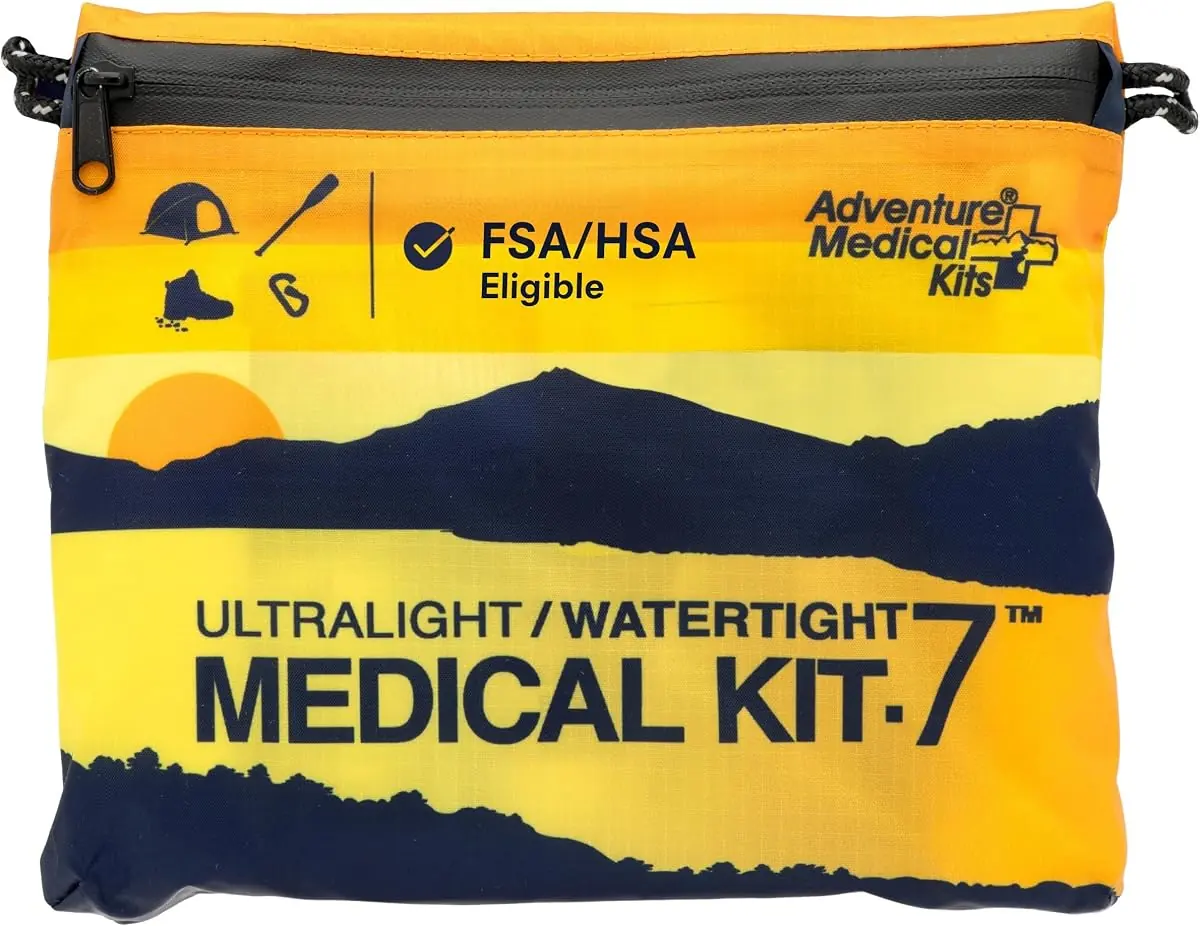
Most of what goes wrong on a hike is small. A blister at mile six, a palm scraped open on wet rock, a rolled ankle, a headache, a bee sting. A good first aid kit is built around those, because they're what you'll actually use it for, and it carries enough on top to cover a bad cut while you walk out.
The piece count on the box won't tell you whether a kit can do that. A 300-piece kit can be mostly adhesive bandages. What matters is whether it covers the jobs NOLS lists as the minimum, and how much it weighs doing it.
The seven kits below are ranked on that: what they can treat, against the ounces you carry and how fast you can find the right thing with cold hands. Adventure Medical Kits takes the top four places. CleverHiker and OutdoorGearLab both put its Ultralight/Watertight and Mountain Series lines at or near the top, and nothing else here covers as much per ounce.
My dad and I haven't used any of these in a real emergency, and I'm not going to write as if we had. The order comes from each maker's published contents list and weight, what CleverHiker and OutdoorGearLab found in their testing, and what Amazon buyers report after carrying them.
Two good makers are missing because Amazon doesn't sell them. HART Outdoor, whose kits CleverHiker rates highly for organization, sells through REI and its own site, and so does Cascade First Aid. If one of those suits you better, buy it there.
A kit only holds supplies. Knowing what to do with them takes training, like the Wilderness First Aid course NOLS teaches in 16 hours over two or two and a half days, and that weekend is worth more than the best kit here. Nothing on this page is medical advice, and none of these kits stands in for training.