Skip to content
Best Hydration Reservoirs of 2026 — hiking gear
Hydration Reservoir Buying Guide

Best Hydration Reservoirs of 2026

Eight water bladders, ranked on how you get water in, how the bag hangs in a pack, and whether it dries out afterwards. Not on review count.

View the top picksUpdated 30 August 2026 · Ranked from specs & buyer reviews

If you buy through a link on this page we may earn a commission, at no extra cost to you. It never changes how anything is ranked. Prices were last checked on and move around; the figure on Amazon is the one that counts.

How to Choose

How to Choose a Hydration Reservoir

Almost nobody chooses their first reservoir. It comes in the box with a pack, or it's whatever the store had, and after that it's just the thing that makes water come out of a tube. That works until the day it doesn't: the valve drips into the small of your back for four hours, or you open the pack after two weeks in a closet and find something growing in the one corner you could never reach.

A reservoir is a consumable that people treat as furniture. The good ones are easy to fill, easy to hang, and they dry out instead of going sour on you.

So the fill port comes first here, because it decides everything downstream. A wide slide-seal or zip-top bar opens the bag flat, so you can fill it at a tap without funneling and stand it open to dry afterward. A screw cap is lighter and has fewer things to fail. It also means the only way in is a two-inch hole. The hanger comes next, because a reservoir that won't hang in your pack sags into a lump against your spine and shifts every time you take a sip.

Then the valve and its shutoff, which is where leaks come from. Then cleaning and drying, which is what ends a reservoir's life early. Insulation and capacity come last, and they matter enormously on exactly two kinds of day: freezing ones and very hot ones.

Amazon review count sets none of that order, and on this category it would produce a completely different page. The deepest rating pool in reservoirs belongs to an unbranded listing sold under a name that changes every few months, with more ratings than every product ranked here put together. That number tells you how many units a cheap listing has moved. It doesn't tell you whether the bag survives a season.

There's nothing wrong with a twenty-dollar bladder for occasional use, and if that's what you want, buy one and skip the rest of this page. What you give up is specific: nobody sells you a replacement tube, a replacement valve or a cleaning kit for it, so the first component that fails ends the whole thing. Every reservoir below comes from a company that sells those parts separately.

One caveat I'm not going to dress up: my dad and I haven't tested all eight of these side by side. The order comes from the makers' published specs, what other reviewers have put in print, and Amazon buyer reviews, and every price and rating was read on August 30, 2026 off one specific listing.

Quick Picks

Top Three at a Glance

Short on time? Start with these top-rated hydration reservoirs picks.

Best Overall
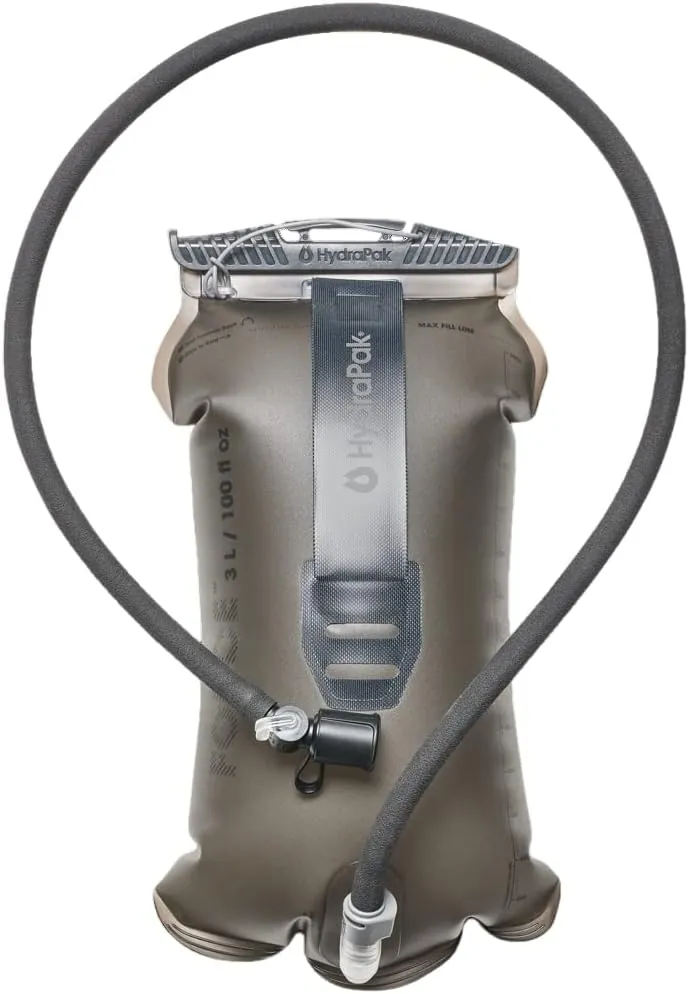
HydraPak Force Hydration Reservoir, 3L
4.5

HydraPak Force Hydration Reservoir, 3L

The most complete reservoir here, and the only one that both ships insulated and turns inside out. HydraPak built the Force around the two things that actually retire a reservoir: a hose you can't dry and a bag you can't get into. Then it sold every component separately, so a failure here is a repair and not a replacement.

Check Price
Easiest to Clean
Platypus Big Zip EVO Taste-Free Water Reservoir, 3-Liter
4.6

Platypus Big Zip EVO Taste-Free Water Reservoir, 3-Liter

The easiest reservoir here to actually clean, and that's a badge you can check by opening the bag. Platypus's SlideLock bar opens the entire top edge, and the pincher grip lets you hold the mouth open one-handed at a tap, which is the difference between rinsing a reservoir and washing one. It's also the lightest three-liter bag here by the makers' own published weights.

Check Price
Best Pack Fit
HydraPak Contour Hydration Reservoir, 3L
4.5

HydraPak Contour Hydration Reservoir, 3L

The reservoir to try first if your pack's sleeve is tight, or if your last bladder sat in it like a lump. HydraPak shapes the Contour with fixed baffles and a 3D bottom so the water spreads sideways instead of pooling, and the hose leaves from the side of the bag, not the bottom.

Check Price
Comparison Table

Every Pick, Side by Side

Compare all 8 picks
Best Overall
Best For
One reservoir to cover everything, in every season
Difficulty
Beginner
Price
$$$
Easiest to Clean
Best For
Getting a hand and a brush right inside the bag
Difficulty
Beginner
Price
$$$
Best Pack Fit
Best For
Fitting flat in a narrow pack sleeve
Difficulty
Beginner
Price
$$$
Recommended #4
Best For
The most water per bite, and a tube that is already covered
Difficulty
Intermediate
Price
$$$
Recommended #5
Best For
Dropping straight into an Osprey pack
Difficulty
Beginner
Price
$$$
Recommended #6
Best For
The cheapest three-liter bag here, with parts on every shelf
Difficulty
Beginner
Price
$$$
Recommended #7
Best For
Hiking, skiing and running below freezing
Difficulty
Intermediate
Price
$$$
Recommended #8
Best For
The lightest, simplest reservoir with nothing to break
Difficulty
Beginner
Price
$$$
The Lineup

8 Best Hydration Reservoirs, Compared

Detailed picks with verdicts, strengths, tradeoffs, and the situations where each one makes the most sense.

Best Overall
HydraPak Force Hydration Reservoir, 3L
4.5 (342 Amazon ratings)

HydraPak Force Hydration Reservoir, 3L

Quick verdict: The most complete reservoir here, and the only one that both ships insulated and turns inside out. HydraPak built the Force around the two things that actually retire a reservoir: a hose you can't dry and a bag you can't get into. Then it sold every component separately, so a failure here is a repair and not a replacement.

Why It Stands Out

  • It reverses completely for cleaning, so the inside of the bag becomes a surface you wipe and stand open to dry instead of a space you poke a brush at. HydraPak also rates it for the dishwasher's top rack.
  • The insulated HydraFusion drink tube and dust cover come in the box. Only the Source and the Stoaway also arrive with the hose covered; on the other five reservoirs here, insulating it is a separate purchase.
  • HydraPak's own listing calls the film abrasion resistant and says it expands to eight times its size without bursting. That's the durability claim you're paying for.
  • The Slide-Seal top opens the bag flat for filling and ice, and the hanger is universal, so it hooks into whatever your pack happens to use.

Pros

  • Reverses fully for drying, and top-rack dishwasher safe
  • Insulated tube and dust cover included as standard
  • Universal hanger fits packs from any maker
  • Every part sold separately, backed by a lifetime guarantee

Cons

  • Among the most expensive reservoirs on this page
  • The film is opaque, so you can't eyeball how much water is left the way you can on the clear bags
  • 342 ratings, against thousands on the long-running Big Zip and Crux listings

Best Situations

Hot summer days where an insulated hose keeps the first sip drinkableWinter hiking, where the tube is the part that ices upAnyone who has thrown away a reservoir because it started to smell
Difficulty
Beginner
Price Range
$$$
Easiest to Clean
Platypus Big Zip EVO Taste-Free Water Reservoir, 3-Liter
4.6 (2,419 Amazon ratings)

Platypus Big Zip EVO Taste-Free Water Reservoir, 3-Liter

Quick verdict: The easiest reservoir here to actually clean, and that's a badge you can check by opening the bag. Platypus's SlideLock bar opens the entire top edge, and the pincher grip lets you hold the mouth open one-handed at a tap, which is the difference between rinsing a reservoir and washing one. It's also the lightest three-liter bag here by the makers' own published weights.

Why It Stands Out

  • The SlideLock slides off either end and takes the whole top edge with it, so a brush goes in about as easily as the water does.
  • Platypus publishes a weight of 6.5 ounces for the three-liter version, which is lighter than any other three-liter reservoir here that publishes a figure.
  • The high-mount quick-disconnect sits near the top of the bag, so you can detach the tube and pull the reservoir out without digging to the bottom of the sleeve.
  • Platypus advertises a large 5/16-inch drink tube alongside the self-sealing HyFLO valve, and it's the only maker on this page that puts a tube width forward as a selling point.

Pros

  • Opens across the full top edge, which makes cleaning and drying easy
  • Lightest three-liter reservoir on this page by published weight
  • The only reservoir here whose maker advertises its tube width
  • Made in the USA with a limited lifetime warranty

Cons

  • The zipper is the one part you can't replace if it fails
  • No insulation on the tube, so it needs a sleeve for winter
  • Doesn't reverse for drying the way the HydraPak bags do

Best Situations

Anyone who fills from a tap or a wide-mouth filterHot days where you want to load the bag with icePeople who have written off a previous reservoir over taste
Difficulty
Beginner
Price Range
$$$
Best Pack Fit
HydraPak Contour Hydration Reservoir, 3L
4.5 (337 Amazon ratings)

HydraPak Contour Hydration Reservoir, 3L

Quick verdict: The reservoir to try first if your pack's sleeve is tight, or if your last bladder sat in it like a lump. HydraPak shapes the Contour with fixed baffles and a 3D bottom so the water spreads sideways instead of pooling, and the hose leaves from the side of the bag, not the bottom.

Why It Stands Out

  • Fixed Shape-Loc baffles and a shaped bottom hold the bag flat when full, which is what keeps a three-liter reservoir from bulging into your spine in a slim sleeve.
  • Because the hose leaves from the side, it doesn't kink the way a bottom-exit tube does once the reservoir is pressed against the back of the sleeve.
  • The Slide-Seal top carries a universal pack hanger, so it catches whatever your pack uses to hold a bladder up. That makes it the safer pick if you own packs from more than one brand.
  • It reverses for cleaning and has an internal drying tab, which is HydraPak's answer to the reservoir that never quite dries out.

Pros

  • Baffled and shaped to stay flat in a tight sleeve
  • Side hose exit avoids the classic bottom-port kink
  • Universal hanger plus a magnetic tube clip included
  • Reverses for cleaning, with a drying tab built in

Cons

  • The welded baffles are one more thing to clean around
  • The tube isn't insulated, unlike the one on its sibling the Force
  • Costs more than the plainer reservoirs that hold the same water

Best Situations

A 20 to 30 liter daypack with a shallow hydration sleeveAnyone who has felt a full reservoir shift with each stepOwners of packs from several different brands
Difficulty
Beginner
Price Range
$$$
Recommended #4
Source Hydration Bladder WXP, 3 Liter
4.5 (878 Amazon ratings)

Source Hydration Bladder WXP, 3 Liter

Quick verdict: The outlier here, and the most interesting one. Source drops the bite valve for a push-pull Storm valve you don't bite at all, and claims a quarter again more flow than bite designs. The tube comes wrapped in a cover that insulates and blocks UV, no accessory needed. It also costs considerably less than any reservoir ranked above it.

Why It Stands Out

  • The Storm valve is operated by pushing and pulling instead of biting, which Source says delivers 25 percent higher flow than bite designs, and it has an integrated shutoff.
  • The drink tube ships inside a cover that Source says both insulates the water and blocks UV light, so the sun-warmed first mouthful is handled out of the box.
  • The patented Widepac slide opening runs the full width of the bag, which covers filling, draining, ice and a brush.
  • Source publishes real numbers for it: 8.2 inches wide by 16.1 inches tall, 0.84 pounds, with a 37-inch tube and a two-inch filler cap.

Pros

  • Highest claimed flow rate on this page
  • Insulating, UV-blocking tube cover included as standard
  • Full-width slide opening for filling and cleaning
  • Considerably cheaper than the other top-tier reservoirs

Cons

  • The heaviest reservoir here by published weight, at 0.84 pounds
  • A push-pull valve takes some getting used to if you've only ever bitten one
  • The listing leans on tactical styling instead of plain product shots

Best Situations

Long hot days where flow rate and a cool first sip both matterAnyone who finds bite valves fiddly or hard to use with glovesBuyers who want the top tier without the top-tier price
Difficulty
Intermediate
Price Range
$$$
Recommended #5
Osprey Hydraulics Backpack Water Reservoir, 3L
4.3 (847 Amazon ratings)

Osprey Hydraulics Backpack Water Reservoir, 3L

Quick verdict: If your pack is an Osprey, this is the one that simply works: the Hydraulics is built around Osprey's own HydraClip hanger and its own sleeve dimensions. A rigid internal backplate keeps it flat and makes it easier to slide in and out than a soft baffled bag.

Why It Stands Out

  • It integrates with Osprey's HydraClip reservoir hanger, which is the system already sewn into Osprey's hydration-compatible packs.
  • A lightweight rigid backer plate keeps the bag in shape, so it stays upright and slides into a sleeve without folding over on itself.
  • A central baffle cuts slosh and keeps the profile slim, and the magnetic bite valve attachment holds the valve on the sternum strap instead of letting it swing.
  • Osprey publishes its dimensions and weight: 17.3 by 7.5 by 0.4 inches, and 0.52 pounds empty.

Pros

  • Purpose-built for Osprey packs and their HydraClip system
  • Rigid backplate makes loading and unloading genuinely easy
  • Strong magnetic valve attachment
  • One-handed slide-seal closure

Cons

  • The lowest average rating on this page, at 4.3
  • Less compelling if your pack is not an Osprey
  • No insulation anywhere, and no reverse-for-drying

Best Situations

Anyone replacing the reservoir that came with an Osprey packPacks whose sleeve is a tight vertical slotHikers who lose the bite valve down their side on every hike
Difficulty
Beginner
Price Range
$$$
Recommended #6
CamelBak Crux 3L Hydration Reservoir
4.6 (9,243 Amazon ratings)

CamelBak Crux 3L Hydration Reservoir

Quick verdict: The default reservoir for a lot of people, and the cheapest three-liter bag on this page. CamelBak puts the on-off lever at the exit port instead of on the valve, which is the better place for it, and the shaped Crux lobe is why the brand quotes a fifth more water per sip.

Why It Stands Out

  • CamelBak states the Crux delivers 20 percent more water per sip than its previous reservoir, which is what the shaped lobe below the cap is for.
  • The on-off lever shuts the tube off at the bag end instead of at the mouthpiece, so a valve knocked open in a car trunk can't empty the reservoir into your pack.
  • The leak-proof cap is a big screw closure with a folding handle on it, which is what you want when you're carrying three full liters back from a spigot.
  • It's the most widely stocked reservoir in the category, which is why spare valves, tubes and cleaning kits for it are easy to find.

Pros

  • The cheapest three-liter reservoir on this page
  • Shutoff at the exit port, not just at the valve
  • Big folding carry handle molded into the cap
  • 9,243 ratings behind a listing that has been on sale for years

Cons

  • A screw cap is the hardest fill port here to dry out
  • No insulation on the tube
  • Doesn't reverse, so cleaning is a brush job

Best Situations

A first reservoir, or a spare to keep in a second packAnyone who fills from a bottle or a squeeze filter rather than a tapReplacing the no-name bladder that came with a pack
Difficulty
Beginner
Price Range
$$$
Recommended #7
CamelBak Stoaway Insulated Hydration Reservoir, 70 oz
4.4 (114 Amazon ratings)

CamelBak Stoaway Insulated Hydration Reservoir, 70 oz

Quick verdict: The only pick here built for cold instead of just surviving it. CamelBak wraps a Crux reservoir in closed-cell foam and adds an insulated tube and a bite valve cover, which is all three places ice forms. It's a specialist tool, and it's priced like one.

Why It Stands Out

  • Closed-cell foam wraps the reservoir itself and not just the hose. That is the difference between an all-season reservoir and a hose accessory.
  • The insulated tube and bite valve cover handle the two parts that ice up long before the bag does.
  • Inside the sleeve is a Crux reservoir, so it keeps the on-off lever and the flow CamelBak quotes for that design.
  • Attachment points and an adjustable carry loop let it work on its own or clip into a pack that has no hydration sleeve.

Pros

  • Insulates the reservoir, the tube and the valve
  • Works as a standalone or clipped into a pack
  • Keeps the Crux's exit-port shutoff lever
  • Keeps water cold in summer as well as liquid in winter

Cons

  • The most expensive reservoir on this page
  • The foam adds bulk you don't want in a tight hydration sleeve
  • Holds about two liters, not three

Best Situations

Winter hiking, snowshoeing and ski touringAnyone who has arrived at a summit with a frozen hoseDesert days where you want the water to stay drinkable
Difficulty
Intermediate
Price Range
$$$
Recommended #8
Platypus Hoser Ultralight Water Reservoir, 2-Liter
4.4 (1,895 Amazon ratings)

Platypus Hoser Ultralight Water Reservoir, 2-Liter

Quick verdict: The minimalist answer, and it gets there by having almost nothing on it: a screw cap, a hang loop, a tube and a valve. Platypus publishes 3.6 ounces for the two-liter Hoser, well under half what the heavier reservoirs here weigh.

Why It Stands Out

  • It's the lightest reservoir on this page, and that is the whole reason to choose it.
  • The one-piece self-sealing HyFLO bite valve has no separate parts to lose, and Platypus quotes a 30 percent higher flow rate for it.
  • The threaded outlet works with all threaded Platypus drink tubes and closure caps, so it doubles as a plain water bag when you take the hose off.
  • The film carries silver ions to slow what grows in it, and Platypus lists it as taste-free, BPA-free, BPS-free and phthalate-free.

Pros

  • The lightest reservoir here, at a published 3.6 ounces
  • Four parts total: cap, hang loop, tube, valve
  • Converts to a plain water bag with a cap
  • Platypus builds it in the USA and warrants it for life against defects

Cons

  • A screw cap is the hardest port to clean and dry through
  • Two liters, so not the choice for long dry stretches
  • No baffle or backplate, so it hangs as a soft bag

Best Situations

Ultralight backpacking where every ounce is countedSmall daypacks with a shallow sleeveCarrying spare water in camp as well as on the move
Difficulty
Beginner
Price Range
$$$
Buying Guide

What to Check Before You Buy

How does the fill port change the way you live with a reservoir?

The fill port decides how easily you fill the bag, whether you can get a hand inside it, and whether it will ever really dry. Wide slide-seal and zip-top closures open the reservoir almost flat, so a tap, a brush and a drying rack all work. A screw cap is lighter and simpler but leaves a small round hole as the only way in. There are three designs, and the differences show up every single time you use one.

A slide-seal is a plastic bar that clamps a folded-over top edge shut, and it's what most of the category has converged on: HydraPak's Slide-Seal, Osprey's Slide-Seal and Source's Widepac are the same idea under three names. Slide the bar off and the whole top edge opens, which is wide enough for a tap, a handful of ice and a hand with a brush in it.

A zip-top does the same job with a heavy-duty waterproof zipper instead of a bar. Platypus's SlideLock is the best-known version, and its pincher grip lets you hold the mouth open one-handed at a sink. The third design is the screw cap, which CamelBak uses on the Crux and Platypus uses on the Hoser. A cap has almost nothing to fail and adds no weight, and if you fill from a bottle or a filter it's fine.

What it costs you is drying: air doesn't circulate through a two-inch hole, so a screw-cap reservoir wants a dedicated hanger or a rolled-up paper towel to prop it open. One more thing to check on any of them: does the closure include a carry handle? A three-liter bag full of water weighs about six and a half pounds, and the difference between carrying that by a molded handle and pinching a wet plastic bar is bigger than it sounds when you're refilling at a creek with cold hands.

Which hanger actually keeps the reservoir flat inside your pack?

The hanger is the loop, tab or clip at the top of the reservoir that hooks into your pack's hydration sleeve, and it decides whether the bag hangs flat or slumps into a lump against your spine. A universal hanger works with clips, hooks and loops from any brand; a proprietary one only fits its own maker's packs. This is the spec most buyers never look at, and it's the one most likely to make a good reservoir useless.

Packs suspend a reservoir in three incompatible ways: a plastic hook the reservoir hangs on, a webbing loop the reservoir clips to, and a slot the reservoir's own tab slides into. HydraPak's universal hanger and Osprey's HydraClip are the two you'll meet most often, and only one of them is brand-agnostic. If you already own the pack, look inside the sleeve before you buy anything.

A reservoir with the wrong hanger sits on the bottom of that sleeve no matter what it cost. Then there's what happens to the water once it's hanging. Three liters is a lot of moving weight, and a bag with nothing holding its shape pools at the bottom and swings on every step. Makers fix that with internal structure. Baffles get welded across the bag so water spreads sideways instead of pooling; a rigid backplate holds the whole thing flat.

Baffles keep the profile slim, which is what you want in a narrow sleeve. A backplate makes the reservoir easier to slide in and out and easier to clean, since there's no welded seam to scrub around. The last two details are small and easy to skip. A side exit port lets the hose leave the sleeve without a kink, which straight-down ports often can't manage.

And a magnet or clip on the shoulder strap decides whether the valve is where you left it or swinging loose somewhere behind you.

Do hydration reservoir bite valves leak, and what stops it?

A self-sealing bite valve doesn't leak on its own; the drips people blame on the valve almost always come from a valve left open by a knock, or from a fill port closed off-square. The fix is a mechanical shutoff on the valve or a lever at the exit port, and every reservoir here has one or the other. Use it any time the pack goes in a car.

Bite valves stay closed until your teeth flatten a silicone slit, and a healthy one holds water against gravity indefinitely. What goes wrong is grit in the slit holding it a fraction open, or the whole assembly getting pinned against a car seat and dribbling until the bag is empty. That's what the shutoff is for, and it lives in one of two places. On the valve itself it's a quarter-turn collar or a thumb lever right at your mouth, which is the version you'll actually remember to use.

At the exit port, like the lever on the Crux, it closes the tube at the top of the bag, so nothing reaches the hose at all. Flow rate is the other half of this, and it's set by the width of the tube and the size of the valve's opening. Be careful with the numbers here, because the makers don't publish comparable ones.

Platypus advertises a 5/16-inch drink tube as a feature, HydraPak quotes a quarter-inch fitting on the tube it sells separately, and CamelBak publishes no tube measurement at all. Nobody states whether their figure is the inside or the outside of the hose, so a tidy table comparing bores would be three-fifths invention. The direction is all you get: a maker advertising a wider tube is advertising more water per bite.

Source goes further and drops the bite valve entirely for a push-pull Storm valve it says delivers 25 percent more flow than bite designs. The more useful thing to look for is a quick-disconnect at the top of the hose. It lets you pull the reservoir out to refill without unthreading the tube through the pack, and on a hot day that turns a five-minute job into a thirty-second one.

How do you clean and dry a reservoir, and what about freezing?

Rinse and hang a reservoir open after every hike, and give it soap and a brush after anything but plain water. What kills reservoirs is being put away damp, so the most useful feature on any of them is whether the bag can be turned inside out. For freezing, blow the water back into the bag after each sip and insulate the tube; the hose freezes long before the reservoir does.

Drying is where the buying decision sits. Mold grows in the film's folds and inside the hose, and no rinse reaches either if the bag is folded shut in a dark closet. HydraPak's reservoirs reverse completely, so you can turn one inside out, wipe it and stand it open on a rack, and they're rated for the dishwasher's top rack too. The ones that don't reverse need a drying hanger, a wire frame, or the old trick of a balled-up paper towel holding the mouth open.

That difference is worth more than it sounds, because it decides how much of your evening the reservoir costs you. Platypus comes at it from the other end and embeds silver ions in the film to slow what grows there. That helps. It isn't a substitute for drying. And whatever you buy, drink mix is what makes cleaning hard, so plan on plain water in the bag.

Freezing is the other seasonal problem, and it's cheap to solve at one end and expensive at the other. Blowing the tube clear costs nothing. A neoprene sleeve over the hose and a cover over the valve costs a little. HydraPak sells its insulated HydraFusion tube separately for about seventeen dollars, described as a universal quarter-inch fitting with a quick-connect system, and CamelBak's Stoaway wraps closed-cell foam around the whole reservoir, which is the only way to buy the problem away outright.

If you're buying one reservoir
Reverses to dry

Buy a three-liter bag with a slide-seal top, a universal hanger and a tube you can replace. Then stop thinking about it. The HydraPak Force is the most complete version of that here: it reverses for drying, and the insulated tube comes with it instead of costing extra. If what you care about most is getting a hand and a brush inside the bag, take the Platypus Big Zip EVO instead.

If your pack already has a sleeve you're fighting with
Shape, not specs

The reservoir that fits beats the reservoir with the better spec sheet. If your pack isn't an Osprey, try the HydraPak Contour first: its hanger catches whatever your pack uses to hold a bladder up, and its baffles keep it flat in a shallow sleeve. Osprey owners can skip that decision, because the Hydraulics clips into the system already sewn inside the pack.

If you want to spend the least, or hike in winter
Under $30, or insulated

These pull in opposite directions, and both ends are covered. The CamelBak Crux is the cheapest three-liter bag here, and CamelBak will still sell you a spare valve when yours goes soft. Its on-off lever is a better leak defense than most valve collars. At the other end sits the CamelBak Stoaway, the only pick built for cold, with foam around the bag itself and not just the tube.

Full Catalog

Compare All 8 Hydration Reservoirs

Want to browse beyond the ranked picks? Filter and sort the full hydration reservoirs listing below.

FAQ

Frequently Asked Questions

Rinse it with warm water after every hike, then hang it open until it's bone dry inside. That covers plain water, which is most use. After anything with sugar or electrolytes in it, give it a real wash: warm water, a little mild dish soap or a cleaning tablet, a long-handled brush through the bag and a narrow brush pushed down the hose, then rinse until no soap taste is left.

The step people skip is the drying, and it's the one that matters. For a reservoir that turns inside out, that's a thirty-second job. For one that doesn't, use a drying hanger, a wire frame, or a rolled-up paper towel wedged in the mouth to hold it open, and hang the hose downward so it drains. Some reservoirs, HydraPak's included, are rated for the top rack of a dishwasher, which handles the bag but not the tube.

CamelBak does not list its reservoirs as dishwasher safe, which is worth reading as an absence of endorsement rather than a prohibition. There's also a shortcut both Platypus and CamelBak endorse in their own support material. If you're hiking again in a few days, rinse the reservoir and put it in the freezer between trips instead of drying it, because nothing grows at freezing temperatures.

It's the one real labor-saver in reservoir care. If a reservoir has already gone sour, a soak in baking soda or a denture-style cleaning tablet usually recovers it. And if black spots have taken hold inside the hose, replace the hose. It's a cheap part, and scrubbing rarely gets all of it.

Glossary

The words on this page

Every term this guide leans on has its own page with a plain answer at the top.

Browse the whole glossary →
How We Choose Products

How These Picks Are Chosen

Reader-supported and free of paid placements. Every pick is ranked on published specs and Amazon buyer ratings, not on who pays us.

Spec Research

Each pick is compared on published specs, materials, design, and category fit across the major brands.

Practical Fit

Rankings factor in how well each product matches common hiking, backpacking, and trail running needs, not just popularity.

Amazon Buyer Ratings

Star ratings and review volume from verified Amazon buyers are factored in to reflect real-world satisfaction.

Value

A pick earns its spot by delivering useful performance for the money, whether budget or premium.

RESERVOIR SORTED.
STILL NOT SURE IT'S THE RIGHT FORMAT?

A reservoir is not automatically the right answer. It carries more than flasks and you drink from it without breaking stride, but you cannot see how much is left and you cannot refill it without taking the pack off. The Basecamp explainer walks the actual decision rather than assuming it.

Bladders vs Soft Flasks