Skip to content
Best Backpacking Sleeping Bags of 2026 — hiking gear
Sleeping Bag Buying Guide

Best Backpacking Sleeping Bags of 2026

Eight bags, budget synthetic to premium down. A bag called 15 keeps most people comfortable at 27°F, so how honest the rating is decides the order here.

View the top picksUpdated 13 August 2026 · Ranked from specs & buyer reviews

If you buy through a link on this page we may earn a commission, at no extra cost to you. It never changes how anything is ranked. Prices were last checked on and move around; the figure on Amazon is the one that counts.

How to Choose

How to Choose a Backpacking Sleeping Bag

The number printed on a sleeping bag is not the temperature it keeps you comfortable at. It's the limit rating, and the gap between the two is bigger than most people expect. Take the bags on this page. NEMO calls one the Disco 15, and its ISO comfort rating is 27°F. Marmot's Sawtooth 15 tests at 27.0°F comfort against a 15.0°F limit. The Kelty Cosmic Down 20 is 31°F comfort, 21°F limit.

Marmot's Trestles 15 is 27.3°F comfort. Four bags, three different companies, and every one of them sold under a number roughly 12°F colder than the temperature most people will sleep well at. Nobody is cheating: ISO 23537 defines both figures, and the industry has settled on advertising the limit one. But if you buy a bag called 15 for a trip where it's forecast to hit 15, you're going to have a bad night.

The other number that matters is fill power. It gets read as a warmth rating, and it isn't one. What it measures is loft: how much air a single ounce of down can trap. An ounce of 850-fill traps more than an ounce of 550-fill, so a bag can reach the same rating with less weight, and that is where most of the price difference in this category comes from.

The Kelty Cosmic Down 20 uses 550-fill and weighs 39 ounces in the regular. The Western Mountaineering UltraLite 20 carries 16 ounces of 850+ fill goose down, weighs 29 ounces all in, and is rated colder. Both are honest bags. One of them is ten ounces lighter because the down inside it is better. Fill power on this page runs 550, 650, 800, 850 and 900+, and the prices climb roughly in step.

So the eight below are ordered on how trustworthy the temperature rating is first, then warmth per ounce, then draft control and fit. That last one covers the collar, the hood and the baffle behind the zipper, which is where heat actually leaves a bag. Price breaks ties. Amazon review count breaks nothing, and this page shows why: the two biggest rating pools here belong to the Kelty Cosmic Down 20 and the Marmot Trestles 15, at 107 and 85 ratings, and they finish seventh and eighth.

The bag at the top has ten. A review count tells you how many units a listing has moved. It doesn't tell you how well the bag works. The lineup reaches the real top of the category, but some of the bags reviewers rate highest aren't sold on Amazon at all. Feathered Friends (the Swallow UL 20, around $659) sells direct, REI's Magma 15 is REI-only, and the cottage quilt makers like Enlightened Equipment and Katabatic take orders through their own sites.

If you're shopping at the $500-plus end, look at those before you commit. Everything here is ranked from published specs, ISO 23537 figures and the testing other reviewers have put in print. My dad and I haven't slept a season in all eight, and I'm not going to pretend otherwise. Ratings and prices were read off the listings on August 13, 2026.

Quick Picks

Top Three at a Glance

Short on time? Start with these top-rated sleeping bags picks.

Best Overall
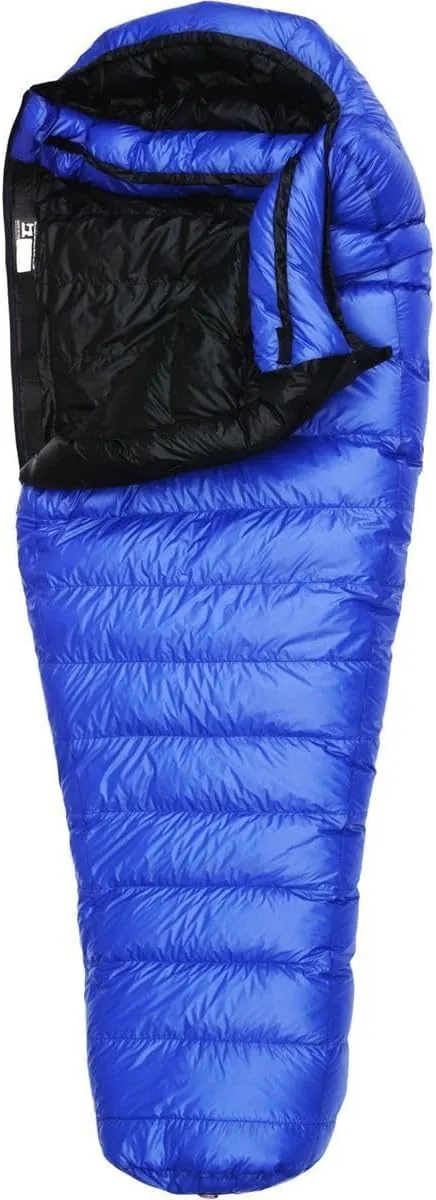
Western Mountaineering UltraLite 20
5

Western Mountaineering UltraLite 20

The bag the rest of this category gets measured against. 850+ fill goose down, a full 360° draft collar, continuous baffles, 29 ounces on the scale, sewn in California. It costs meaningfully more than anything else here, and nothing on the spec sheet looks like a compromise.

Check Price
Lightest
Sea to Summit Spark Pro 30
5

Sea to Summit Spark Pro 30

The lightest bag here, on 900+ fill down. Around 17 ounces for a 30°F rating is exceptional, and three separate zips let you vent the footbox and both sides. It's emphatically a warm-weather bag, and priced like a cold-weather one.

Check Price
Summer Pick
Therm-a-Rest Hyperion 32F
4.3

Therm-a-Rest Hyperion 32F

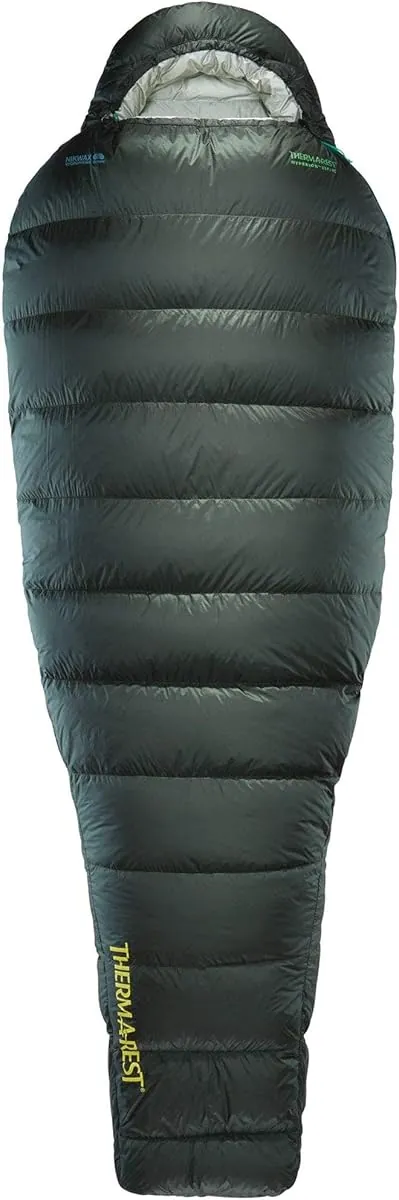
900-fill Nikwax hydrophobic down in a true ultralight summer bag, and unlike the Western Mountaineering it publishes ISO 23537 figures. About 1 lb 3 oz in the regular. The Amazon listing here is the long, which adds a couple of ounces and some cost.

Check Price
Comparison Table

Every Pick, Side by Side

Compare all 8 picks
Best Overall
Best For
Buying once and keeping it for a decade
Difficulty
Advanced
Price
$$$
Lightest
Best For
Counting grams in warm weather
Difficulty
Advanced
Price
$$$
Summer Pick
Best For
Ultralight summer trips with a third-party rating
Difficulty
Advanced
Price
$$$
Recommended #4
Best For
Side sleepers doing three-season trips
Difficulty
Beginner
Price
$$$
Recommended #5
Best For
Premium down construction at a discount
Difficulty
Intermediate
Price
$$$
Recommended #6
Best For
Best value in a real three-season down bag
Difficulty
Beginner
Price
$$$
Recommended #7
Best For
First down bag on a budget
Difficulty
Beginner
Price
$$$
Recommended #8
Best For
Wet conditions and the tightest budget
Difficulty
Beginner
Price
$$$
The Lineup

8 Best Sleeping Bags, Compared

Detailed picks with verdicts, strengths, tradeoffs, and the situations where each one makes the most sense.

Best Overall
Western Mountaineering UltraLite 20
5 (10 Amazon ratings)

Western Mountaineering UltraLite 20

Quick verdict: The bag the rest of this category gets measured against. 850+ fill goose down, a full 360° draft collar, continuous baffles, 29 ounces on the scale, sewn in California. It costs meaningfully more than anything else here, and nothing on the spec sheet looks like a compromise.

Why It Stands Out

  • 16 ounces of 850+ fill power goose down for 29 ounces of total bag weight
  • A draft collar that wraps the full 360° around your neck, plus a full-length insulated draft tube behind the zipper
  • Continuous baffles run right around the bag, so you can shift down toward the top on cold nights or the floor on warm ones
  • Western Mountaineering rates in-house instead of to ISO, and reviewers have found those ratings conservative for years

Pros

  • 29 ounces for a real 20°F rating, where the other near-freezing bags here run 39 to 54
  • Full-size draft collar and draft tube, where cheaper bags fit token versions
  • Built in California with a reputation for lasting fifteen years or more

Cons

  • A serious outlay, and the most on this page
  • No published ISO figure, so you're trusting the maker's reputation rather than a third-party test
  • Only ten ratings on this listing, and the price shifts with length and zip side; the one linked here is the 6 ft left-zip

Best Situations

A bag you intend to own for a decade rather than replaceCold three-season trips where the rating needs to be honestLong carries where 29 ounces instead of 46 is the difference that matters
Difficulty
Advanced
Price Range
$$$
Lightest
Sea to Summit Spark Pro 30
5 (2 Amazon ratings)

Sea to Summit Spark Pro 30

Quick verdict: The lightest bag here, on 900+ fill down. Around 17 ounces for a 30°F rating is exceptional, and three separate zips let you vent the footbox and both sides. It's emphatically a warm-weather bag, and priced like a cold-weather one.

Why It Stands Out

  • 900+ fill power Ultra-Dry down, level with the Hyperion at the top of this page
  • Roughly 17 ounces, the lightest bag on this page
  • Three zippers including a ventable footbox, so you can dump heat without opening the whole bag
  • 10-denier interior fabric and a roomy 61-inch shoulder girth for a bag this light

Pros

  • Outstanding warmth for the weight and pack size
  • Venting options make it usable across a wider range than a 30°F rating suggests
  • Non-PFC Ultra-Dry down treatment helps with condensation over several nights

Cons

  • A lot of money for a 30°F bag with limited seasonal range
  • Only two ratings on this listing, which is far too thin a pool to read anything into
  • Ultralight 10D fabrics need care; this is not a bag to be careless with

Best Situations

Summer trips where every ounce is being countedFastpacking and long distance hiking in warm monthsPairing with a warm pad and a liner to stretch it into shoulder season
Difficulty
Advanced
Price Range
$$$
Summer Pick
Therm-a-Rest Hyperion 32F
4.3 (10 Amazon ratings)

Therm-a-Rest Hyperion 32F

Quick verdict: 900-fill Nikwax hydrophobic down in a true ultralight summer bag, and unlike the Western Mountaineering it publishes ISO 23537 figures. About 1 lb 3 oz in the regular. The Amazon listing here is the long, which adds a couple of ounces and some cost.

Why It Stands Out

  • 900 fill power Nikwax Hydrophobic Down, treated to resist moisture without PFCs
  • Tested and published to the ISO 23537 standard rather than rated in-house
  • Around 1 lb 3 oz in the regular size, among the lightest bags on this page
  • Compresses very small, which matters as much as weight in a tight pack

Pros

  • Excellent down quality with a published third-party temperature rating
  • Hydrophobic treatment helps over consecutive damp nights
  • Higher fill power than anything here except the Spark Pro, so it packs down accordingly small

Cons

  • Premium money for a 32°F bag
  • This is a summer bag; the comfort figure sits well above freezing
  • Sized long on this listing, so check the length before you order

Best Situations

Summer alpine trips where nights stay above 40°FAnyone who wants ultralight down with an ISO number attachedStacking with a liner and warm layers to push into cooler nights
Difficulty
Advanced
Price Range
$$$
Recommended #4
NEMO Disco 15
4.7 (24 Amazon ratings)

NEMO Disco 15

Quick verdict: The most comfortable bag here, and the one most three-season backpackers should buy. Its spoon-shaped cut is wider at the elbows and knees so you can sleep on your side without wrestling it, and the Thermo Gill vents let you shed heat without unzipping. 27°F ISO comfort, in the middle of this page on price.

Why It Stands Out

  • Spoon silhouette is cut generously at the elbows and knees for side sleeping
  • ISO comfort rating of 27°F, which is the figure that matters rather than the 15 in the name
  • Thermo Gill vents open along the top to dump heat without letting drafts into the footbox
  • 650 fill power RDS-certified down with a PFAS-free hydrophobic treatment

Pros

  • Solves side sleeping, which most mummy bags don't even try to
  • Vents give it useful range on warmer nights
  • Recyclable shell as part of NEMO's Endless Promise program

Cons

  • 2 lb 11 oz in the regular is heavy next to the premium down bags here
  • 650 fill means it packs bigger than its rating suggests
  • Stock on this listing has been thin, and the men's and women's versions are separate ASINs

Best Situations

Three-season trips from spring through fallAnyone who sleeps on their side and has felt trapped in a mummy bagTrips where nights swing from warm to near-freezing
Difficulty
Beginner
Price Range
$$$
Recommended #5
Therm-a-Rest Parsec 32F
4.3 (8 Amazon ratings)

Therm-a-Rest Parsec 32F

Quick verdict: The Hyperion's cheaper sibling: 800-fill Nikwax hydrophobic down instead of 900, a recycled 20-denier shell, and the same ISO testing behind it. It currently sells at a deep discount off its list price, the biggest on this page.

Why It Stands Out

  • 800 fill power Nikwax Hydrophobic Down, PFC-free, with close to 12 ounces of fill
  • ISO 23537 tested and published, like the Hyperion
  • 20-denier GRS-certified recycled nylon shell with an anti-snag YKK zipper
  • Deeply discounted from its list price at the time of writing

Pros

  • High-end down and construction for mid-range money
  • Anti-snag zipper is a small thing that matters at 3am
  • Hydrophobic fill handles condensation better than untreated down

Cons

  • A 32°F bag, so it needs layers or a liner outside of summer
  • Only eight ratings on this listing
  • Also sold as the long on this listing, so confirm the size before you order

Best Situations

Summer and warm shoulder-season backpackingAnyone who wants treated high-fill down without paying premium moneyPairing with a warm pad to extend its usable range
Difficulty
Intermediate
Price Range
$$$
Recommended #6
Marmot Sawtooth 15
4.8 (16 Amazon ratings)

Marmot Sawtooth 15

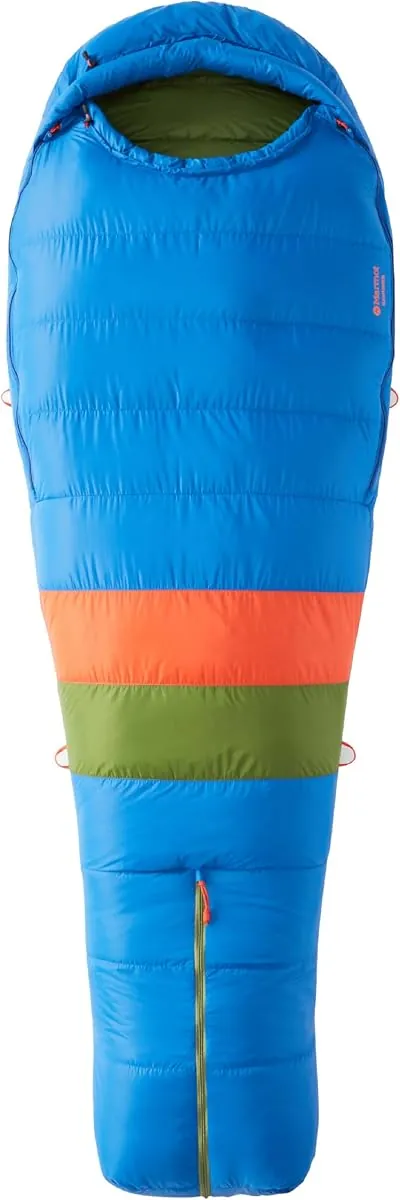
Quick verdict: The same 27°F ISO comfort rating as the NEMO Disco for less, with a real down-filled draft collar and a wraparound footbox. 650-fill down treated with Marmot's Down Defender for water resistance, about 2 lb 14 oz in the regular.

Why It Stands Out

  • Tested comfort 27.0°F and limit 15.0°F under ISO 23537
  • 650 fill power down treated with Down Defender for water resistance
  • A nautilus multi-baffle hood with a down-filled collar, which is unusual at this price
  • Dual side half-zips let you vent or open it out like a blanket

Pros

  • Matches the Disco's comfort rating for meaningfully less
  • A down-filled draft collar at a mid-range price, which is rare
  • 4.8 stars, the highest average of any bag here with more than ten ratings

Cons

  • The second-heaviest bag here, behind only the synthetic Trestles
  • 650 fill means a bigger packed size than the premium bags
  • Only sixteen ratings, and this listing goes in and out of stock

Best Situations

A first serious three-season backpacking bagCold-ish nights where a real draft collar earns its keepAnyone weighing the Disco but not sold on the spoon shape
Difficulty
Beginner
Price Range
$$$
Recommended #7
Kelty Cosmic Down 20
4.6 (107 Amazon ratings)

Kelty Cosmic Down 20

Quick verdict: The long-standing budget answer, and still the cheapest way into real down. 550-fill with a 31°F ISO comfort rating, at about 2 lb 7 oz in the regular. That's heavier than the premium bags and still light enough to backpack with, which is more than most cheap bags manage.

Why It Stands Out

  • 16.4 ounces of 550 fill power down in the regular size
  • ISO comfort 31°F and limit 21°F, published rather than claimed
  • About 2 lb 7 oz, roughly a pound lighter than the synthetic Trestles
  • Recycled fabrics with a PFAS-free DWR finish

Pros

  • The cheapest down bag here that's still light enough to carry
  • Published ISO figures at a price where many bags have none
  • Much lighter and smaller-packing than a synthetic at the same rating

Cons

  • 550 fill is the lowest on this page, so it's bulky in a pack
  • 31°F comfort means it isn't a near-freezing bag despite the 20 in its name
  • Its 107 ratings are the largest pool here, which reflects sales volume rather than quality

Best Situations

A first backpacking bag where the budget is the constraintSummer and early-fall trips at moderate elevationAnyone who wants down without a premium commitment
Difficulty
Beginner
Price Range
$$$
Recommended #8
Marmot Trestles 15
4.4 (85 Amazon ratings)

Marmot Trestles 15

Quick verdict: The only synthetic bag here, and the cheapest. Its EN comfort rating of 27.3°F puts it level with bags costing more than twice as much, and you pay for that in weight, at about 3 lb 6 oz. If you camp where nothing ever really dries out, that's the right trade.

Why It Stands Out

  • SpiraFil LT synthetic insulation keeps working when damp, unlike down
  • EN comfort 27.3°F and limit 16°F, on par with the mid-priced down bags here
  • The least expensive bag on this page by a clear margin
  • Synthetic fill needs far less care than down and tolerates rough treatment

Pros

  • Keeps insulating when wet, which no down bag here does
  • The cheapest route here to a sub-30°F comfort rating
  • Nothing to baby: an ordinary wash, and no loft-killing storage mistakes to make

Cons

  • The heaviest bag on this page, half a pound over the next one up
  • Packs significantly bigger than any of the down bags
  • Synthetic fill loses loft faster over the years than down does

Best Situations

Wet regions where a down bag is a liabilityA first bag where the price gap is the deciding factorLending to friends, or any use where the bag will get abused
Difficulty
Beginner
Price Range
$$$
Buying Guide

What to Check Before You Buy

The number in the name is the limit rating, and comfort is 10-15°F warmer

ISO 23537 is the shared test almost every serious brand now rates to, and it produces more than one number. The comfort rating is the temperature a 'standard' cold-sleeping woman can sleep through the night at. The limit rating is where a 'standard' warm-sleeping man is curled up and just holding on. There is also an extreme rating, which is a survival figure and should never influence a purchase.

Manufacturers overwhelmingly name bags after the limit number, because it's the more impressive one. That's why the Disco 15 is a 27°F comfort bag and the Cosmic Down 20 is a 31°F comfort bag. The practical rule: take the name, add roughly 12°F, and treat that as the coldest night you'd want to be out in it. Then account for yourself. How warm you sleep varies a lot from person to person, and your own history in a bag you've owned beats any chart.

Western Mountaineering is the odd one out here. They don't publish ISO figures at all and rate their bags in-house, which sounds like a red flag and isn't; reviewers have been calling their ratings conservative for years, which is the opposite of the industry's usual direction.

Fill power is warmth per ounce, and it's most of what the money buys

Fill power is the number of cubic inches one ounce of down expands to fill. Loftier down traps more air for less weight. That doesn't make 850-fill warmer than 550-fill ounce for ounce in some magical way; it means less of it gets you to the same warmth. Which is why this page's price ladder and its fill-power ladder are nearly the same list. The Kelty Cosmic Down 20 is 550-fill at the bottom of this page.

The Sawtooth and the Disco are 650-fill in the middle of it. The Therm-a-Rest Parsec is 800-fill, the Western Mountaineering UltraLite is 850+, and the Sea to Summit Spark Pro is 900+. Two things that ladder doesn't tell you. First, fill power means nothing without fill weight: a high fill-power bag with comparatively little down packed into it is a summer bag, which is exactly what the Hyperion 32F (900 fill) and Parsec 32F (800 fill) are.

Second, past about 850 you pay steeply for diminishing returns, so the honest sweet spot for most backpackers is 650 to 800 unless you're counting every gram or heading somewhere seriously cold.

Down or synthetic comes down to what happens when it gets wet

Down gives a lot more warmth per ounce and packs far smaller, which is why seven of the eight bags here are down. Its weakness is real though. Wet down clumps and loses its loft, and once it does it stops insulating almost completely; it also takes a long time to dry. Synthetic keeps a usable fraction of its warmth when damp and dries fast, at the cost of weight and pack size.

The comparison on this page is unusually clean, because both Marmots are the same brand at nearly the same rating. The synthetic Trestles 15 weighs about 3 lb 6 oz. The down Sawtooth 15 weighs about 2 lb 14 oz and packs much smaller. That's the trade, in one brand's own catalog. Hydrophobic treatments narrow the gap without closing it.

The Therm-a-Rest bags use Nikwax Hydrophobic Down, and NEMO and Sea to Summit both treat theirs, and where that helps most is the slow build-up of body moisture and condensation over several nights, which is how down bags usually get damp in practice. Synthetic makes the most sense if you camp somewhere that never really dries out, or if you're hard on your gear, or simply if the budget is tight, since it's much cheaper per degree.

Draft collars, hoods and zipper baffles are where the heat actually leaks

Two bags with the same rating and the same fill can perform very differently, and the reason is usually construction. The draft collar is the big one: an insulated tube that seals around your neck and stops the bag pumping warm air out every time you roll over. Cheaper bags leave it out or fit a token version, and in a cold bag it's the feature most worth paying for.

The Western Mountaineering UltraLite's collar wraps a full 360° and works with an insulated tube running the length of the zipper, which is a big part of why 16 ounces of down gets it to 20°F. Baffle construction matters too. Sewn-through baffles stitch the shell straight to the lining, which is light and cheap and leaves a cold line at every seam. Box baffles hold the down in three-dimensional chambers instead, with no cold spots.

The UltraLite goes further again with continuous baffles that run all the way around, so you can shake down toward the top on a cold night or toward the floor on a warm one. Then there's fit. A bag with too much room in it leaves dead air your body has to heat all night. A bag that's too snug presses the insulation flat against you, which produces cold spots of its own.

NEMO's spoon shape is the notable answer here, a cut that gives you room to bend instead of pinning you flat on your back.

Three-Season, One Bag For Everything
$250-$300

If you're buying one bag and you want it to cover spring through fall, this is the range to shop. The NEMO Disco 15 is the comfortable choice: 27°F ISO comfort, a spoon cut so side sleepers can bend, Thermo Gill vents for the nights that turn warm. Marmot's Sawtooth 15 tests to the same 27°F comfort, costs less and packs down a little smaller. Neither one is light. This is still the pair most people should be choosing between.

You Want To Buy Once
$549-$680

The top of the page splits two ways. The Western Mountaineering UltraLite 20 is 29 ounces of 850+ fill sewn in California, and people hang onto them for fifteen years. The Sea to Summit Spark Pro 30 goes lighter still on 900+ fill, but check the rating before you fall for the weight: 30°F is a summer number at a winter price. Neither is a first purchase.

First Bag, Tight Budget
$139-$190

The Kelty Cosmic Down 20 has been the budget answer for years, and it still is: real 550-fill down, a 31°F ISO comfort rating, and light enough to carry all day. Wet trips change the math. The synthetic Marmot Trestles 15 is cheaper still, holds nearly the same comfort rating and doesn't mind getting soaked. You carry about an extra pound for that.

Full Catalog

Compare All 8 Sleeping Bags

Want to browse beyond the ranked picks? Filter and sort the full sleeping bags listing below.

Best Backpacking Sleeping Bags of 2026 — All Products

8 Products
FAQ

Frequently Asked Questions

Work backwards from the coldest night you realistically expect, add margin, then remember the number on the label is the limit figure. For most three-season backpacking in the US, spring through fall and mountains included, a bag named 15°F or 20°F is the right answer. Those carry ISO comfort ratings around 27°F to 31°F, and shoulder-season nights in the mountains land near freezing far more often than the forecast suggests.

If you only camp in high summer at low elevation, a 30-32°F bag like the Spark Pro or the Hyperion is lighter and plenty. If you're heading out on snow, nothing on this page is the right tool; you want a 0°F bag or colder. One adjustment is worth making up front: if you know you sleep cold, take the next warmer bag instead of assuming you'll adapt, because the ISO 'standard sleeper' is a mannequin and you are not.

You can also add warmth cheaply after the fact. A liner is worth a few degrees, and clothing worn inside the bag counts. What you can't do is make an over-rated bag warmer than its fill allows.

Glossary

The words on this page

Every term this guide leans on has its own page with a plain answer at the top.

Browse the whole glossary →
How We Choose Products

How These Picks Are Chosen

Reader-supported and free of paid placements. Every pick is ranked on published specs and Amazon buyer ratings, not on who pays us.

Spec Research

Each pick is compared on published specs, materials, design, and category fit across the major brands.

Practical Fit

Rankings factor in how well each product matches common hiking, backpacking, and trail running needs, not just popularity.

Amazon Buyer Ratings

Star ratings and review volume from verified Amazon buyers are factored in to reflect real-world satisfaction.

Value

A pick earns its spot by delivering useful performance for the money, whether budget or premium.

A WARM BAG IS HALF OF IT.
THE GROUND IS THE OTHER HALF.

The bag only insulates the air above you. What you lie on does the rest, and a cheap pad is the most common reason a warm bag still sleeps cold. Pads are ranked separately.

Best Backpacking Sleeping Pads