Skip to content
Best Backpacking Quilts of 2026 — hiking gear
Backpacking Quilt Buying Guide

Best Backpacking Quilts of 2026

Six quilts you can actually buy on Amazon, ranked on how well each one seals to your pad. Review count didn't decide any of it, and neither did what the listing calls itself.

View the top picksUpdated 3 September 2026 · Ranked from specs & buyer reviews

If you buy through a link on this page we may earn a commission, at no extra cost to you. It never changes how anything is ranked. Prices were last checked on and move around; the figure on Amazon is the one that counts.

How to Choose

How to Choose a Backpacking Quilt

A quilt is a sleeping bag with the back cut off. That sounds like a gimmick until you think about what the back of a bag is doing: you're lying on it, the insulation under you is crushed flat, and crushed down insulates almost nothing. You carried it up the hill for nothing. Cut it off and a three-season sleep system loses a serious chunk of its weight and most of its packed volume.

What you're left with is a system with a hole in it, and the pad underneath you plugs the hole. Almost everyone buying a first quilt shops the quilt and forgets that. With a bag, a bad pad means a cold night. With a quilt, a bad pad means no bottom insulation at all, and a quilt that won't stay clipped means a draft down your ribs every time you roll over.

So pad attachment is the first thing ranked here, ahead of fill power. Then warmth for the weight, then how the footbox closes, then what happens at your neck. Review count sets none of it. The deepest rating pool in these search results belongs to a down camping blanket with no footbox and no straps at all, and it's not on this page, because it isn't a quilt.

The quilts that win most expert roundups aren't sold here. Enlightened Equipment, Katabatic, Hammock Gear, UGQ, Zpacks and Western Mountaineering all sell direct from their own sites, roughly $240 to $535 depending on temperature rating and fill. If you want the best quilt made, you order from one of them and you wait. Amazon carries a slice of this category and not the top of it.

That slice is a warm-weather shelf. Everything below is rated between 25F and 40F, and nothing on Amazon is a credible cold-weather quilt. Not one of these six has a draft collar, the tube of insulation that seals the gap at your shoulders. Cold ratings and draft collars are the two things the direct-order tier gives you and this one doesn't.

None of which makes these bad buys. A 25F or 30F quilt covers the ordinary three-season night across most of the country, and the six below have closed footboxes and pad-attachment systems, which is what separates a quilt from a blanket with a good listing. If your trips run colder than about 20F, or you already know you sleep cold, buy from a cottage maker and take the wait.

My dad and I haven't slept under all six of these, and I'd rather say so here than bury it. The order comes from the makers' published specs, what other reviewers have put in print, and Amazon buyer reviews. Every price, rating and review count was read on September 3, 2026, off one specific listing, and the listing we link is the one those numbers belong to.

Quick Picks

Top Three at a Glance

Short on time? Start with these top-rated backpacking quilts picks.

Best Overall
Featherstone Moondance 25 Down Top Quilt
4.6

Featherstone Moondance 25 Down Top Quilt

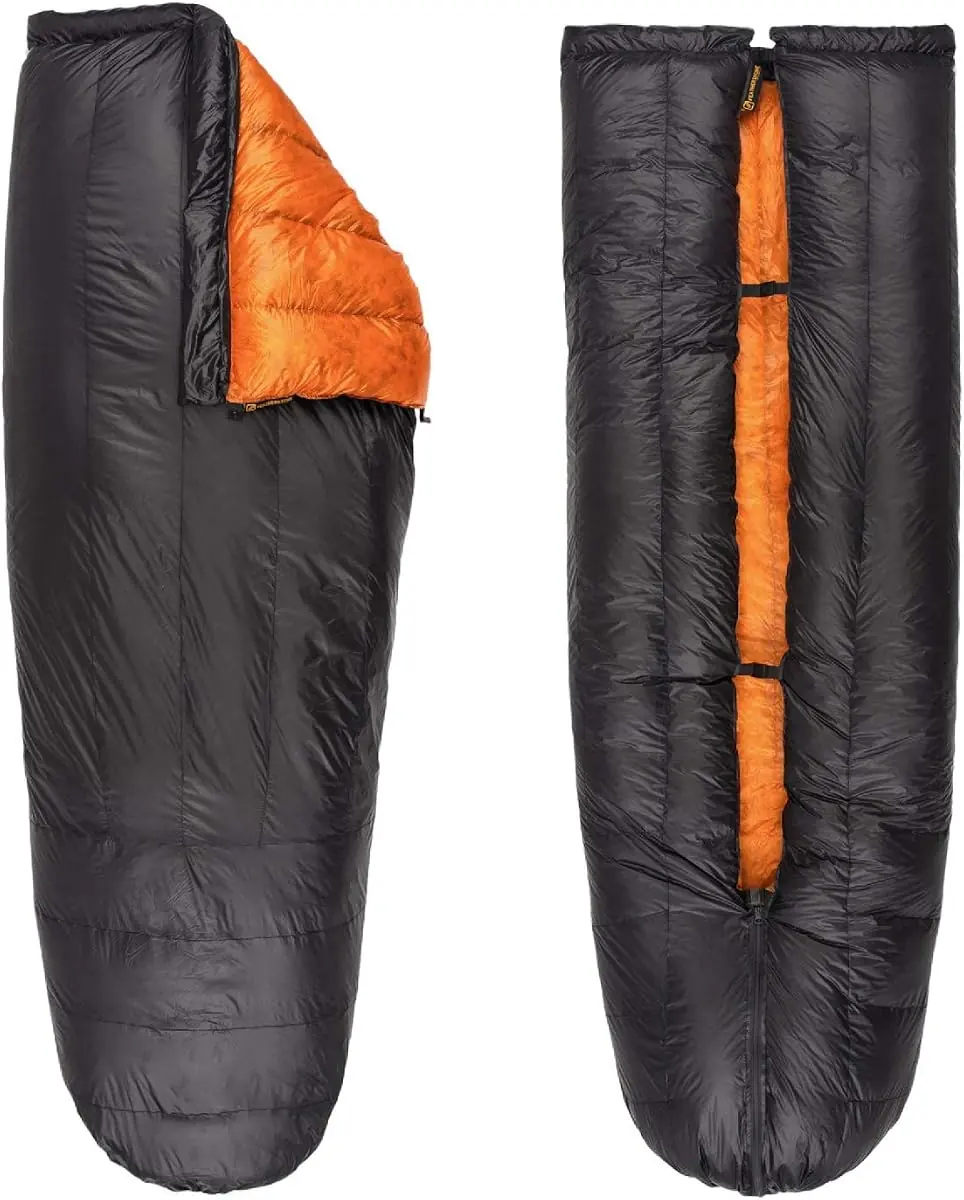
The most complete three-season quilt Amazon stocks, and the only one here with both a high fill power and a temperature rating somebody actually tested. Featherstone put 850-fill DownTek duck down in a calendered 10-denier shell and had the result ISO tested at 26F. That's a measured number, not a chosen one.It's also the only down quilt here with a rating pool deep enough to mean anything. The one thing it gets wrong is the pad straps, which are a separate purchase: a cheap fix, and an annoying one to find out about after the box lands on your porch.

Check Price
Best Pad Attachment
Therm-a-Rest Corus 32F Down Quilt, Regular
5

Therm-a-Rest Corus 32F Down Quilt, Regular

The best pad-attachment system on this page, from the company that also makes the pad. Therm-a-Rest's SynergyLink connectors give you more adjustment range than anything else here, and they come off, so the Corus works as a plain blanket when you want it to.Add an insulated, shaped footbox and a snap neck closure and you've got the closest thing to draft management Amazon sells in a quilt. The compromise is the fill: 650 is the lowest number on this page, so you carry more ounces for the warmth.

Check Price
Lightest
Sea to Summit Ember Ultralight Down Quilt, 35F Regular
4.9

Sea to Summit Ember Ultralight Down Quilt, 35F Regular

The best-built quilt here and the lightest, at a shade over a pound. Sea to Summit used 850-fill Ultra-Dry down in a 10-denier shell with a 7-denier lining and box baffles throughout, and it compresses into a sack small enough to lose in a pack.The catch is the rating. At 35F it's a two-season quilt, not a three-season one, and it's the most expensive thing here by a wide margin. Buy it if you want the lightest, smallest warm-weather quilt on the page. Don't buy it if you want the warmest.

Check Price
Comparison Table

Every Pick, Side by Side

Compare all 6 picks
Best Overall
Best For
One quilt to cover spring through fall
Difficulty
Beginner
Price
$$$
Best Pad Attachment
Best For
Sleepers who thrash, and anyone whose feet go cold first
Difficulty
Beginner
Price
$$$
Lightest
Best For
Summer trips where packed size is the constraint
Difficulty
Intermediate
Price
$$$
Recommended #4
Best For
The coldest published rating you can get on Amazon
Difficulty
Intermediate
Price
$$$
Recommended #5
Best For
Wet climates and warm nights, on a small budget
Difficulty
Beginner
Price
$$$
Recommended #6
Best For
A cheap way into a down quilt, with eyes open
Difficulty
Beginner
Price
$$$
The Lineup

6 Best Backpacking Quilts, Compared

Detailed picks with verdicts, strengths, tradeoffs, and the situations where each one makes the most sense.

Best Overall
Featherstone Moondance 25 Down Top Quilt
4.6 (349 Amazon ratings)

Featherstone Moondance 25 Down Top Quilt

Quick verdict: The most complete three-season quilt Amazon stocks, and the only one here with both a high fill power and a temperature rating somebody actually tested. Featherstone put 850-fill DownTek duck down in a calendered 10-denier shell and had the result ISO tested at 26F. That's a measured number, not a chosen one.

It's also the only down quilt here with a rating pool deep enough to mean anything. The one thing it gets wrong is the pad straps, which are a separate purchase: a cheap fix, and an annoying one to find out about after the box lands on your porch.

Why It Stands Out

  • 850 fill power puts it at the top of this shelf for warmth per ounce, and the DownTek treatment keeps the down lofting when the air is damp.
  • Featherstone says the quilt was ISO tested and rates it 26F. Only one other quilt here publishes a standards-based figure at all.
  • The 10-denier shell is calendered: the weave is pressed tight so down can't work its way through, and it skips the clammy coated feel of a cheaper fabric.
  • It doubles as a hammock top quilt or an underquilt, so one piece of insulation covers ground nights and hammock nights.

Pros

  • 850 fill power with a moisture-resistant treatment
  • Its 26F rating comes from an ISO test, not from the marketing copy
  • The deepest review pool of any down quilt here, by a wide margin
  • Works on the ground or in a hammock

Cons

  • Pad straps are sold separately, so that's a second order to place
  • No draft collar, so your neck is where the warmth goes
  • Duck down, not goose, which is normal at this fill power and price

Best Situations

Three-season backpacking anywhere the nights don't drop far below freezingA first quilt for somebody moving off a heavy synthetic bagHammock campers who want one insulation piece that covers both jobs
Difficulty
Beginner
Price Range
$$$
Best Pad Attachment
Therm-a-Rest Corus 32F Down Quilt, Regular
5 (1 Amazon ratings)

Therm-a-Rest Corus 32F Down Quilt, Regular

Quick verdict: The best pad-attachment system on this page, from the company that also makes the pad. Therm-a-Rest's SynergyLink connectors give you more adjustment range than anything else here, and they come off, so the Corus works as a plain blanket when you want it to.

Add an insulated, shaped footbox and a snap neck closure and you've got the closest thing to draft management Amazon sells in a quilt. The compromise is the fill: 650 is the lowest number on this page, so you carry more ounces for the warmth.

Why It Stands Out

  • SynergyLink connectors clip the quilt to any regular pad up to three inches thick and let you set the tension, so you aren't just cinching everything down and hoping.
  • The footbox is insulated and shaped, not a flat end cinched with a cord, and that difference shows up fast if cold feet are what wake you up.
  • Box-baffled construction stops the down migrating into cold spots. It's what the better sleeping bags use and what cheap quilts skip.
  • The 20-denier recycled ripstop shell is PFAS-free, and the down is Responsible Down Standard certified and PFC-free.

Pros

  • The most adjustable pad attachment here, and it comes off
  • Insulated, shaped footbox plus a snap neck closure
  • Full perimeter side baffles to block edge drafts
  • Usually sells below its list price

Cons

  • 650 fill power is the lowest on this page, so it's heavier for the warmth
  • The Amazon listing carries a single review, so there's no buyer consensus yet
  • Amazon's own product title says Long; the listing actually sells the Regular

Best Situations

Restless sleepers who wake up because the quilt has slid sidewaysAnyone already on a Therm-a-Rest pad who wants the two to work togetherCold-footed campers who care more about the foot end than the fill number
Difficulty
Beginner
Price Range
$$$
Lightest
Sea to Summit Ember Ultralight Down Quilt, 35F Regular
4.9 (15 Amazon ratings)

Sea to Summit Ember Ultralight Down Quilt, 35F Regular

Quick verdict: The best-built quilt here and the lightest, at a shade over a pound. Sea to Summit used 850-fill Ultra-Dry down in a 10-denier shell with a 7-denier lining and box baffles throughout, and it compresses into a sack small enough to lose in a pack.

The catch is the rating. At 35F it's a two-season quilt, not a three-season one, and it's the most expensive thing here by a wide margin. Buy it if you want the lightest, smallest warm-weather quilt on the page. Don't buy it if you want the warmest.

Why It Stands Out

  • The lightest quilt on this page, and Sea to Summit puts its compressed volume at 3.7 liters, small enough that packed size stops being the thing you plan around.
  • 850-fill Responsible Down Standard down treated with Ultra-Dry, so it keeps lofting when the air is humid.
  • Snap-on attachment straps are in the box, and a drawcord cinches the base into a foot pocket or opens it flat for hot nights.
  • Two Embers press-stud together into a double, which matters if you and a partner keep buying two of everything.

Pros

  • Lightest and most compressible quilt here
  • Box baffle construction with a 10-denier shell over a 7-denier lining
  • Pad straps and a compression sack included
  • Joins to a second Ember to make a two-person quilt

Cons

  • Rated 35F, so it's a summer quilt and not a three-season one
  • Comfortably the most expensive quilt on this page
  • Only 15 Amazon ratings, though they're the highest average on the page

Best Situations

Summer backpacking and fastpacking where every liter of pack space countsDesert and low-elevation trips where nights stay mildCouples who want two quilts that snap into one
Difficulty
Intermediate
Price Range
$$$
Recommended #4
WIND HARD Tiny PRO 800FP Down Quilt
4.8 (20 Amazon ratings)

WIND HARD Tiny PRO 800FP Down Quilt

Quick verdict: The best warmth per dollar on this page, and the only quilt besides the Featherstone that publishes a standards-based temperature rating. WIND HARD states an EN comfort of 28F and a lower limit of 18F. That 18F limit is the coldest published figure on this shelf, and it's why the quilt ranks where it does.

It's 800-fill ultra-dry down in a 10-denier nylon shell at about 29 ounces all in, with straps on the back for a pad and a drawcord at the foot. The reservation is scale: a small brand with a shallow review pool behind a good spec sheet.

Why It Stands Out

  • Publishes an EN comfort and limit pair, not a single number somebody picked. Almost nothing else on this shelf does.
  • 800 fill power ultra-dry down puts it within reach of the 850-fill quilts here at a noticeably lower price.
  • Straps on the back panel connect it to a pad, and a hidden center zipper lets it close up so you can wear it around camp.
  • WIND HARD lists the quilt at 780 grams, 835 grams packed, which holds up against quilts costing considerably more.

Pros

  • The coldest published comfort rating on this page
  • Published EN comfort and limit figures, not a marketing number
  • 800 fill power at a mid-shelf price
  • Center zip closes it up so you can wear it around camp

Cons

  • Only 20 Amazon ratings, so buyer consensus is thin
  • A small brand with no US service network behind it
  • Drawcord footbox, not a sewn or insulated one

Best Situations

Shoulder-season nights that dip close to freezingAnyone who wants an EN number and can't spend cottage-maker moneyCold camp evenings where wearing your insulation beats sitting in it
Difficulty
Intermediate
Price Range
$$$
Recommended #5
OneTigris Featherlite Ultralight Sleeping Quilt, 40F
4.6 (489 Amazon ratings)

OneTigris Featherlite Ultralight Sleeping Quilt, 40F

Quick verdict: The only synthetic quilt on this page, and the fill is the reason to buy it, not the price. Synthetic keeps most of its loft when it gets wet and dries fast, which is the trade you want if your trips are the kind where nothing gets a chance to dry out.

It's a warm-nights quilt at 41F, with a convertible footbox and a hollowed-out back panel your pad sits in. There are no pad straps, and that's the limitation that will actually bother you, more than the rating will.

Why It Stands Out

  • Synthetic fill holds warmth wet and dries quickly, so a leaky tent or three days of drizzle doesn't end your trip.
  • The convertible footbox cinches shut for cooler nights and opens flat as a blanket when it's warm.
  • A 20-denier ripstop shell over a 380-thread polyester lining is a more durable combination than the ultralight fabrics above it.
  • The deepest review pool of anything ranked here, which at least tells you the thing is consistent from box to box.

Pros

  • Keeps insulating when wet, unlike every other quilt on this page
  • By far the cheapest quilt here
  • Convertible footbox opens completely for hot nights
  • Tougher shell fabric than the ultralight down quilts

Cons

  • No pad straps, only a hollowed back panel, so it shifts if you move
  • 35 ounces for a 41F rating is heavy next to the down quilts here
  • Rated 41F, so it's a summer piece and nothing more

Best Situations

Rainy coastal and mountain trips where drying gear isn't an optionSummer overnights and shakedown tripsA first quilt to find out whether you like sleeping under one
Difficulty
Beginner
Price Range
$$$
Recommended #6
SENSORY4U Ultralight Top Quilt, 850 Down, 30F
4.2 (80 Amazon ratings)

SENSORY4U Ultralight Top Quilt, 850 Down, 30F

Quick verdict: A genuine quilt at a price the named brands don't reach. Amazon's own spec table lists both a foot box and straps for attaching it to a sleeping pad, and buyers rate it decently across a reasonable pool. At about 1.9 pounds with a stated comfort rating of 30F, the paper numbers are competitive.

It ranks last because not one of those numbers can be checked. The listing claims 850 fill and stops there: no Responsible Down Standard certification, no named down supplier, no ISO or EN test, and a seller whose other products are sensory toys.

Why It Stands Out

  • The spec table confirms the two things that make a quilt a quilt: a foot box, and straps for attaching to a sleeping pad.
  • A stated comfort rating of 30F with a lower limit of 20F, which, if it's accurate, covers most three-season nights.
  • 1.9 pounds is light for the money, and lighter than the synthetic quilt above it.
  • 80 ratings at a reasonable average is a deeper pool than three of the branded quilts on this page have.

Pros

  • The cheapest down quilt here by a wide margin
  • Pad straps and a footbox both in the box
  • Light for its stated rating

Cons

  • The 850 fill claim carries no certification and no independent test behind it
  • Sold by a marketplace seller with no outdoor track record
  • No published fill weight, so there's no way to sanity-check the temperature rating
  • No warranty or spare parts of the kind the branded makers offer

Best Situations

Trying a quilt without committing serious money to the formatSummer and mild three-season nights, where an optimistic rating costs you comfort and not safetyA spare quilt for a friend who wants to come along
Difficulty
Beginner
Price Range
$$$
Buying Guide

What to Check Before You Buy

Why does pad attachment decide more than anything else on a quilt?

A quilt has no back panel, so whatever holds its long edges down against your sleeping pad is the bottom half of the system. Get that wrong and every roll opens a gap along your ribs and dumps the warm air out of it. It's the difference between a quilt that works at its rating and one that feels ten degrees colder than the label says.

There are three arrangements on this page. The best is a full strap system: two or three elastic or webbing straps that pass under the pad and clip to anchor points on the quilt's edges, with cordlocks so you can set the tension. Therm-a-Rest's SynergyLink connectors are the most refined version here, which figures, because Therm-a-Rest also makes the pad they wrap around.

The second is straps in the box but simpler: Sea to Summit, WIND HARD and the SENSORY4U quilt all give you snap or loop attachments that do the job without much adjustment range. The third is no straps at all. The OneTigris relies on a hollowed-out back panel your pad sits in, which works if you barely move and fails if you don't.

Check the box contents before you order, because Featherstone sells the Moondance without straps and lists them as a separate accessory. They're cheap and it isn't a reason to skip the quilt, but it's a second thing to buy, and a quilt that shows up with no way to attach it is a quilt you can't really use on night one.

What does fill power actually tell you about a down quilt, and what does it not?

Fill power is how many cubic inches one ounce of down expands to fill, measured in a lab cylinder. An 850-fill quilt traps more air per ounce than a 650-fill one, so it hits the same warmth at lower weight and packs smaller. It's the best proxy for warmth per ounce you'll find on a down quilt, and it's printed on almost every listing.

There is a real test behind the number, which is worth knowing because it explains why the same down can score differently in two places. The International Down and Feather Bureau publishes the method as IDFB Testing Regulations Part 10-B: a weighed sample is steam conditioned, tipped into a cylinder, and a piston reads off the height it settles at. Change the conditioning step and the number moves.

What it doesn't tell you is how warm the quilt is. That depends on fill weight, the total ounces of down stuffed inside, and almost nobody publishes it. A 650-fill quilt with plenty of down beats an 850-fill quilt with too little, every time. The Therm-a-Rest Corus is the proof on this page: the lowest fill power here, attached to a perfectly respectable 32F rating.

Above roughly 850 you pay steeply for diminishing returns, part of why the cottage makers charge what they do for 950 and 1000 fill. On this shelf the practical range is 650 to 850, and the gap between the two ends is real but not dramatic once the quilts are rated to similar temperatures.

Two more things to look for on the listing: whether the down is treated to shed moisture, sold as hydrophobic or dry down, and whether it's Responsible Down Standard certified. Featherstone, Sea to Summit and Therm-a-Rest all say yes to both. The SENSORY4U listing says 850 fill and stops there, and that's why it ranks last.

How does the footbox closure change how a quilt sleeps?

The foot end closes in one of three ways here, and the choice decides how wide a temperature range the quilt is usable across. A closed box is warm and only warm. An opening one gives up a little heat to buy you hot nights.

A sewn footbox is permanently closed and fully insulated. It's the warmest and lightest option, because there's no zipper hardware and no seam to leak through, and it's what most cottage 20F quilts use. The cost is that the quilt stays a quilt forever. You can't open it flat as a blanket on a hot night.

A drawcord footbox cinches shut and opens all the way when you loosen it. That's the middle ground and the most common arrangement on this shelf: Sea to Summit, WIND HARD, OneTigris and the SENSORY4U quilt all use a version of it. It vents well and gives up a little warmth against a sewn box, because a cinched opening is still an opening.

A zippered footbox is the most adjustable and the heaviest, and none of the six here has one. The Corus takes a fourth route: an insulated, permanently shaped footbox that holds your feet in a warm pocket instead of under a flat sheet. If your feet are the part of you that goes cold first, that detail beats the fill power sitting above it.

Can you trust a quilt's temperature rating the way you can a sleeping bag's?

Mostly no. Sleeping bags have a standard: EN ISO 23537 puts a bag on a heated mannequin and produces both a comfort rating and a lower limit. Quilts sit largely outside it, because the test assumes a bag with a back and a hood, so most quilt makers just state a number they picked.

Two quilts here do better than that. Featherstone says the Moondance 25 was ISO tested and rates it 26F. WIND HARD publishes an EN pair for the Tiny PRO: comfort 28F, lower limit 18F. Those are the most trustworthy temperature claims on the page, and the ten-degree gap in that pair shows you exactly what the standard is for.

Read a comfort rating as the temperature where a typical sleeper stays comfortable, and a limit rating as the temperature where a warm sleeper survives the night curled up and not enjoying it. Buy on the comfort figure. Every other number on this page is a manufacturer's unverified claim, which isn't the same as a lie, but isn't a measurement either.

The other half of the answer is underneath you. A quilt's rating assumes a pad that insulates, and pad warmth is measured as R-value under ASTM F3340. Pair a 25F quilt with a summer pad and you'll have a cold night and blame the quilt. Match the pad to the season and the quilt gets to work at its label.

You want the most warmth for the least weight
850 fill power

Buy the highest fill power you can afford in the temperature rating you actually need. On this page that's the Featherstone Moondance 25 or the Sea to Summit Ember, both 850 fill and both treated to shed moisture.

The Featherstone is the better all-round pick because its rating covers more of the year. Take the Ember if packed size is the constraint: Sea to Summit puts it at 3.7 liters compressed, about a loaf of bread.

You sleep cold, or you roll over all night
Clip-on pad straps

If drafts are your problem, the attachment system matters more than the fill. Buy the Therm-a-Rest Corus. Its SynergyLink connectors give you more adjustment range than anything else here, and they come from the company that makes the pad they wrap.

The insulated footbox is the other half of that argument. A shaped pocket keeps your feet warmer than a flat sheet cinched around them, and cold feet are what wake most people up.

Your trips are wet, or you cannot dry gear out
Synthetic fill

Down stops working when it gets soaked and takes a long time to come back. Synthetic holds most of its loft wet and dries fast, so it's the right call for coastal rain and for anyone who can't count on a dry afternoon to air things out.

The OneTigris Featherlite is the only synthetic quilt on this page. At 41F it's a warm-nights quilt and not a three-season one, so treat it as a summer piece and plan your shoulder season separately.

Full Catalog

Compare All 6 Backpacking Quilts

Want to browse beyond the ranked picks? Filter and sort the full backpacking quilts listing below.

Best Backpacking Quilts of 2026 — All Products

6 Products
FAQ

Frequently Asked Questions

No. For the same amount of insulation a quilt is slightly cooler than a bag, because it has no hood and no sealed perimeter, so warm air escapes at the neck and along the edges. What it gives you is the same warmth for less weight and less packed volume, because it deletes the insulation you were flattening under you anyway.

The practical version: pick a quilt rated about five degrees colder than the bag you'd otherwise buy. You'll carry less for the same night's sleep, and you'll notice it most in the pack volume you get back.

Glossary

The words on this page

Every term this guide leans on has its own page with a plain answer at the top.

Browse the whole glossary →
How We Choose Products

How These Picks Are Chosen

Reader-supported and free of paid placements. Every pick is ranked on published specs and Amazon buyer ratings, not on who pays us.

Spec Research

Each pick is compared on published specs, materials, design, and category fit across the major brands.

Practical Fit

Rankings factor in how well each product matches common hiking, backpacking, and trail running needs, not just popularity.

Amazon Buyer Ratings

Star ratings and review volume from verified Amazon buyers are factored in to reflect real-world satisfaction.

Value

A pick earns its spot by delivering useful performance for the money, whether budget or premium.

NOT SURE A QUILT
IS THE RIGHT CALL AT ALL?

A quilt saves weight by deleting the part of a sleeping bag you were flattening anyway. That trade is great if you sleep warm and stay put, and miserable if you thrash all night. The Basecamp explainer walks through the decision without assuming you've already made it.

What is a backpacking quilt?