Skip to content
Best Insulated Hiking Jackets of 2026 — hiking gear
Insulated Jacket Buying Guide

Best Insulated Hiking Jackets of 2026

Nine puffies, down and synthetic. The warmth is the easy part. What separates them is how much of it you carry per ounce, and what happens the first time one gets wet.

View the top picksUpdated 19 August 2026 · Ranked from specs & buyer reviews

If you buy through a link on this page we may earn a commission, at no extra cost to you. It never changes how anything is ranked. Prices were last checked on and move around; the figure on Amazon is the one that counts.

How to Choose

How to Choose an Insulated Hiking Jacket

A puffy is the one piece of clothing you carry all day specifically so you can stop moving. Walking generates a startling amount of heat, which is why most people hike in a base layer in weather that would be miserable to stand around in. The jacket is for the other moments: ten minutes on a windy summit, or an hour at camp after the sun drops.

Sometimes just the first cold mile before your legs wake up. That's the job, and it's what should decide which one you buy. It also explains why the warmest jacket on this page isn't the one sitting at the top of it.

Two numbers do most of the work on the down side, and people mix them up constantly. Fill power measures the quality of the down, so 800-fill traps more air per gram than 700-fill. Fill weight is how much down actually went into the jacket. One is efficiency. The other is how warm you'll be, and it's the one nobody prints on a hangtag.

A 700-fill jacket stuffed with plenty of down beats an 800-fill jacket with a thin layer of it every time, which is exactly why the Rab Microlight Alpine at 700-fill is warmer than several 800-fill jackets that weigh less. Synthetic skips fill power altogether and is sold by weight per square meter, so the Arc'teryx Atom's Coreloft Compact 60 means 60 grams per square meter.

As for down versus synthetic, the short version is that down buys you more warmth per ounce and a smaller packed size, and synthetic keeps insulating when it's wet. Neither one is better. They just fail differently, and which failure you can live with is the next section.

So the nine below are ranked on how much warmth each one delivers for the weight you carry, then on what happens when it gets damp, then on whether the hood, cuffs and pockets still work with a pack on and a shell over the top. Price breaks ties. Amazon review count sets none of it, and this page shows why about as cleanly as any page could: the Marmot Guides Down Hoody has 1,259 ratings, more than the other eight jackets here put together, and it finishes eighth.

All that number tells you is how many Marmot has sold on Amazon. It says nothing about how well the jacket works. It's worth naming what isn't here, too. Several of the jackets the expert roundups rank at the very top don't sell on Amazon at all: Patagonia's Down Sweater Hoody is about $345, Montbell's Plasma 1000 around $369, the Feathered Friends Eos about $409, and REI's own Magma 850 roughly $259.

If you're spending this kind of money, price those direct before you commit. Every price and rating on this page belongs to one specific Amazon listing, checked on August 19, 2026. Jackets sell as size-and-color combinations, and every combination is a separate listing with its own price and its own stock, so your size will come out different, sometimes by a lot. Prices move week to week too, sometimes sharply, so treat the figure on each card as a snapshot from that date rather than a promise.

My dad and I haven't worn all nine of these through a winter, and I'm not going to pretend we have. The ranking comes from published specs, manufacturer fabric data and the testing other reviewers have put in print.

Quick Picks

Top Three at a Glance

Short on time? Start with these top-rated insulated jackets picks.

Best Overall
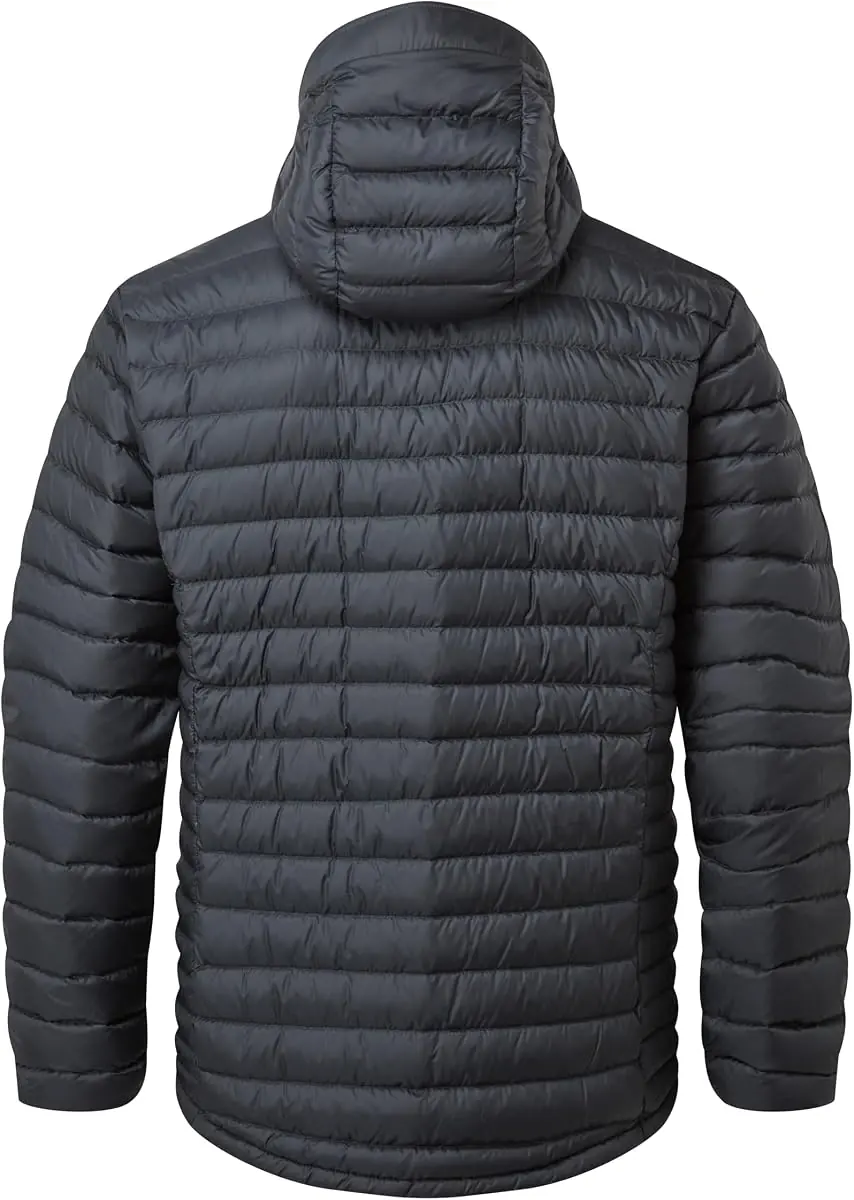
Rab Microlight Alpine Down Jacket
4.2

Rab Microlight Alpine Down Jacket

The one I'd recommend to almost anyone asking this question. It's 700-fill rather than 800, which sounds like a compromise until you notice it weighs 17 ounces to the Ghost Whisperer's 10.7. There's simply more down in it, so it's the warmer jacket. Hydrophobic treatment on the clusters, a Pertex Quantum shell that shrugs off flurries, zoned baffling, and a hood that actually adjusts.

Check Price
Lightest Warmth
Mountain Hardwear Ghost Whisperer/2 Hoody
4.3

Mountain Hardwear Ghost Whisperer/2 Hoody

The warmth-to-weight benchmark, and the reason ultralight hikers keep buying it. Treeline Review weighs it at 10.7 ounces for a men's, with 800-fill RDS down under a fully recycled face fabric, and it stuffs into a pocket about the size of a grapefruit. The catch is that the shell is gossamer-thin, and you'll be thinking about branches.

Check Price
Best Synthetic
Arc'teryx Atom Hoody
4.6

Arc'teryx Atom Hoody

The best synthetic here, and it solves a problem a puffy can't. Coreloft Compact 60 insulation with stretch fleece side panels means it dumps heat from under your arms instead of trapping it, so you can hike in it in the cold rather than putting it on and taking it off all day. Warm when damp, and the most versatile jacket on this page.

Check Price
Comparison Table

Every Pick, Side by Side

Compare all 9 picks
Best Overall
Best For
One puffy for three-season hiking
Difficulty
Beginner
Price
$$$
Lightest Warmth
Best For
Carrying warmth without noticing the weight
Difficulty
Intermediate
Price
$$$
Best Synthetic
Best For
Wearing while you move, not just when you stop
Difficulty
Intermediate
Price
$$$
Recommended #4
Best For
Down that copes with weather
Difficulty
Intermediate
Price
$$$
Recommended #5
Best For
Active insulation at a sane price
Difficulty
Intermediate
Price
$$$
Recommended #6
Best For
Genuinely cold weather and standing still in it
Difficulty
Advanced
Price
$$$
Recommended #7
Best For
Synthetic that packs like down
Difficulty
Beginner
Price
$$$
Recommended #8
Best For
Maximum warmth for the money
Difficulty
Beginner
Price
$$$
Recommended #9
Best For
The cheapest jacket here that is still a real one
Difficulty
Beginner
Price
$$$
The Lineup

9 Best Insulated Jackets, Compared

Detailed picks with verdicts, strengths, tradeoffs, and the situations where each one makes the most sense.

Best Overall
Rab Microlight Alpine Down Jacket
4.2 (475 Amazon ratings)

Rab Microlight Alpine Down Jacket

Quick verdict: The one I'd recommend to almost anyone asking this question. It's 700-fill rather than 800, which sounds like a compromise until you notice it weighs 17 ounces to the Ghost Whisperer's 10.7. There's simply more down in it, so it's the warmer jacket. Hydrophobic treatment on the clusters, a Pertex Quantum shell that shrugs off flurries, zoned baffling, and a hood that actually adjusts.

Why It Stands Out

  • 700-fill RDS recycled down with a hydrophobic finish, so damp costs you time rather than the whole jacket
  • 17 ounces against the Ghost Whisperer/2's 10.7, and that extra weight is down you get to feel
  • Pertex Quantum ripstop is water- and wind-resistant and tough enough to wear without babying it
  • 475 ratings at 4.2 stars, the deepest record on this page after the Marmot

Pros

  • Warmth you notice the moment you stop walking, and a fill-power number that undersells it
  • Zoned micro and nano baffling puts the insulation where it earns its weight
  • Durable enough to be the jacket you actually reach for, not the one you protect

Cons

  • 700-fill means it packs bigger than the 800-fill jackets here
  • 17 ounces is mid-pack weight, so gram counters will look elsewhere
  • 4.2 stars is the lowest average here, and it costs meaningfully more than the Ghost Whisperer/2

Best Situations

Three-season hiking where the jacket comes out at breaks and at campAnyone buying one puffy and wanting it to cover most of what they doCold, damp mornings where untreated down would start to sag
Difficulty
Beginner
Price Range
$$$
Lightest Warmth
Mountain Hardwear Ghost Whisperer/2 Hoody
4.3 (209 Amazon ratings)

Mountain Hardwear Ghost Whisperer/2 Hoody

Quick verdict: The warmth-to-weight benchmark, and the reason ultralight hikers keep buying it. Treeline Review weighs it at 10.7 ounces for a men's, with 800-fill RDS down under a fully recycled face fabric, and it stuffs into a pocket about the size of a grapefruit. The catch is that the shell is gossamer-thin, and you'll be thinking about branches.

Why It Stands Out

  • 800-fill RDS down at about 10.7 ounces is the best warmth-to-weight ratio on this page
  • The lowest published weight of any jacket here, more than six ounces under the Microlight
  • CleverHiker rates it their Best Ultralight down jacket
  • The largest discount on the page against its list price

Pros

  • Real down warmth at a weight you stop noticing in the pack
  • Completely recycled face fabric and RDS-certified down
  • Women's version comes in at 6.9 ounces, per Treeline Review

Cons

  • The ultralight face fabric snags and tears far more easily than the Microlight's
  • Less total down than the Microlight Alpine, so it's the cooler jacket at a standstill
  • Only two pockets, and no chest pocket to stay clear of a hipbelt

Best Situations

Thru-hiking and fastpacking where every ounce is argued overStuffing into a daypack for a summit you might not stop atAnyone already carrying a shell to protect it from wind and rain
Difficulty
Intermediate
Price Range
$$$
Best Synthetic
Arc'teryx Atom Hoody
4.6 (210 Amazon ratings)

Arc'teryx Atom Hoody

Quick verdict: The best synthetic here, and it solves a problem a puffy can't. Coreloft Compact 60 insulation with stretch fleece side panels means it dumps heat from under your arms instead of trapping it, so you can hike in it in the cold rather than putting it on and taking it off all day. Warm when damp, and the most versatile jacket on this page.

Why It Stands Out

  • Coreloft Compact 60 synthetic keeps insulating when damp, unlike every down jacket here
  • Stretch fleece side panels vent heat, which is what lets you keep it on while working
  • Tyono 20 face fabric balances wind resistance against air permeability, with an FC0 DWR finish
  • 4.6 stars across 210 ratings, the top average on this page and the deepest pool of the three jackets that reach it

Pros

  • Actually wearable while hiking, which no straight puffy here is
  • Doubles as a winter mid layer under a shell without bulking up
  • Handles damp, sweat and drizzle the way down can't

Cons

  • The second-highest price here, and Arc'teryx charges for the name
  • Less warm per ounce than the down jackets, which is the trade active insulation makes
  • Fleece side panels are the first thing to let wind through on an exposed ridge

Best Situations

Cold-weather hiking where you'd rather not stop to change layersWet regions where a down jacket is a liabilityShoulder-season days that swing between working hard and standing still
Difficulty
Intermediate
Price Range
$$$
Recommended #4
Outdoor Research Helium Down Hoodie
4.6 (38 Amazon ratings)

Outdoor Research Helium Down Hoodie

Quick verdict: The down jacket to pick if your worry is precipitation. 800-fill under a Pertex Shield Diamond Fuse face fabric, which is meaningfully more water-resistant than the shells on most puffies, plus reinforced panels across the shoulders where a pack does its damage. CleverHiker named it their Best Moisture Resistance pick, and at the 15.4 ounces Outdoor Research lists it isn't paying much for the protection.

Why It Stands Out

  • 800-fill down behind a Pertex Shield Diamond Fuse shell, one of the two most weather-resistant face fabrics on this page
  • Reinforced shoulder and upper-sleeve panels take the abrasion from pack straps
  • CleverHiker's Best Moisture Resistance pick among down jackets
  • 4.6 stars, level with the Atom Hoody and the Neutrino Pro at the top of this page

Pros

  • Down warmth you can take out in weather that would worry you in any other puffy here
  • Built to survive being worn under a loaded pack day after day
  • Zippered chest pocket sits well clear of a hipbelt

Cons

  • No discount off list, so you pay full freight
  • Only 38 ratings behind it so far
  • 15.4 ounces, so it's neither the lightest nor the warmest thing here

Best Situations

Hiking in the Pacific Northwest or anywhere drizzle is normalTrips where the puffy will be worn under a pack for hoursAnyone who wants down but has ruined a puffy in the rain before
Difficulty
Intermediate
Price Range
$$$
Recommended #5
Rab Xenair Alpine Light Jacket
4.5 (21 Amazon ratings)

Rab Xenair Alpine Light Jacket

Quick verdict: Most of what the Atom Hoody does, for meaningfully less. The PrimaLoft Gold Active+ is mapped across the jacket, so the warmth sits on your chest and the breathability sits where you overheat, all of it under a Pertex Quantum Air shell that's deliberately air-permeable. The alpine detailing beats the Arc'teryx too: a hood that works over a helmet, gusseted cuffs, and pockets set high enough to clear a harness or a hipbelt.

Why It Stands Out

  • Mapped insulation, with two PrimaLoft Gold Active+ densities placed by where you get cold
  • Pertex Quantum Air face fabric is wind- and water-resistant while still breathing
  • Harness-compatible zippered pockets sit above a loaded hipbelt
  • Undercuts the Arc'teryx Atom for a very similar job

Pros

  • Semi-elastic helmet-compatible hood with a rear adjustment tab
  • Elasticized cuff gussets seal better than plain elastic
  • Recycled Atmos ripstop lining, and the whole thing breathes well enough to hike in

Cons

  • Only 21 ratings, so there's not much of a durability record yet
  • An air-permeable shell is a cold shell in real wind without something over it
  • Alpine cut is trimmer than the Atom's, so check sizing over a mid layer

Best Situations

Cold-weather hiking where you keep moving and don't want to stop and changeScrambling and mountaineering where a helmet and harness are involvedAnyone who wanted the Atom Hoody and balked at the price
Difficulty
Intermediate
Price Range
$$$
Recommended #6
Rab Neutrino Pro Down Hoody
4.6 (73 Amazon ratings)

Rab Neutrino Pro Down Hoody

Quick verdict: The warmest jacket here by a wide margin, and the only one on the page that's really a winter piece. 800-fill with a Nikwax hydrophobic finish, a water-resistant Pertex Quantum Pro shell, and ripstop reinforcement over the shoulders. CleverHiker ranks it their best overall down jacket. It's also more warmth than ordinary three-season hiking will ever use, which is why it sits sixth rather than first.

Why It Stands Out

  • 800-fill RDS down with a Nikwax hydrophobic finish, the most warmth on this page by a clear margin
  • Pertex Quantum Pro shell is water-resistant, with ripstop panels over the shoulders and upper sleeves
  • Adjustable helmet-compatible hood and adjustable cuffs seal properly when it turns
  • CleverHiker's Best Overall pick in its down jacket ranking

Pros

  • Nothing else here is close on outright warmth
  • Built for weather, with reinforcement exactly where a pack wears a jacket out
  • Anatomical cut moves better than most jackets this warm

Cons

  • The highest price on the page
  • The heaviest jacket here, at the 1 lb 3.9 oz CleverHiker measured for a men's medium
  • Too warm to hike in above freezing, so it's a second jacket rather than a first

Best Situations

Winter hiking, snowshoeing and cold alpine campsStanding around at a belay or a summit in real coldAnyone who runs cold and has decided to solve it once
Difficulty
Advanced
Price Range
$$$
Recommended #7
Outdoor Research SuperStrand LT Hoodie
4.3 (13 Amazon ratings)

Outdoor Research SuperStrand LT Hoodie

Quick verdict: The synthetic that comes closest to feeling like a down jacket. VerticalX SuperStrand insulation is built to mimic down's lofted clusters rather than lie flat like a sheet batting, so it compresses far better than most synthetics, and the 12D ripstop shell keeps the whole thing light. Warm when damp, small in the pack, and it doesn't feel like you're wearing a sleeping bag.

Why It Stands Out

  • VerticalX SuperStrand insulation lofts like down while keeping synthetic's warm-when-damp behavior
  • 12D bluesign-approved ripstop shell and lining, so it packs down small for a synthetic
  • Left hand pocket doubles as a stuff sack, so there's no separate bag to lose
  • Low-profile elastic binding at the cuffs and hem seals without adding bulk

Pros

  • The most packable synthetic jacket on this page
  • Insulated hood on a jacket this light is unusual
  • Sits well under the Atom Hoody for a warmer, if less breathable, jacket

Cons

  • Only 13 ratings, the thinnest record on this page
  • A 12D shell is fragile, roughly on par with the Ghost Whisperer/2 for snagging
  • Hand wash only, per the listing, which is a nuisance on a jacket that gets grubby

Best Situations

Wet-climate hiking where you still want something that packs smallLayering under a hard shell in winterAnyone who wants synthetic's reliability without carrying a brick
Difficulty
Beginner
Price Range
$$$
Recommended #8
Marmot Guides Down Hoody
4.5 (1,259 Amazon ratings)

Marmot Guides Down Hoody

Quick verdict: The most warmth per dollar here, and the clearest proof on this page that a review count is not a ranking. It has 1,259 ratings and finishes eighth, because it's bulky, heavy for the warmth it gives, and cut more like a town jacket than a hiking one. As a warm, cheap, well-made puffy for camp and cold mornings, it's very hard to argue with at the price.

Why It Stands Out

  • 700-fill blend of 80% recycled down and 20% Ceiba flower fiber, and there's a real quantity of it in there
  • The second-cheapest jacket here, usually well below its list price, and among the warmest
  • Zippered chest and hand pockets, adjustable drawcord hood and elastic cuffs
  • PFAS-free finish on a 100% recycled polyester ripstop shell

Pros

  • Far more warmth than the price suggests
  • 1,259 ratings at 4.5 stars is the deepest feedback record on this page
  • Recycled shell, recycled down and no PFAS in the water-repellent finish

Cons

  • Bulky and heavy for its warmth, which is what drops it to eighth
  • Boxier, more urban cut than the technical jackets here
  • The whole case for it is the price, so check that it holds in your size

Best Situations

Camp warmth on a budget where pack space is not criticalCold-weather dog walks, tailgates and school runs as much as trailsA first puffy for someone not yet counting ounces
Difficulty
Beginner
Price Range
$$$
Recommended #9
The North Face ThermoBall Eco Hoodie 2.0
4.4 (42 Amazon ratings)

The North Face ThermoBall Eco Hoodie 2.0

Quick verdict: The entry point, and a perfectly honest one. ThermoBall Eco uses clustered synthetic fibers rather than sheet batting, so it behaves a little more like down than most cheap synthetics, over a fully recycled shell with a non-PFC DWR. It's the least efficient jacket here for warmth per ounce, and at the bottom of this page that's a fair thing to accept.

Why It Stands Out

  • ThermoBall Eco clustered synthetic insulation keeps working when damp
  • 100% recycled nylon shell with a non-PFC durable water-repellent finish
  • Dedicated stow pocket, so it packs into itself for the daypack
  • The lowest price on this page

Pros

  • Cheapest real insulated jacket in this lineup
  • Slim fit and plain looks mean it gets worn off the trail too
  • Synthetic fill, so an unexpected soaking is an inconvenience rather than a disaster

Cons

  • You carry more weight for less warmth than anything ranked above it
  • Fixed hood with no adjustment, unlike every jacket above it
  • 42 ratings, and the shell is thinner than the price band suggests

Best Situations

A first puffy for day hikes and shoulder-season walksTravel and everyday cold where a technical jacket is overkillAnyone who wants synthetic insurance without paying the top-tier price
Difficulty
Beginner
Price Range
$$$
Buying Guide

What to Check Before You Buy

Fill power is efficiency, fill weight is warmth

This is the most misread pair of numbers in outdoor gear, and shops encourage the confusion, because one of the two is easy to print on a hangtag and the other isn't. Fill power is a quality measurement. Take an ounce of down, put it in a cylinder under a weighted disc, and see how many cubic inches it fills. Better down has larger, springier clusters, so it traps more air for the same weight.

650 is serviceable, 800 is very good, and 1000 is exotic and priced accordingly. What fill power doesn't tell you is how warm the jacket is, because it says nothing about how much down went in. A jacket with 800-fill down and four ounces of it is warmer than a jacket with 800-fill down and two ounces of it, and both get sold as 800-fill.

Manufacturers very rarely publish fill weight, which is unhelpful and probably deliberate. The workable proxy is total garment weight against fill power: at the same fill power, a heavier jacket almost always has more down in it. That's the honest reason the Rab Microlight Alpine sits above the Mountain Hardwear Ghost Whisperer/2 here despite the lower fill power. Treeline Review weighs the Microlight at 17 ounces and the Ghost Whisperer/2 at 10.7.

The Rab is carrying appreciably more down, and if you're standing still in the cold you'll feel it. High fill power earns its price when weight and pack space are the constraint rather than the budget, which is why the ultralight crowd pays for 850 and 1000 and the rest of us mostly shouldn't.

Down or synthetic is a question about your weather, not your budget

Down wins on the numbers that look good in a comparison: more warmth per ounce, better compressibility, and a working life measured in decades if you look after it. It loses badly on one thing. Wet down clumps and the clusters collapse, so a soaked down jacket is a heavy wet rag that insulates almost not at all, and it can take a day or more to dry out in the field.

Synthetic insulation is polyester filament, which holds its structure when wet, keeps a usable fraction of its warmth and dries fast. The cost is weight and pack space for the same warmth, plus loft that degrades permanently over a few hard seasons as the fibers break down. So the question is how likely your jacket is to get wet.

Hike somewhere dry, or somewhere you can reliably keep a puffy in a dry bag and only pull it out in camp, and you should buy down and enjoy the weight saving. But if the rain where you hike is persistent rather than occasional, think the Pacific Northwest or the Appalachians in spring, synthetic is the less exciting answer that will still be working on day four.

Same goes if you're the kind of hiker who sweats heavily into a mid layer. Hydrophobic down muddies this a little. Brands treat the clusters with a water-repellent finish, which the Rab Microlight Alpine and the Neutrino Pro both use, and it buys real time before the loft goes. It buys time. It does not make down waterproof, and anyone who tells you otherwise is selling something.

Active insulation is a different tool from a puffy

There's a category split hiding in this page that trips people up. A classic puffy, the Ghost Whisperer/2 or the Neutrino Pro, is built to be as warm as possible for its weight and is barely breathable, because trapping still air is the entire mechanism. You put it on when you stop. Active insulation, which is what the Arc'teryx Atom Hoody and the Rab Xenair Alpine Light are, deliberately gives up some warmth to move moisture, so you can wear it while you're working without soaking it.

The Atom does this with a Tyono 20 face fabric chosen for air permeability, plus stretch fleece side panels that dump heat from under your arms. The Xenair uses Pertex Quantum Air over two densities of PrimaLoft Gold Active+, more insulation across the chest and less where you overheat. If you run cold, or you spend a lot of time moving slowly in low temperatures, an active-insulation piece can live on your body all day and replace the fleece-plus-puffy shuffle entirely.

If what you want is maximum warmth in the smallest package for standing around at camp, it's the wrong buy, and a straight down jacket is both warmer and lighter. Figure out which of those two problems you have before you read a single spec on this page.

The hood, the hem and where the pockets sit

Insulation is a commodity. Detailing isn't, and it's quietly where the money goes. Start with the hood, because an insulated one is worth a surprising amount of warmth: a lot of heat leaves through your head and neck, and a jacket whose hood cinches down properly around your face is warmer than a better-insulated jacket whose hood flops. Check whether it adjusts at all, whether it fits over a hat, and whether it moves when your head does.

The Neutrino Pro and the Xenair both use helmet-compatible hoods with real adjustment. The ThermoBall Eco's is fixed and simple. Next the hem, where a drawcord that seals the bottom stops the chimney effect of warm air escaping upward and cold air drawing in underneath. That matters more than people expect on a windy ridge. Cuffs after that, elastic being fine and adjustable being better.

Then the one nobody checks in a store: where the hand pockets sit. A backpack hipbelt lands directly across a normally-placed hand pocket, so on a jacket you'll wear under a loaded pack the pockets want to be high, or there needs to be a chest pocket that stays reachable. Last, check whether the jacket packs into one of its own pockets. The SuperStrand LT's left hand pocket doubles as its stuff sack, and the ThermoBall Eco has a dedicated stow pocket.

It's a small thing that means you never lose the sack, which is the sort of detail you only appreciate after you've lost one.

One Puffy for Three-Season Hiking
700-fill down

For most people this band is the whole decision. The Rab Microlight Alpine is still the pick here, with no sale price to soften it. Hydrophobic 700-fill, with a real weight of down behind the modest fill-power figure. The Mountain Hardwear Ghost Whisperer/2, usually discounted well below its list price, is cheaper for six fewer ounces and a shell you'll have to be careful with. If that gap decides it for you, take the Ghost Whisperer and don't feel short-changed.

Wet Country, or You Sweat Into Everything
Synthetic fill

Go synthetic and stop worrying about it. The Arc'teryx Atom Hoody is the one to beat, breathable enough to hike in and warm enough to stop in, though the Rab Xenair Alpine Light does much the same job for meaningfully less. For packing small, it's the Outdoor Research SuperStrand LT, which is the closest thing here to a down jacket in feel. And if the budget is firm, The North Face ThermoBall Eco Hoodie 2.0 is the cheapest jacket on this page that's still a real one.

Genuinely Cold, or Standing Still in It
800-fill down

Nothing else here is in the same conversation as the Rab Neutrino Pro. It's the only jacket on this page built for winter rather than stretched to cover it, with hydrophobic 800-fill, a shell that resists water instead of just shedding drizzle, and ripstop over the shoulders where a pack wears through lesser fabric. It's also the heaviest jacket here, and warmer than three-season hiking will ever ask for.

Buy it as a second jacket: for winter, for cold camps, or because you get cold standing around and have decided to fix that permanently.

Full Catalog

Compare All 9 Insulated Jackets

Want to browse beyond the ranked picks? Filter and sort the full insulated jackets listing below.

Best Insulated Hiking Jackets of 2026 — All Products

9 Products
FAQ

Frequently Asked Questions

Answer one question and it usually settles itself: how likely is this jacket to get soaked? Down gives you roughly a third more warmth per ounce and packs down far smaller, and it lasts decades if you keep it dry and store it uncompressed. Soak it and it's close to useless until it dries, which in the field can mean a day or more.

Synthetic keeps insulating when damp and dries fast, and you pay for that in weight and pack volume, with loft that degrades over a few hard seasons in a way down's doesn't. So: dry country, or a puffy that mostly lives in a dry bag and comes out at camp, buy down. Rain as the default rather than the exception, heavy sweating into your layers, or a jacket that'll be worn while you move rather than only when you stop, buy synthetic.

There's a middle path worth knowing about too. Hydrophobic down treats the clusters so they resist water and dry faster, and two jackets here use it, the Microlight Alpine and the Neutrino Pro. It's a real improvement, and it still isn't rainproof. Several brands also build hybrids, with down in the core and synthetic on the shoulders and hood where a pack and the weather hit hardest; the Arc'teryx Cerium is the best-known, at around $400, and it isn't sold on Amazon.

Glossary

The words on this page

Every term this guide leans on has its own page with a plain answer at the top.

Browse the whole glossary →
How We Choose Products

How These Picks Are Chosen

Reader-supported and free of paid placements. Every pick is ranked on published specs and Amazon buyer ratings, not on who pays us.

Spec Research

Each pick is compared on published specs, materials, design, and category fit across the major brands.

Practical Fit

Rankings factor in how well each product matches common hiking, backpacking, and trail running needs, not just popularity.

Amazon Buyer Ratings

Star ratings and review volume from verified Amazon buyers are factored in to reflect real-world satisfaction.

Value

A pick earns its spot by delivering useful performance for the money, whether budget or premium.

INSULATION IS THE MIDDLE LAYER.
SOMETHING HAS TO GO OVER IT.

A puffy stops working the moment rain gets into it, which is why it lives under a shell rather than instead of one. Waterproof jackets are ranked separately, on how well they vent once the rain starts.

Best Hiking Rain Jackets