Skip to content
Best Hiking Shoes of 2026 — hiking gear
Hiking Shoe Buying Guide

Best Hiking Shoes of 2026

Nine low-cut hiking shoes ranked on fit before anything else. Five are waterproof and four are vented, and picking the wrong half is how people end up with wet feet either way.

View the top picksUpdated 20 August 2026 · Ranked from specs & buyer reviews

If you buy through a link on this page we may earn a commission, at no extra cost to you. It never changes how anything is ranked. Prices were last checked on and move around; the figure on Amazon is the one that counts.

How to Choose

How to Choose a Hiking Shoe

A hiking shoe is a boot that stops below the ankle bone. Small change on paper, bigger one on the trail. Losing the cuff costs you the part that keeps grit and creek water out, and it buys you about half a pound off each foot plus a shoe that's comfortable the first time you lace it. What it doesn't cost you is support, and that's where most people get steered wrong.

Support in hiking footwear lives in the sole unit under your foot: a stiff shank and a dense midsole are what stop the shoe twisting when you land on a loose rock. A boot collar mostly limits how far your ankle travels after something has already gone wrong.

So the shoe-or-boot decision is a lot less dramatic than the outdoor industry makes it sound. Day hikes on maintained trail, in weather that isn't actively trying to soak you, are shoe territory for almost everybody. Boots start earning their weight when the ground goes loose and off-camber, or when there's snow and sustained mud underfoot. They earn it again when the pack gets heavy enough that your ankles are stabilizing a load and not just a body, though plenty of people carry thirty pounds in shoes and do fine.

Mostly this is a preference with a couple of real edge cases attached.

The nine below are ranked on fit and last shape first, then on whether the weather protection matches how the shoe will actually get used, then on how much support and underfoot protection it delivers, then on outsole rubber and lug depth. Price breaks what's left. Amazon review volume sets none of it, and if it did this page would be a silly one: the Merrell Moab 3 has 14,909 ratings and finishes second, while the HOKA Anacapa 2 Low GTX has 24 and still made the cut.

A footwear review count is mostly a measure of listing age. On money, this category tops out around $200, and La Sportiva's Spire GTX carries a list price right at that ceiling. It's on this page at a discount, not because it's a cheap shoe. Every rating and price here came off the linked listing on August 20, 2026, footwear is priced per color and size so another colorway of the same shoe can sit twenty dollars either side, and every link goes to a men's listing.

My dad and I haven't walked all nine of these up a mountain and I'm not going to pretend otherwise. The ranking comes from published specs, the design decisions each brand made, the testing other reviewers have put in print, and what Amazon buyers report after living with them.

Quick Picks

Top Three at a Glance

Short on time? Start with these top-rated hiking shoes picks.

Best Overall
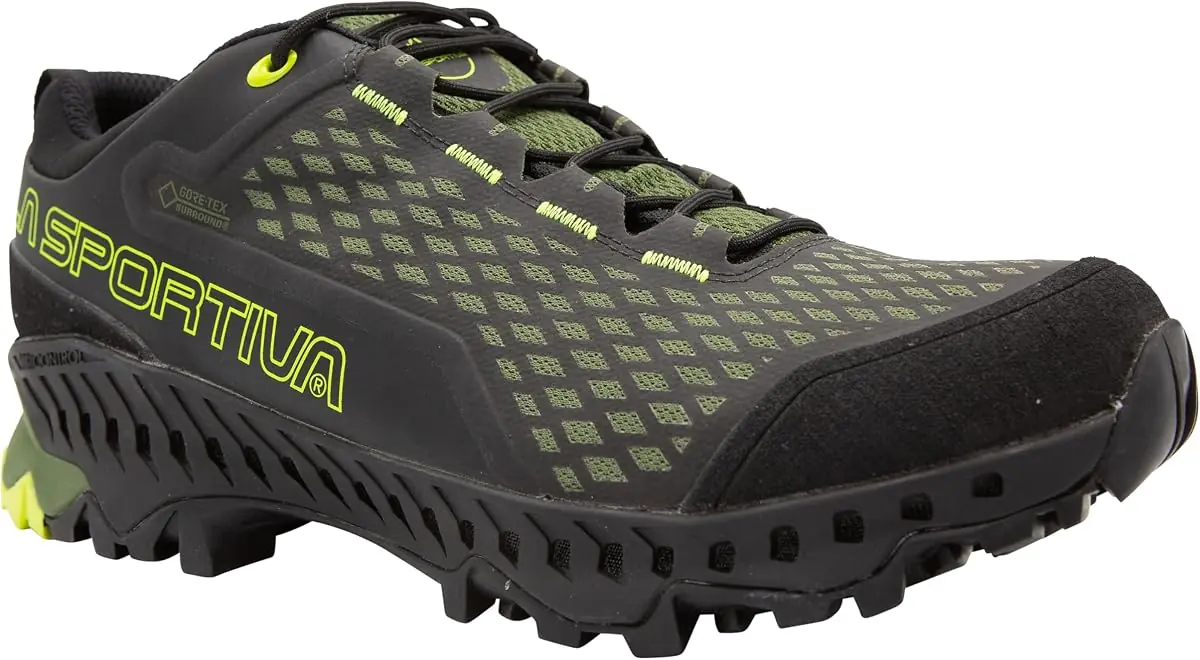
La Sportiva Men's Spire GTX Waterproof Hiking Shoes
4.4

La Sportiva Men's Spire GTX Waterproof Hiking Shoes

The best shoe here, and the one that fixes the waterproof category's central problem instead of just living with it. Gore-Tex Surround lets air out through the sides of the sole as well as through the upper, so it stays far cooler than a conventional membrane shoe. Add a Vibram outsole and a build that handles real mountain ground, and the only serious caveat left is the last, which is narrow.

Check Price
Best Value
Merrell Men's Moab 3 Hiking Shoe
4.6

Merrell Men's Moab 3 Hiking Shoe

The default hiking shoe, and there's a good reason everybody ends up recommending it. The last is forgiving enough to work on a very wide range of feet, this listing is the vented build rather than the waterproof one, and it's the cheapest way onto a shoe this good. It finishes second only because the Spire GTX is better in the conditions that actually break shoes.

Check Price
Best Under a Load
Oboz Men's Sawtooth X Low Hiking Shoe
4.4

Oboz Men's Sawtooth X Low Hiking Shoe

The stiffest, most supportive platform on this page, and the shoe to reach for when the pack gets heavy. Oboz ships a molded O FIT insole instead of the flat foam sheet almost every other brand includes, which is a real footbed most people would otherwise pay extra for. Firm, stable, built to last, and the least nimble thing here as a result.

Check Price
Comparison Table

Every Pick, Side by Side

Compare all 9 picks
Best Overall
Best For
Wet trails without the sweatbox
Difficulty
Intermediate
Price
$$$
Best Value
Best For
Almost anybody, on almost any trail
Difficulty
Beginner
Price
$$$
Best Under a Load
Best For
Carrying a real pack
Difficulty
Intermediate
Price
$$$
Best for Wide Feet
Best For
Wide feet and high-volume forefeet
Difficulty
Beginner
Price
$$$
Best Lightweight
Best For
Moving fast with a light pack
Difficulty
Intermediate
Price
$$$
Best Grip
Best For
Grip on technical, mixed terrain
Difficulty
Intermediate
Price
$$$
Most Durable
Best For
Durability, and looking normal off the trail
Difficulty
Intermediate
Price
$$$
Most Cushioned
Best For
Maximum cushioning on hard ground
Difficulty
Beginner
Price
$$$
Best Budget
Best For
Spending as little as possible without regretting it
Difficulty
Beginner
Price
$$$
The Lineup

9 Best Hiking Shoes, Compared

Detailed picks with verdicts, strengths, tradeoffs, and the situations where each one makes the most sense.

Best Overall
La Sportiva Men's Spire GTX Waterproof Hiking Shoes
4.4 (222 Amazon ratings)

La Sportiva Men's Spire GTX Waterproof Hiking Shoes

Quick verdict: The best shoe here, and the one that fixes the waterproof category's central problem instead of just living with it. Gore-Tex Surround lets air out through the sides of the sole as well as through the upper, so it stays far cooler than a conventional membrane shoe. Add a Vibram outsole and a build that handles real mountain ground, and the only serious caveat left is the last, which is narrow.

Why It Stands Out

  • Gore-Tex Surround construction, which is the reason this waterproof shoe doesn't cook your feet the way most of them do
  • Vibram outsole with a lug pattern aimed at mixed rock and dirt rather than soft ground alone
  • The biggest markdown on this page against a published list price
  • La Sportiva's mountain-running heritage shows in how precise it feels on uneven rock next to the softer shoes here
  • 4.4 stars from 222 ratings, a respectable pool for a technical shoe at this price

Pros

  • Best breathability of any waterproof shoe on this page, by a clear margin
  • Vibram rubber and a lug pattern that holds on wet rock
  • A technical mountain shoe for less than the KEEN or the HOKA here
  • Precise, stable feel on broken ground

Cons

  • Narrow last, so it's a poor starting point if your feet are wide
  • Firmer underfoot than the HOKA or the Merrells, which some people read as harsh
  • A technical shoe at heart, so more shoe than a groomed-trail day hiker needs

Best Situations

Wet, cool trails where you want a membrane but hate how membranes breatheRocky and uneven ground where precision matters more than cushioningShoulder season hiking in the mountains
Difficulty
Intermediate
Price Range
$$$
Best Value
Merrell Men's Moab 3 Hiking Shoe
4.6 (14,909 Amazon ratings)

Merrell Men's Moab 3 Hiking Shoe

Quick verdict: The default hiking shoe, and there's a good reason everybody ends up recommending it. The last is forgiving enough to work on a very wide range of feet, this listing is the vented build rather than the waterproof one, and it's the cheapest way onto a shoe this good. It finishes second only because the Spire GTX is better in the conditions that actually break shoes.

Why It Stands Out

  • 4.6 stars from 14,909 ratings, which is more feedback than the other eight shoes here have between them, and the highest average on the page
  • Vented suede and mesh upper, so it wets out fast and dries just as fast instead of staying soaked for a day
  • Vibram TC5+ outsole, which is more rubber than the price suggests
  • A roomy, forgiving last that also comes in wide sizes, which is why it fits so many people
  • Sells below its list price on this listing

Pros

  • Fits a wider range of foot shapes than anything else here
  • Excellent value, and the rating holds up across an enormous sample
  • Comfortable out of the box with no break-in
  • Vented build dries quickly after a stream crossing

Cons

  • Not waterproof; this listing is the vented version, so wet grass soaks it immediately
  • Heavier than it looks, and heavier than the Moab Speed 2 sitting next to it
  • Midsole is comfortable rather than supportive, so it isn't the pick for a heavy pack

Best Situations

First proper hiking shoe, where fit is uncertain and the odds should be stackedWarm and dry trails where breathability beats a membraneDay hiking on maintained trail with a light pack
Difficulty
Beginner
Price Range
$$$
Best Under a Load
Oboz Men's Sawtooth X Low Hiking Shoe
4.4 (341 Amazon ratings)

Oboz Men's Sawtooth X Low Hiking Shoe

Quick verdict: The stiffest, most supportive platform on this page, and the shoe to reach for when the pack gets heavy. Oboz ships a molded O FIT insole instead of the flat foam sheet almost every other brand includes, which is a real footbed most people would otherwise pay extra for. Firm, stable, built to last, and the least nimble thing here as a result.

Why It Stands Out

  • The molded O FIT insole is a contoured footbed rather than a die-cut foam sheet, and it's a big part of why this shoe holds up under load
  • Firm, supportive midsole with a nylon shank that resists twisting on uneven ground
  • Nubuck leather upper with substantial rubber protection at the toe
  • 4.4 stars from 341 ratings, a solid pool for a specialist brand at this price
  • Vented rather than membrane-lined in this version, so it drains and dries

Pros

  • Best support and stability here for a loaded pack
  • The included footbed outclasses what the category normally gives you
  • Durable build that should outlast the lighter shoes on this page
  • Medium-width last that suits more feet than the narrow European shoes here

Cons

  • Stiff and heavy compared with the fast shoes here
  • Not waterproof in this version, which Oboz sells separately as B-DRY
  • More shoe than a light day hiker needs, and it feels like it

Best Situations

Overnight and multi-day trips where the pack is doing real weightRough, off-camber ground where twisting is the concernHikers with a history of ankle or arch trouble who want a firm platform
Difficulty
Intermediate
Price Range
$$$
Best for Wide Feet
KEEN Men's Targhee 3 Low Height Waterproof Hiking Shoes
4.4 (8,642 Amazon ratings)

KEEN Men's Targhee 3 Low Height Waterproof Hiking Shoes

Quick verdict: The widest forefoot in mainstream hiking footwear, and for a lot of people that one fact ends the discussion. KEEN's toe box is why this shoe has 8,642 ratings behind it, and the membrane and leather upper make it a durable wet-weather option. On a narrow foot it'll feel sloppy, which is the flip side of the same design.

Why It Stands Out

  • KEEN's famously generous toe box, the most distinctive last on this page and the reason it sells the way it does
  • KEEN.DRY waterproof membrane paired with a leather upper, a combination that lasts
  • Substantial rubber toe protection, a KEEN signature that really does cut down stubbed-toe damage
  • 4.4 stars from 8,642 ratings, the second deepest pool here
  • Multi-directional lug pattern that handles mud better than the rock-oriented soles here

Pros

  • Roomiest forefoot of anything on this page
  • Waterproof and durable, with a leather upper that should go the distance
  • Excellent toe protection
  • Very deep and consistent review history

Cons

  • Sloppy on narrow feet; this is not a neutral fit
  • Heavier and warmer than the vented shoes here
  • It's priced above shoes that outperform it on technical ground

Best Situations

Wide or high-volume feet that get pinched by mainstream lastsWet, muddy trail where a membrane earns its keepHikers who repeatedly kick rocks and want the toe protected
Difficulty
Beginner
Price Range
$$$
Best Lightweight
Merrell Men's Moab Speed 2 Hiking Shoe
4.3 (128 Amazon ratings)

Merrell Men's Moab Speed 2 Hiking Shoe

Quick verdict: The Moab name on a much lighter, faster chassis. It's essentially a trail runner with hiking durability added: breathable mesh upper, a flexible plate underfoot, and far less weight than the standard Moab. Right shoe if your hiking looks like brisk day miles rather than loaded overnights, wrong one if you want something stiff under a load.

Why It Stands Out

  • Substantially lighter than the Moab 3 while keeping a hiking-grade outsole rather than a running one
  • Mesh upper that sheds heat and water fast
  • A flexible plate in the midsole adds underfoot protection without the stiffness of a full shank
  • 4.3 stars from 128 ratings on this listing
  • Sits mid-pack on price here for a shoe this light

Pros

  • Light and quick underfoot compared with everything above it here
  • Very breathable, and dries fast after water
  • Comfortable immediately, with no break-in at all

Cons

  • Soft and flexible under a heavy pack, where the plate protects your foot but won't stop the shoe folding
  • Mesh upper will wear out sooner than the leather shoes here
  • Vented, not waterproof, and priced above the Moab 3 that outsells it

Best Situations

Fast day hikes and long approaches with a light packHot weather where breathability is the priorityHikers crossing over from trail running who want more durability
Difficulty
Intermediate
Price Range
$$$
Best Grip
Salomon Men's X-Adventure Recon Gore-TEX Waterproof Hiking Shoes
4.3 (453 Amazon ratings)

Salomon Men's X-Adventure Recon Gore-TEX Waterproof Hiking Shoes

Quick verdict: Salomon's traction and chassis engineering in a low waterproof hiker. Contagrip rubber is among the most confident compounds on wet rock and root, and the stability chassis keeps the shoe from squirming when the ground is uneven. It's cut narrow, like most Salomon, which is the main thing that decides whether this shoe works for you.

Why It Stands Out

  • Contagrip outsole, Salomon's own compound and one of the more assured rubbers here on wet rock and root
  • Advanced Chassis construction, a stability structure between midsole and outsole that resists lateral roll
  • Gore-Tex membrane for genuinely wet conditions
  • 4.3 stars from 453 ratings, a healthy pool
  • Cheaper than the KEEN and the HOKA it competes with

Pros

  • Confident grip on wet, technical ground
  • Stable underfoot without being as stiff as the Oboz
  • Good price for a Gore-Tex shoe from this brand

Cons

  • Narrow through the midfoot, as Salomon generally is
  • Waterproof, so it breathes worse than the vented shoes here
  • Less well known than Salomon's X Ultra line, the brand's other low-cut hiker

Best Situations

Wet rock, roots and mixed technical terrainCool, damp climates where a membrane makes senseHikers with narrow feet who find mainstream lasts sloppy
Difficulty
Intermediate
Price Range
$$$
Most Durable
Danner Men's Trail 2650 Campo 3-Inch Outdoor Shoe
4.4 (163 Amazon ratings)

Danner Men's Trail 2650 Campo 3-Inch Outdoor Shoe

Quick verdict: The most durable-feeling shoe here and the only one you'd happily wear to dinner afterwards. Danner builds the Trail 2650 line around a leather and textile upper on a Vibram outsole, and the Campo is the version that leans furthest toward everyday wear without giving up the trail sole. You pay for that, and it's heavier than the numbers suggest.

Why It Stands Out

  • Leather and textile upper that should outlast every mesh shoe on this page
  • Vibram outsole, chosen for longevity as much as grip
  • The only shoe here that doesn't read as technical gear off the trail, which matters more to some buyers than they admit
  • 4.4 stars from 163 ratings
  • Vented rather than membrane-lined, so it dries instead of trapping water

Pros

  • Made to be worn hard for years rather than replaced every season
  • Vibram rubber under a well-made upper
  • Works as an everyday shoe as well as a trail shoe

Cons

  • The most expensive shoe here
  • Heavier than the mesh shoes, and it feels less nimble
  • Not waterproof, and the leather takes a while to dry once soaked

Best Situations

Travel where one pair of shoes has to cover trail and townDry and rocky trail that destroys soft uppersHikers who would rather buy once than replace every season
Difficulty
Intermediate
Price Range
$$$
Most Cushioned
HOKA Men's Anacapa 2 Low GTX Hiking Shoe
3.9 (24 Amazon ratings)

HOKA Men's Anacapa 2 Low GTX Hiking Shoe

Quick verdict: Much the most cushioned shoe here, and the answer if your problem is impact rather than instability. Thick compression-molded EVA, HOKA's rocker geometry and a Vibram Megagrip outsole make long days on hard-packed trail a lot easier on your joints. It ranks eighth on the strength of its Amazon feedback, not its design: 3.9 stars from 24 ratings is the thinnest and lowest-rated pool on this page.

Why It Stands Out

  • The deepest cushioning stack on this page, which is the whole reason to buy it
  • Vibram Megagrip outsole, the softer high-traction compound that holds wet rock well
  • Rocker geometry that helps the shoe roll through the stride, noticeable on long flat miles
  • Gore-Tex membrane and a nubuck leather upper, so it's durable as well as cushioned
  • The honest caveat: hardly anyone has reviewed this listing yet, so treat that average as thin information rather than a verdict

Pros

  • Unmatched cushioning here for long days on hard surfaces
  • Vibram Megagrip is among the best wet-rock rubber on this page
  • Durable nubuck upper despite the running-shoe silhouette

Cons

  • Lowest Amazon rating on this page, from much the smallest sample
  • The tall stack makes it less precise on uneven, technical ground
  • A lot to pay for a shoe with this little public feedback behind it

Best Situations

Long mileage on hard-packed trail, gravel and rockHikers with joint pain who want impact taken out of the dayAnyone who already knows they get on with HOKA's fit and geometry
Difficulty
Beginner
Price Range
$$$
Best Budget
Columbia Men's Crestwood Waterproof Hiking Shoes
4.4 (1,365 Amazon ratings)

Columbia Men's Crestwood Waterproof Hiking Shoes

Quick verdict: The budget pick, and a reasonable one. It's the cheapest shoe here by a clear margin and it's waterproof, which is unusual at this price. You feel where the money went, but 4.4 stars from 1,365 ratings says it holds together well enough that most buyers are happy. The right first pair for somebody unsure they'll hike often.

Why It Stands Out

  • The lowest price on this page, and a waterproof shoe at that
  • 4.4 stars from 1,365 ratings, a large enough sample to trust for consistency
  • Columbia's Techlite midsole and Omni-Grip rubber, which are real technologies rather than badge engineering
  • Suede and mesh upper with rubber toe protection
  • Low-risk way to find out whether hiking is going to stick before spending real money

Pros

  • Cheapest shoe here and still waterproof
  • Well-reviewed across a large sample
  • Light and comfortable straight away

Cons

  • Less support and less protection underfoot than anything ranked above it
  • Outsole rubber isn't in the same class as the Vibram and Contagrip shoes here
  • Waterproof at a price point where the membrane is usually the first thing to fail

Best Situations

A first pair, where the question is whether you'll hike enough to justify moreOccasional easy day hikes on maintained trailA spare pair to keep in the car
Difficulty
Beginner
Price Range
$$$
Buying Guide

What to Check Before You Buy

Fit is a shape, not a size

Every brand builds its shoes around a last, which is a foot-shaped mold, and the differences between those molds are bigger than the differences between the shoes themselves. It's why a shoe half the internet swears by can rub you raw in three miles, and why brand loyalty in footwear is more rational than it looks. Three measurements matter and only one of them is the number printed on the box.

Length wants about a thumb's width in front of your longest toe, because your foot slides forward on every descent and a black toenail is what happens when there's nowhere for it to go. Width is the one people ignore and then blame the shoe for. KEEN and Merrell run generously up front, Salomon and La Sportiva run noticeably narrower through the midfoot, and Oboz sits in between.

Volume, meaning the space over the top of your foot, decides whether the laces can hold your heel in place at all. Try shoes on at the end of the day when your feet have swollen, in the socks you hike in, and walk down something. If your heel lifts, a surgeon's knot at the top eyelets fixes more problems than a new pair usually will.

What the low cut actually costs you

Two things, and neither one is ankle support. The first is debris. A boot cuff keeps grit, sand and trail duff out; a low collar doesn't, so on sandy or scree-covered trail you'll be stopping to empty your shoes. A cheap pair of low gaiters solves that completely if it bothers you. The second is waterline.

A membrane in a low shoe only works up to the height of the collar, which is somewhere around your ankle bone, so a puddle deeper than that fills the shoe from the top and the membrane then does an excellent job of keeping the water in. That's an argument for vented shoes in wet, warm conditions and an argument for boots in deep water or snow.

What you get back is weight off the end of a long lever, which is the most tiring place to carry it, plus a shoe that flexes with your foot from day one instead of needing a break-in. Ankle stability is the third thing people expect to lose here, and it isn't really on the list. The evidence behind the boots-prevent-sprains claim is thinner than the marketing suggests.

Membrane or mesh, and be honest about your weather

A waterproof-breathable membrane is a thin layer between the lining and the upper that blocks liquid water while letting some vapor through. It works well in cool, wet conditions, and it always breathes worse than plain mesh, because a barrier that stops water going one way slows vapor going the other. On a hot dry trail that difference turns into a swamp by mid-afternoon.

Drying time is the other half of the trade: a mesh shoe soaks through in seconds and dries on your feet within an hour or two, while a wet membrane shoe can stay wet for a day. So match the shoe to where you hike instead of buying waterproof out of habit. Wet grass in the morning, drizzle, spring snowmelt and shoulder-season mud are all membrane weather.

Desert heat, high summer and any trail where you'll be fording streams anyway are not. La Sportiva's Spire GTX is the one shoe here that narrows the gap, with a Gore-Tex Surround construction that vents through the midsole sidewall instead of the upper alone. Five of the nine below are waterproof and four are vented, which is about the split this category deserves.

Underfoot: shank, plate, midsole and lug depth

This is where support actually lives, and it's worth knowing which piece does what. The shank or plate sits under the arch and resists twisting, which is what keeps a sharp rock from folding the shoe and your foot around it. Midsole foam density controls how much impact gets through and how stable the shoe feels loaded up; softer foam is comfortable and vague, firmer foam is supportive and less forgiving.

Stack height is how much of it there is, and more isn't automatically better, because a tall soft stack raises you further off the ground and makes the shoe less precise on uneven terrain. Then the outsole. Deep, widely spaced lugs bite into mud and shed it instead of packing solid; shallower, closer lugs put more rubber on dry rock, which is what you want on slabs.

Somewhere around 4 to 5mm is the useful middle for general hiking. Rubber compound is the quiet variable: softer compounds like Vibram Megagrip hold wet rock noticeably better and wear out faster, harder compounds last longer and get skittish when damp. Scale all of it to the load. A light day pack on groomed trail wants something you can flex in your hands. Thirty pounds on broken ground wants a platform that fights back.

One Pair to Start With
About $110

If you're buying one pair and you don't yet know what your feet like, the Merrell Moab 3 is the safe bet. Few feet fight it, and 14,909 ratings at 4.6 stars is the closest thing to proof this page has. It's the vented build, so it wets through in long grass and dries again while you walk. If your trails are reliably wet, take the La Sportiva Spire GTX instead. It's the better shoe and the bigger markdown, and it's the one I'd buy.

Wide Feet or a Roomy Toe Box
$110-$170

Broad feet have one obvious answer here and it's the KEEN Targhee 3 Low Waterproof, with more room across the toes than anything else on this page and 8,642 ratings from buyers who mostly came for exactly that. The Merrell Moab 3 is the cheaper route to a forgiving fit and comes in wide sizes too. What you should skip is the Salomon and the La Sportiva. Both are narrow shoes, and lacing has never once fixed a last that's the wrong shape.

Heavy Pack or Long Days on Hard Ground
$165-$174

The Oboz Sawtooth X Low is the stiffest, most stable thing here, and the one I'd put under an overnight pack. Oboz also puts a real contoured footbed in the box, which most brands leave you to buy separately. Sore joints are a different problem, and the HOKA Anacapa 2 Low GTX answers that one, with more foam under you than anything else on the page and a Vibram Megagrip outsole below it.

Read its Amazon average carefully though: it's the lowest here and it rests on the smallest handful of ratings on the page.

Full Catalog

Compare All 9 Hiking Shoes

Want to browse beyond the ranked picks? Filter and sort the full hiking shoes listing below.

Best Hiking Shoes of 2026 — All Products

9 Products
FAQ

Frequently Asked Questions

For most day hiking, shoes. Boots win in a narrower set of conditions than the marketing suggests: sustained snow and mud, scree and talus where the cuff keeps grit out of your socks, and loads that put your ankles to work holding up a pack rather than just you. Everything else on maintained trail in three-season weather goes better in something lighter and cooler that needs no break-in and won't rub hot spots while it softens up.

The ankle-support argument is the weakest part of the boot case, because the shank and midsole do that job and the cuff only limits how far your ankle rolls once it's already rolling. That isn't nothing, but it's much less than people assume, and long-distance hikers cover thousands of miles under full packs in trail shoes. Plenty of people end up owning both and choosing by forecast, which is the honest long-term answer.

If you're only buying one thing first, buy the shoe. There's a full mid-height boot guide on this site if you decide the other way.

Glossary

The words on this page

Every term this guide leans on has its own page with a plain answer at the top.

Browse the whole glossary →
How We Choose Products

How These Picks Are Chosen

Reader-supported and free of paid placements. Every pick is ranked on published specs and Amazon buyer ratings, not on who pays us.

Spec Research

Each pick is compared on published specs, materials, design, and category fit across the major brands.

Practical Fit

Rankings factor in how well each product matches common hiking, backpacking, and trail running needs, not just popularity.

Amazon Buyer Ratings

Star ratings and review volume from verified Amazon buyers are factored in to reflect real-world satisfaction.

Value

A pick earns its spot by delivering useful performance for the money, whether budget or premium.

LOW-CUT SORTED.
WHEN TO GO HIGHER.

Low-cut covers most day hiking. Sustained snow, scree and a pack heavy enough to lean on your ankles are still boot territory, and the mid-height guide picks up exactly where this one stops.

Best Hiking Boots