Skip to content
Best Hiking Base Layers of 2026 — hiking gear
Base Layer Buying Guide

Best Hiking Base Layers of 2026

Eight merino and synthetic tops ranked on how wide a temperature range each one covers. Fabric weight tells you more than the brand name does.

View the top picksUpdated 25 August 2026 · Ranked from specs & buyer reviews

If you buy through a link on this page we may earn a commission, at no extra cost to you. It never changes how anything is ranked. Prices were last checked on and move around; the figure on Amazon is the one that counts.

How to Choose

How to Choose a Hiking Base Layer

A base layer is the shirt against your skin, and its job is moving sweat off you fast enough that you never get cold in the first place. Keeping you warm is the job of whatever goes over it. That sounds like a technicality right up until the first time you sweat through a climb, stop at a windy col, and realize the wet shirt you're wearing is now refrigerating you. Pulling a fleece on doesn't fix it. It just traps air around a soaked shirt.

Fabric weight does most of the work here, and almost nobody puts it on the hangtag. It's measured in grams per square meter, gsm. A 150 gsm shirt and a 250 gsm shirt cut from the same wool aren't a good version and a better version of each other, they're summer and winter. Lightweight, call it 120 to 170 gsm, is what you want for moving hard in three-season conditions.

Midweight, 190 to 260 gsm, is for cold days, low output, and standing around. Shop by brand instead and you'll get this wrong about half the time. Three of the eight shirts below publish a gsm figure, and where a maker doesn't, its own weight class is the next best thing.

So the eight are ranked on how wide a temperature range each one covers for somebody walking under a loaded pack, then on whether the fabric survives having those straps on it, then on how it smells on day three. Price breaks ties. Amazon review count sets none of it, and here it would actively mislead: the shirt I'd tell you to buy first carries 21 ratings, the fewest here, while the one with the most, 793, finishes third.

A review count measures how much a listing has sold, not how good the shirt is. On price, the good news is that this category has a low ceiling.

The most expensive thing here is the Intraknit, and that really is the top of the market rather than a mid-point: the highly rated shirts that aren't on Amazon at all sit in the same band, not above it, with Patagonia's Capilene Midweight around $89, Arc'teryx's Rho and Ibex's Woolies Pro Tech around $115 to $120, Ortovox's 185 Rock'n'Wool at about $110 and Stio's Trax at around $129.

Buy those direct if they appeal. None of those well-reviewed alternatives cost more for being warmer or better made than what's below — the extra money there buys something more specialized instead. Then the caveats. My dad and I haven't worn all eight of these through a winter, and I'm not going to pretend we have; the ranking comes from published specs, the makers' own material data, and the testing other reviewers have put in print.

Every price and rating was read on August 25, 2026, from one specific listing, and because clothing sells as size-and-color combinations with a separate listing each, your size will land somewhere else, sometimes by $25. All eight links go to the men's listings.

Quick Picks

Top Three at a Glance

Short on time? Start with these top-rated hiking base layers picks.

Best Overall
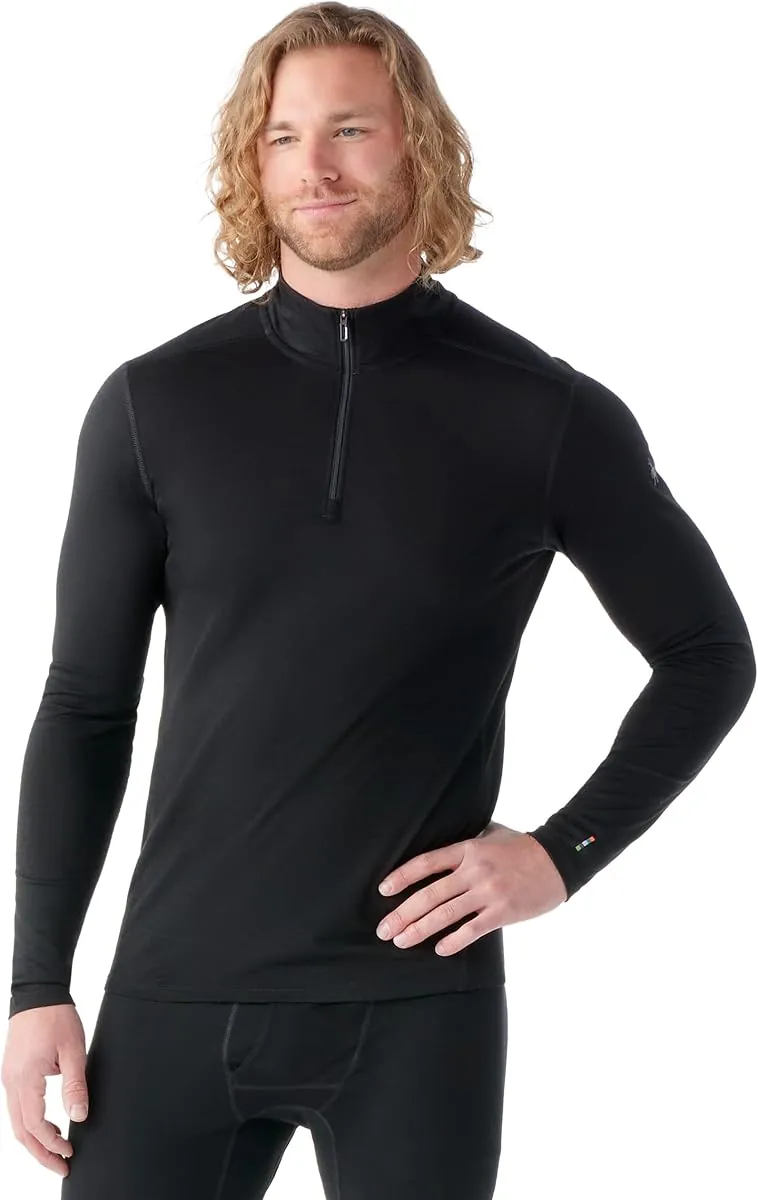
Smartwool Classic All-Season Merino Base Layer 1/4 Zip
4.5

Smartwool Classic All-Season Merino Base Layer 1/4 Zip

The shirt to buy if you're buying one. At 150 gsm it sits in the lightweight band that covers three-season hiking start to finish, and the nylon-cored yarn answers the one real objection to thin merino, which is that thin merino wears through where pack straps sit. This is the quarter-zip cut of the fabric Treeline Review makes its Best Overall and OutdoorGearLab makes a Best Buy in the crew version, and the zip is a genuine gain on a climb.

Check Price
Best Midweight Merino
Icebreaker Oasis Mid-Weight Merino Long Sleeve Crewe
4.7

Icebreaker Oasis Mid-Weight Merino Long Sleeve Crewe

The reference midweight, and an OutdoorGearLab Editors' Choice. At 200 gsm it's the lightest of the true midweights here, which makes it the most flexible of them: warm enough for winter days, not so warm that a hard climb cooks you the way 250 gsm will. If you want one cold-weather shirt and you want it in pure merino, this is it.

Check Price
Best for Deep Cold
Smartwool Classic Thermal Merino Base Layer Crew
4.6

Smartwool Classic Thermal Merino Base Layer Crew

250 gsm of 100% merino, and the shirt to reach for when the problem is real cold rather than variable weather. Treeline Review names it their extreme-cold pick, and OutdoorGearLab makes the Classic Thermal line an Editors' Choice in its quarter-zip cut. It's emphatically not a do-everything shirt: put it on for a hard climb in October and you'll sweat through it.

Check Price
Comparison Table

Every Pick, Side by Side

Compare all 8 picks
Best Overall
Best For
Almost everybody, almost all year
Difficulty
Beginner
Price
$$$
Best Midweight Merino
Best For
Cold-weather hiking in 100% merino
Difficulty
Beginner
Price
$$$
Best for Deep Cold
Best For
Deep cold and standing still
Difficulty
Intermediate
Price
$$$
Recommended #4
Best For
Sweating hard in the cold
Difficulty
Intermediate
Price
$$$
Recommended #5
Best For
Midweight merino without the premium
Difficulty
Beginner
Price
$$$
Recommended #6
Best For
High output in cold air
Difficulty
Advanced
Price
$$$
Recommended #7
Best For
Hot weather and sun cover
Difficulty
Intermediate
Price
$$$
Recommended #8
Best For
Running hot, on a budget
Difficulty
Beginner
Price
$$$
The Lineup

8 Best Hiking Base Layers, Compared

Detailed picks with verdicts, strengths, tradeoffs, and the situations where each one makes the most sense.

Best Overall
Smartwool Classic All-Season Merino Base Layer 1/4 Zip
4.5 (21 Amazon ratings)

Smartwool Classic All-Season Merino Base Layer 1/4 Zip

Quick verdict: The shirt to buy if you're buying one. At 150 gsm it sits in the lightweight band that covers three-season hiking start to finish, and the nylon-cored yarn answers the one real objection to thin merino, which is that thin merino wears through where pack straps sit. This is the quarter-zip cut of the fabric Treeline Review makes its Best Overall and OutdoorGearLab makes a Best Buy in the crew version, and the zip is a genuine gain on a climb.

Why It Stands Out

  • 150 gsm, squarely in the lightweight band that suits moving hard in three-season conditions
  • 88% merino over a 12% nylon core, a construction rather than a blend: the nylon filament runs inside the yarn and takes the abrasion while wool stays on the outside
  • That core is why a shirt this thin can live under a loaded pack, which is where thin 100% merino fails first
  • A quarter zip dumps heat on a climb without stopping to change layers, which a crew cannot do
  • Merino odor resistance, so it goes three or four days on a trip before it needs washing

Pros

  • The widest useful temperature range on this page
  • Far more abrasion-resistant than pure merino at the same weight
  • The zip makes one shirt work across a wider span of effort
  • Wool handles multi-day wear without becoming unpleasant

Cons

  • Only 21 ratings on the linked listing, the smallest pool on this page, because the quarter-zip cut is newer than the crew
  • A quarter zip sits higher at the neck than a crew, which you notice on a warm day
  • Lightweight is the wrong choice if you mostly hike in real cold and stand around a lot
  • Still merino, so it dries slower than any synthetic on this page

Best Situations

Three-season day hiking and backpackingThe first technical shirt somebody buysMulti-day trips where one shirt has to lastClimbs where you want to vent without stopping
Difficulty
Beginner
Price Range
$$$
Best Midweight Merino
Icebreaker Oasis Mid-Weight Merino Long Sleeve Crewe
4.7 (499 Amazon ratings)

Icebreaker Oasis Mid-Weight Merino Long Sleeve Crewe

Quick verdict: The reference midweight, and an OutdoorGearLab Editors' Choice. At 200 gsm it's the lightest of the true midweights here, which makes it the most flexible of them: warm enough for winter days, not so warm that a hard climb cooks you the way 250 gsm will. If you want one cold-weather shirt and you want it in pure merino, this is it.

Why It Stands Out

  • 200 gsm, the low end of the midweight band, which is the most flexible place to be in that band
  • 100% merino with nothing else in it, so the odor resistance and damp-warmth are at full strength
  • 4.7 stars across 499 ratings
  • An OutdoorGearLab Editors' Choice, as is the Smartwool Classic Thermal line
  • Crew neck layers cleanly under a mid layer without bunching at the collar

Pros

  • Versatile for a midweight, warm without being a one-season shirt
  • Nothing but wool against your skin, soft and slow to smell
  • Consistent ratings across a large pool

Cons

  • 100% merino with no nylon, so it'll pill and thin at the shoulders faster than a blended shirt
  • Near the top of the category on price
  • Too warm for summer, and slow to dry when you do soak it

Best Situations

Winter and shoulder-season hikingCold mornings and low-output daysMulti-day cold trips where one shirt does the whole weekAnybody who specifically wants pure merino against their skin
Difficulty
Beginner
Price Range
$$$
Best for Deep Cold
Smartwool Classic Thermal Merino Base Layer Crew
4.6 (793 Amazon ratings)

Smartwool Classic Thermal Merino Base Layer Crew

Quick verdict: 250 gsm of 100% merino, and the shirt to reach for when the problem is real cold rather than variable weather. Treeline Review names it their extreme-cold pick, and OutdoorGearLab makes the Classic Thermal line an Editors' Choice in its quarter-zip cut. It's emphatically not a do-everything shirt: put it on for a hard climb in October and you'll sweat through it.

Why It Stands Out

  • 250 gsm, the upper end of the midweight band, which is as warm as anything on this page
  • 100% merino, so it holds a useful part of its insulation even after you've sweated into it
  • 793 ratings at 4.6 stars, the largest review pool on this page
  • Treeline Review's Best Extreme Cold pick, and the Classic Thermal line is an OutdoorGearLab Editors' Choice in its quarter-zip cut
  • Classic crew cut that layers predictably under a fleece or a puffy

Pros

  • As warm as a base layer gets before it stops being a base layer
  • Wool warmth survives being damp, which matters most in cold
  • A long, well-established review record

Cons

  • The Minus33 below is also 100% merino midweight for noticeably less
  • Pure merino at this thickness is heavy, slow-drying and abrades under straps
  • Far too warm for three-season use, so it's a second shirt rather than a first

Best Situations

Winter hiking and snowshoeingCamp and cold eveningsLow-output days in genuinely cold airUnder a shell when the temperature never gets above freezing
Difficulty
Intermediate
Price Range
$$$
Recommended #4
Helly Hansen LIFA Merino Midweight Crew
4.6 (622 Amazon ratings)

Helly Hansen LIFA Merino Midweight Crew

Quick verdict: The most interesting construction here. Instead of blending fibers, Helly Hansen builds two distinct layers: hydrophobic LIFA polypropylene against your skin and merino on the outside. The polypropylene refuses to hold water, so it pushes sweat outward into the wool, which makes this the midweight to pick if the problem you have is soaking your shirt on climbs.

Why It Stands Out

  • Two-layer construction rather than a blend, with polypropylene next to skin and merino on the face
  • Polypropylene is essentially non-absorbent, so sweat is driven outward instead of sitting against you
  • The merino face still gives you the odor resistance a pure synthetic can't
  • 622 ratings at 4.6 stars
  • Undercuts both the Icebreaker Oasis and the Smartwool Classic Thermal

Pros

  • Handles high sweat output better than any pure merino shirt here
  • Gets most of merino's odor resistance without merino's clamminess
  • Cheaper than the pure-merino midweights it competes with

Cons

  • Helly Hansen doesn't publish a gsm figure for it, so weight class is all you have to go on
  • The two-layer build is thicker in the hand than its warmth suggests
  • Polypropylene next to skin feels slicker than wool, which not everybody likes

Best Situations

Hard climbing in cold weatherSki touring and winter uphill workAnybody who sweats through pure merinoCold, wet trips where drying speed matters
Difficulty
Intermediate
Price Range
$$$
Recommended #5
Minus33 Midweight 100% Merino Long Sleeve Crew
4.7 (188 Amazon ratings)

Minus33 Midweight 100% Merino Long Sleeve Crew

Quick verdict: 100% merino in a true midweight for well under the Smartwool Classic Thermal, and the best value on this page. Minus33 has been making merino in New Hampshire since long before the current wave of brands, and what you give up against Smartwool is refinement of cut and finish, not the wool.

Why It Stands Out

  • 100% merino in Minus33's midweight fabric, so it belongs in the same temperature band as shirts costing a third more
  • Undercuts the Smartwool Classic Thermal, which carries the highest published fabric weight here at 250 gsm
  • 4.7 stars across 188 ratings, matching the Icebreaker Oasis for the second-highest score here
  • Amazon's Choice on the linked listing, and the brand sells merino direct as its whole business rather than as one line

Pros

  • The cheapest route into genuine midweight merino here
  • Same odor resistance and damp-warmth behavior as the shirts costing more
  • Strong ratings across a reasonable pool

Cons

  • 100% merino with no nylon, so expect it to thin at the shoulders under pack straps
  • Minus33 publishes no gsm figure for it, so midweight is all you get to go on
  • Cut and finishing are a step behind Smartwool's and Icebreaker's
  • Midweight, so it's the wrong first shirt if you mostly hike in mild weather

Best Situations

Cold-weather hiking on a budgetA second, warmer shirt alongside a lightweight oneCamp and cold eveningsAnybody who wants merino without paying the top of this page for it
Difficulty
Beginner
Price Range
$$$
Recommended #6
Smartwool Intraknit Thermal Merino Base Layer Crew
4.4 (54 Amazon ratings)

Smartwool Intraknit Thermal Merino Base Layer Crew

Quick verdict: The most technical shirt here and the most expensive, with the knit itself doing the work: Smartwool maps different structures to different parts of the body, so it's denser where you need warmth and more open where you sweat. It's an OutdoorGearLab Top Pick and CleverHiker's breathable cold-weather pick. It sits sixth here because that specialization narrows the range of days it's the right answer on.

Why It Stands Out

  • Body-mapped knit, with ventilation and insulation zoned to different parts of the torso
  • A merino and synthetic blend rather than pure wool, so it's more durable than 100% merino at the same weight
  • An OutdoorGearLab Top Pick, and CleverHiker's breathable cold-weather pick
  • Designed around high aerobic output in cold conditions rather than general hiking

Pros

  • Vents where you actually sweat, which no flat-knit shirt can do
  • Blended construction survives pack straps better than pure merino
  • The knit itself is the feature here, not the fiber percentage

Cons

  • The most expensive shirt here
  • Only 54 ratings, and 4.4 stars is the joint-lowest score on this page
  • Body mapping is tuned to a narrow use case, so it's a poor first base layer

Best Situations

Ski touring and winter aerobic daysHard cold-weather climbsSomebody who already owns a general-purpose base layerCold days with big output swings
Difficulty
Advanced
Price Range
$$$
Recommended #7
Minus33 Woolverino Micro Weight Quarter Zip Sun Hoodie
4.8 (97 Amazon ratings)

Minus33 Woolverino Micro Weight Quarter Zip Sun Hoodie

Quick verdict: The odd one out here, and deliberately included: a hooded, quarter-zip micro weight shirt built for the opposite problem to everything else on this page. In real heat the base layer's second job, keeping the sun off your skin, becomes the more valuable one, and a hood plus long sleeves beats reapplying sunscreen all day. Note the rating is UPF 25, not the UPF 50 this category likes to imply.

Why It Stands Out

  • 84% merino, 12% nylon, 4% spandex, so it stretches and resists abrasion better than pure wool
  • Micro weight, Minus33's lightest fabric class, aimed at heat rather than cold
  • UPF 25 stated on the listing, meaning roughly 96% of UV blocked, under ASTM D6603 labeling and the AATCC 183 test method
  • Hood and quarter zip give you two ways to dump or add coverage without changing shirts
  • 4.8 stars, the highest score on this page

Pros

  • Sun coverage plus merino odor resistance in one garment
  • The nylon and spandex content makes it more durable than pure merino
  • Quarter zip and hood adjust across a wide range of heat

Cons

  • A lot to pay for a summer shirt
  • UPF 25 rather than UPF 50, which is real protection but not the maximum available
  • Only 97 ratings
  • Minus33 doesn't publish a gsm figure, so micro weight is all you get

Best Situations

Desert and high-altitude hikingSummer trips where sun is the main hazardAnybody who burns easily and is tired of sunscreenHot-weather backpacking where one shirt has to last days
Difficulty
Intermediate
Price Range
$$$
Recommended #8
Helly Hansen LIFA Active Stripe Crew
4.4 (533 Amazon ratings)

Helly Hansen LIFA Active Stripe Crew

Quick verdict: The cheapest shirt here, the fastest-drying, and the only wool-free one. LIFA is Helly Hansen's polypropylene, which absorbs almost no water, so this dries faster than anything else on this page and keeps working when it's soaked. It finishes eighth on this page's axis because it covers a narrow temperature range and holds odor, not because it's a bad shirt.

Why It Stands Out

  • Polypropylene, which is essentially non-absorbent, so it dries faster than any merino here
  • The lowest price on this page by a wide margin
  • 533 ratings at 4.4 stars, a large and consistent record
  • Keeps insulating when wet, because the fiber never holds the water in the first place
  • The obvious pick if wool makes you itch, since it's the one shirt here with none in it

Pros

  • Dries faster than anything else here
  • Cheapest way onto this page by a wide margin
  • A large and consistent review record
  • Entirely wool-free

Cons

  • Holds odor badly, so it's realistically a one-day shirt on a trip
  • Lightweight synthetic covers a narrower temperature range than merino does
  • Polypropylene feels slick rather than soft against skin
  • 4.4 stars, the joint-lowest score on this page

Best Situations

Day hikes where you go home and wash itHot, humid conditionsAnybody with a wool sensitivityA cheap spare to keep in the pack
Difficulty
Beginner
Price Range
$$$
Buying Guide

What to Check Before You Buy

What gsm should a hiking base layer be?

Buy 120 to 170 gsm if you hike more than you stand still, and 190 to 260 gsm if you mostly go out in real cold. Grams per square meter is the weight of a square meter of fabric, measured under the ASTM D3776 test method, and it's the most useful number in this category because it sets the temperature window a shirt can work in. The bands hold up across brands even though the figure rarely makes it onto the label.

Lightweight runs 120 to 170 gsm and is what you want for moving hard: summer, three-season hiking, anything where you're generating heat and the shirt's only job is to get sweat out to where it can evaporate. Midweight, 190 to 260 gsm, is a different garment, meant for cold air, low output, and the standing-around parts of a day. Heavyweight starts around 280 gsm and is expedition and static-cold territory, which is why nothing on this page reaches it.

The mistake almost everyone makes on their first purchase is buying midweight because it feels more substantial in the hand, then overheating in it on every climb they own it for. A base layer you sweat through is worse than a thinner one you don't. If you're buying one shirt and you hike more than you stand still, buy lightweight. The Smartwool Classic All-Season is 150 gsm, and that one shirt covers most of what most people do.

Buy midweight second, once you know you need it: the Icebreaker Oasis is 200 gsm and the Smartwool Classic Thermal is 250. Those three are the shirts here that publish a number. Where a maker doesn't, its own weight class is what the rest of this page uses, because a number nobody publishes isn't a number worth inventing.

Do you need merino's odor resistance or synthetic's drying speed?

Odor resistance and drying speed are the two properties that genuinely separate the fibers, and they point opposite ways: merino goes three or four days before it smells but dries slowly, while polyester and polypropylene dry fast and are unpleasant after one hard day. Match the fiber to how long you're out. Merino runs this category, and the reasons are mechanical rather than mystical.

The fiber is fine enough, generally under about 19.5 microns for anything sold to go next to skin, that it doesn't itch the way coarse wool does, and that fineness is the actual spec, which is why merino and 'wool' aren't interchangeable words here. It holds a useful fraction of its insulation when damp, which matters a lot in a garment whose whole life is being damp.

Its surface structure gives odor-causing bacteria a hard time, so a merino shirt can go three or four days on a trip before it becomes a social problem. And it moves moisture as vapor rather than purely by capillary wicking, so it feels less clammy than a wet synthetic. What merino is bad at is abrasion, and thin merino is worst of all, which is why the very lightest 100% wool shirts wear through at the shoulders.

Synthetics reverse every one of those trades. Polyester, and polypropylene like Helly Hansen's LIFA, dry substantially faster, cost less, and last far longer, and they hold odor badly enough that two days in one is unpleasant. Most of the good shirts here split the difference.

The Smartwool Classic All-Season is 88% merino over a 12% nylon core, which is a construction rather than a mixture: the nylon filament runs down the middle of the yarn taking the abrasion while wool sits on the outside doing the wool things, and it's the main reason a 150 gsm shirt can survive pack straps at all.

The Helly Hansen LIFA Merino goes further and builds two distinct layers, hydrophobic polypropylene against the skin and merino on the face, so the shirt pushes sweat away from you instead of holding it. Don't read the percentage as a quality score. A blended shirt is usually the more durable one.

How close should a base layer fit, and where should the seams sit?

Close enough to stay in contact with your skin across most of your torso, and with the shoulder seams kept off the top of your shoulder. Contact is the mechanism, and seam placement is the durability half, because the top of the shoulder is where a loaded strap grinds. Sweat moves into the fabric where the fabric is touching you, so a loose base layer leaves air gaps and leaves your skin damp, and damp skin under a shoulder strap is where chafe starts.

You want it close but not compressive, with enough stretch that reaching overhead doesn't pull the hem out of your waistband. If you're between sizes, size down for cold-weather use and up if you mostly hike in heat, where a fractionally looser shirt breathes better. Then look at the seams, because this is a garment worn under a load.

Flatlock seams lie flat instead of forming a ridge, and the ones worth checking are the shoulder and upper-arm seams, since that's exactly where a pack strap sits and grinds for eight hours. Raglan and offset shoulder constructions move the seam off the top of the shoulder entirely, which is why they keep turning up on shirts aimed at people carrying things. And pack straps are what actually kills base layers, more than washing or general wear: loaded webbing abrading the same two patches of thin knit, day after day.

That's the strongest practical argument for a nylon-blended shirt over a pure-wool one if you're a backpacker rather than a day hiker, and it's worth knowing before you buy a 100% merino shirt that will pill at the shoulders faster than a blended one will.

What wears out first, and what starts to smell?

Thin merino wears out first, and it goes at the shoulders where the pack straps sit. Synthetic is what starts to smell, usually after one hard day, where merino goes three or four. Those two facts pull in opposite directions, and choosing between them is most of the buying decision.

Odor resistance is merino's headline advantage and it holds up: a merino shirt goes three or four days on a trip where a polyester one goes one, which on a five-day trip is the difference between carrying one shirt and carrying two. That's a real weight saving, and it's why thru-hikers put up with merino's other flaws. Drying time runs the other way, and the gap isn't small.

A wet synthetic shirt dries far faster than a wet merino one, which matters most in sustained heat, where the shirt never gets a chance to dry on your back, and in multi-day wet weather, where nothing dries overnight and you'd rather start the morning in something that will. Then durability. A 100% merino shirt is a consumable in a way a synthetic isn't, and thin merino is the most consumable of all.

So the money is better spent matching the fiber to your trips than on buying the most expensive shirt here. Buy merino, or a merino-nylon blend, if you go out for multiple days at a time and can't wash anything. Buy synthetic if you hike hot, hike hard, hike mostly in day trips, or want a shirt you can be careless with.

And this is one of the few categories where the cheapest thing on the page is a legitimate purchase rather than a compromise: the LIFA Active Stripe, the cheapest shirt here, finishes last on temperature range and odor, and it's still the right shirt for somebody who runs hot and does laundry at home.

If you're buying one shirt
150 gsm merino

Buy lightweight merino and stop. The Smartwool Classic All-Season 1/4 Zip is 150 gsm with a nylon core that survives pack straps, and it covers three-season hiking better than anything else here; the zip lets you dump heat on a climb without stopping. If you want to spend less and you mostly hike in the cold half of the year, the Minus33 Midweight crew is the better buy. Both are shirts you'll still be wearing in four years.

If you hike in real cold
250 gsm merino

This is what midweight is for: winter days, camp, and anything where you stop more than you climb. The Smartwool Classic Thermal is 250 gsm of 100% merino and the reference point in that band. The Minus33 Midweight crew is also 100% merino and meaningfully cheaper, which makes it the best value on this page. The Icebreaker Oasis is the flexible one of the three, at 200 gsm.

If you run hot and sweat hard
Synthetic, fast-drying

If you soak a shirt on every climb, drying speed beats warmth-when-damp. The Helly Hansen LIFA Active Stripe is polypropylene, dries fastest here, and costs the least; the trade is that it'll smell by the end of day two. The LIFA Merino puts that same polypropylene against your skin with merino on the outside, which fixes the odor without giving up the moisture handling. The Intraknit is the technical answer, with the knit itself vented where you sweat.

Full Catalog

Compare All 8 Hiking Base Layers

Want to browse beyond the ranked picks? Filter and sort the full hiking base layers listing below.

FAQ

Frequently Asked Questions

Gsm is grams per square meter, the weight of the fabric itself, and it's the number that decides what temperature a base layer works at. The bands hold up across brands. Lightweight is roughly 120 to 170 gsm and suits moving hard in three-season conditions, which is most hiking most of the year. Midweight is roughly 190 to 260 gsm and is for cold air and low output, meaning winter, camp, and days with a lot of standing around.

Heavyweight starts around 280 gsm and is expedition territory that no shirt on this page reaches. If you're buying one shirt, buy lightweight, because the most common first-purchase mistake is buying midweight for its reassuring heft and then overheating in it on every climb. A shirt you've sweated through has failed at the only job it had, and expensive wool doesn't change that. If you already own a lightweight shirt and hike into real cold, midweight is the right second purchase rather than the right first one.

Be aware that plenty of makers never print a gsm figure anywhere, and use vaguer words like micro weight or thermal instead. Three of the eight shirts here publish a number; for the other five, the maker's own weight class is the best available guide.

Glossary

The words on this page

Every term this guide leans on has its own page with a plain answer at the top.

Browse the whole glossary →
How We Choose Products

How These Picks Are Chosen

Reader-supported and free of paid placements. Every pick is ranked on published specs and Amazon buyer ratings, not on who pays us.

Spec Research

Each pick is compared on published specs, materials, design, and category fit across the major brands.

Practical Fit

Rankings factor in how well each product matches common hiking, backpacking, and trail running needs, not just popularity.

Amazon Buyer Ratings

Star ratings and review volume from verified Amazon buyers are factored in to reflect real-world satisfaction.

Value

A pick earns its spot by delivering useful performance for the money, whether budget or premium.

BASE LAYER SORTED.
NOW THE WARM ONE.

A base layer only works as part of a system. Once the shirt against your skin is right, the layer that traps warm air over it is the next decision, and it's the one most people oversize.

Best Insulated Jackets