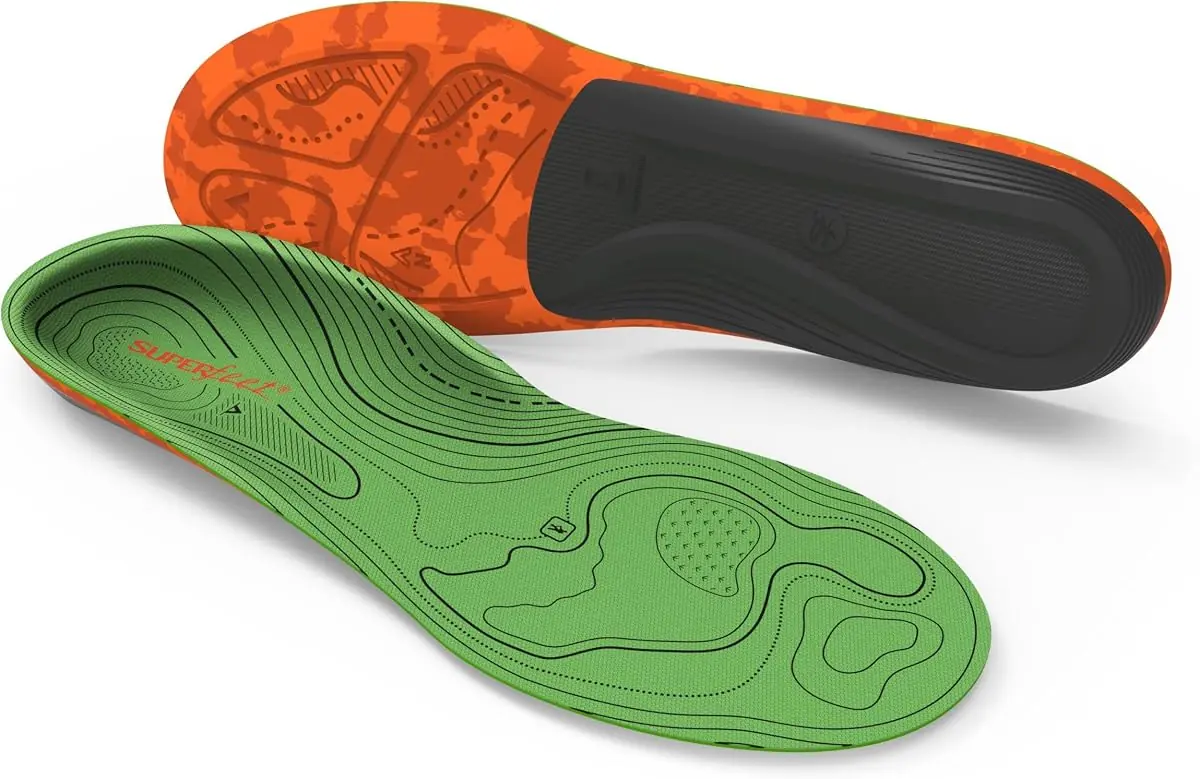
Pull the footbed out of almost any hiking boot and you'll find a thin slab of foam with a gentle bump where the arch should be. REI calls stock insoles in performance footwear typically inexpensive fillers, and that's fair. The boot company spent its money on the upper, the midsole and the outsole, and left the part your foot actually rests on as a placeholder.
An aftermarket insole replaces that placeholder with three things the stock one rarely has: a firm, shaped arch, a deep cup that holds the heel in place, and a volume chosen to fill the boot properly. Get those right and a boot that felt sloppy on descents, or left your arches aching by mile eight, can feel like a different boot. Get them wrong and you've made a good boot worse.
The eight below are ranked on support first, then heel hold, then how well the volume suits a hiking boot, then durability. Amazon review counts set none of it. The PowerStep Pinnacle has nearly a hundred times the ratings of the Currex HikePro and still ranks below it here, because it's a cushioned all-purpose orthotic and the HikePro is built for trail work. The top three are the insoles OutdoorGearLab and CleverHiker rate most highly between them.
On price, this category tops out lower than people expect. The serious hiking insoles cluster in a narrow band, and Tread Labs sits at the top of it, because you're paying for a guaranteed arch shell and a top cover you can replace. Past that you're into custom orthotics from a podiatrist. That's a medical fitting, and a different thing from a better insole.
My dad and I haven't worn or tested any of these eight, and I'm not going to pretend we have. The ranking comes from published specs, the makers' own fit guidance, Amazon buyer reviews, AI-assisted research, and what the expert testers above put in print.