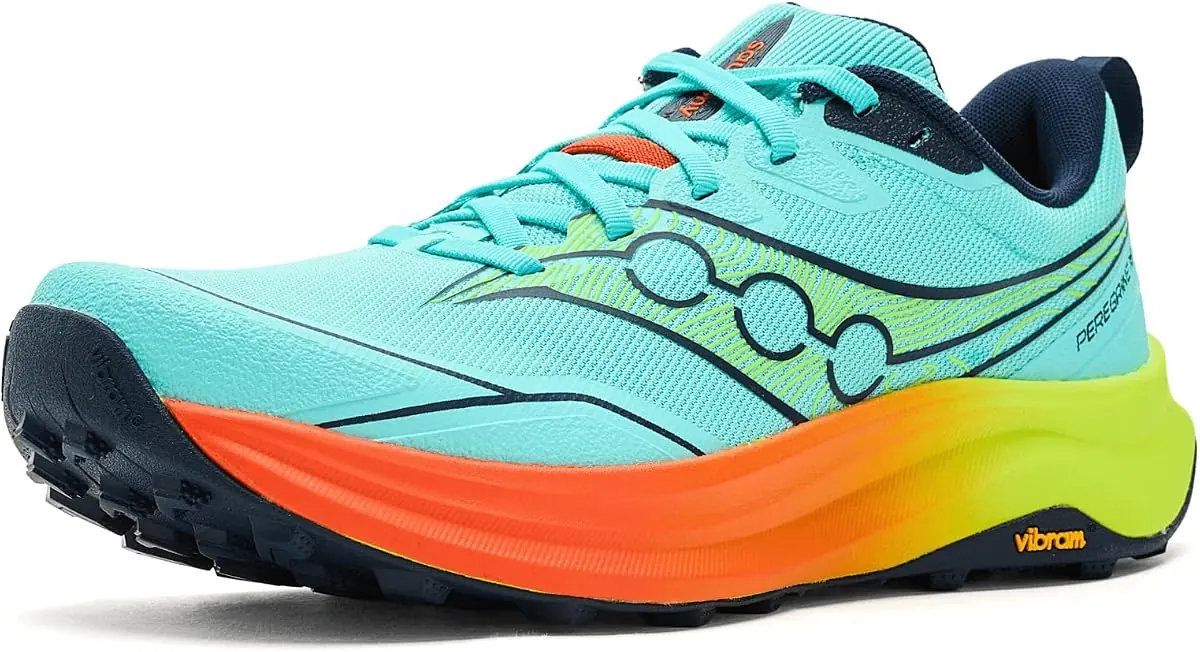
A trail shoe is a road shoe rebuilt around one problem: the ground is no longer flat, and you can't see what's coming. The outsole grows lugs, the rubber teeth that bite into dirt instead of skating over it. The midsole usually gains a rock plate, a thin stiff sheet that keeps a pointed stone from arriving directly under your arch.
The upper gets tougher too, with a toe cap for the root you'll eventually kick and a mesh that drains instead of holding a creek crossing for the next hour. That's the whole idea. If you already run, there's no new skill to pick up here. The shoe just stops fighting you the moment the surface turns.
Two things decide most of it. Start with lug depth, where the honest answer for most people is shallower than the photos suggest. Around 3 to 4mm handles hardpack, gravel, buffed singletrack and the dirt roads in between, and it still rolls quietly if part of your run is pavement. Go to 5mm and up only for real mud, wet grass and loose steep ground.
On dry rock those tall lugs are worse, because only the tips are touching the stone. The compound matters at least as much as the shape, though. Sticky rubber like Vibram Megagrip is what keeps you upright on a wet slab, and a deep lug in hard cheap rubber won't. The other decision is stack height, meaning how much foam sits between you and the ground.
Low stack gives you ground feel and stability on rubble. High stack hides the sharp stuff and saves your legs on long descents. There's no correct end to pick. It's a trade, and you make it on purpose.
The eight below are ordered on grip, protection, fit and how well the cushioning suits the distance each shoe is built for. Amazon review count didn't decide the order, and this category is the clearest case for why it shouldn't. The Peregrine 16 leads the page on 46 ratings while the Speedcross 6 sits third on 3,763. The 2026 models are new listings with thin pools, and a 2022 shoe has had four years to collect feedback.
Rank on that number and the oldest shoes win every time. Prices here cover the mainstream top of this category: six of these eight hold current awards from OutdoorGearLab's 2026 test. Above that sit race-specific shoes around $215 to $225, the Nnormal Kjerag 02 and La Sportiva Prodigio Pro, where the extra money buys a few ounces off each foot and a build aimed at one fast day rather than a season.
Neither is reliably sold on Amazon, so neither is here. Before you click, one thing worth knowing: every link on this page goes to a men's listing, because Amazon sells the women's version of each model as its own separate listing rather than a size option. Search the model name plus "women's" and you'll land on it. Ratings, review counts and prices came off the listings on August 4, 2026.
My dad and I haven't run a season in all eight of these. They're ranked from published specs, buyer feedback and the testing other people have put in print.