Skip to content
Best Hiking Sunglasses of 2026 — hiking gear
Hiking Sunglasses Buying Guide

Best Hiking Sunglasses of 2026

Eight pairs for sunny trails, high ridges and snowfields, from a goodr you won't mind losing to a Julbo lens that darkens on its own. Ranked on the lens first and the fit second.

View the top picksBy TomUpdated 21 October 2026 · Ranked from specs & buyer reviews
How to Choose

How to Choose Hiking Sunglasses

Every pair on this page is sold as blocking 100 percent of UVA and UVB (check the label on the one you buy), and so is almost any pair labeled UV400. The American Academy of Ophthalmology says that's the number that protects your eyes, and that neither a darker lens nor polarization adds to it. So UV protection settles nothing between these eight. What separates them is how dark the lens gets, whether it cuts glare, and how much light sneaks in around the edges.

That's the order this page ranks on. Lens category comes first, because a category 3 lens is right for a sunny trail and a category 4 is right for snow at altitude, and they aren't interchangeable. Glare comes second, because a polarized lens lets you see into a creek instead of at it. Side coverage is third, then fit, meaning whether the pair stays put when you sweat and look down at your feet. Amazon review counts decide nothing, and the pair with the most ratings by far finishes last.

The category's ceiling is around $300. Oakley's Radar EV Path is on this page right at that line, and Smith, Oakley, Costa and Julbo are all names that show up in the expert roundups. A few top-tier pairs sit above it and aren't here: Maui Jim's glass lenses and Smith's glass-lens Guide's Choice, which OutdoorGearLab lists at nearly $300 and pitches at guides and anglers. Glass is the clearest optic you can buy, and also the heaviest and easiest to break on a fall.

My dad and I haven't worn these, so read this as research, not field notes. The ranking comes from the makers' published lens specs, from what OutdoorGearLab and Outdoor Life found in testing, and from Amazon buyer reviews. Each rating was read on October 21, 2026, off one frame and lens combination. Sunglasses sell as a separate listing per color, so the rating and price on the one you pick may differ.

Quick Picks

Top Three at a Glance

Short on time? Start with these top-rated hiking sunglasses picks.

Best Overall
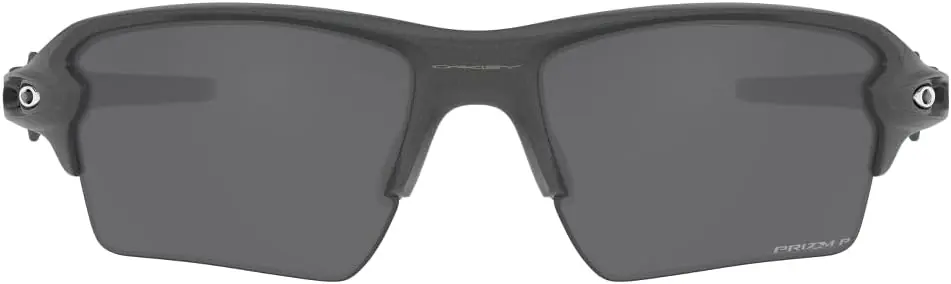
Oakley Flak 2.0 XL Prizm Polarized
4.6

Oakley Flak 2.0 XL Prizm Polarized

The Flak 2.0 XL does the most things right for an ordinary hiking day. It has a polarized category 3 Prizm lens that wraps around the side of your face, a light frame, and rubber at the nose and temples that grips harder as you sweat. The XL cuts the lens deeper than the standard Flak, so more of your view sits behind it.The lens also swaps out. Oakley sells clear, low-light and other Prizm tints for this frame, so a scratched lens or a gray forecast doesn't mean a new pair. The downsides are price and style: it looks like sports eyewear, and it is one of the most expensive pairs on the page.

Check Price
Best for Snow and Altitude
Julbo Shield M Reactiv 2-4 Polarized
4.1

Julbo Shield M Reactiv 2-4 Polarized

The Shield M is a mountain pair, and its lens is the reason it's here. Julbo's Reactiv 2-4 Polarized is photochromic, so it darkens from category 2 to category 4 in strong light, letting through between 20 and 5 percent of visible light, and it's polarized at both ends of that range. It also has an anti-fog coating on the inside.Add removable side shields and a weight of about 30 grams, and one pair covers the shaded approach and the snowfield at the top. It ranks below the Flak because it's a narrower tool. Its Amazon rating rests on a few dozen reviews, and the M is Julbo's medium fit, so larger faces should look at the full-size Shield.

Check Price
Best Everyday Pair
Smith Lowdown 2 XL ChromaPop Polarized
4.5

Smith Lowdown 2 XL ChromaPop Polarized

The Lowdown 2 XL is the pair to buy if you want one set of sunglasses for the trail and the rest of your life. Smith's ChromaPop polarized lens is category 3 in this black tint, and Smith says it's built to sharpen color contrast, which should help pick out roots and rocks in dappled light.The frame is a plain, flat-fronted style in Smith's bio-based Evolve material, with Megol nose pads that grip. That flat front is also why it ranks third. It doesn't wrap, so more light comes in at the sides than with the Flak, and at altitude you'll notice. The XL size is for larger faces; Smith sells a standard Lowdown 2 too.

Check Price
Comparison Table

Every Pick, Side by Side

Compare all 8 picks
Best Overall
Best For
All-day sun on most trails
Difficulty
Beginner
Price
$$$
Best for Snow and Altitude
Best For
Snow, altitude and mixed light
Difficulty
Intermediate
Price
$$$
Best Everyday Pair
Best For
Trail days and everything else
Difficulty
Beginner
Price
$$$
Recommended #4
Best For
Side shields on a budget
Difficulty
Beginner
Price
$$$
Recommended #5
Best For
Hikes along water
Difficulty
Beginner
Price
$$$
Recommended #6
Best For
Fast hiking and trail running
Difficulty
Intermediate
Price
$$$
Recommended #7
Best For
Glacier glasses on a budget
Difficulty
Intermediate
Price
$$$
Recommended #8
Best For
A cheap pair you won't miss
Difficulty
Beginner
Price
$$$

The specs, side by side

Published specs for every pick in Hiking Sunglasses.
ModelLensPolarizedLens categoryLight from the sides
Oakley Flak 2.0 XL Prizm PolarizedPrizm Black, swappableYes3Wraparound lens
Julbo Shield M Reactiv 2-4 PolarizedReactiv photochromic, anti-fogYes2 to 4, self-adjustingRemovable side shields
Smith Lowdown 2 XL ChromaPop PolarizedChromaPop BlackYes3Flat front, some gap
Sunski Treeline PolarizedSlateYes3Removable magnetic shields
Costa Del Mar Blackfin 580P580P gray, blue mirrorYesNot published for this lensWraparound frame
Oakley Radar EV Path Prizm PolarizedPrizm Deep Water, one-piece shieldYesNot published for this lensWraparound shield
Julbo Camino Spectron 4Spectron 4, silver mirrorNo4 (about 5% of light through)Removable side shields
goodr OG PolarizedChrome mirrorYesNot publishedFlat front, some gap
The Lineup

8 Best Hiking Sunglasses, Compared

Detailed picks with verdicts, strengths, tradeoffs, and the situations where each one makes the most sense.

Best Overall
Oakley Flak 2.0 XL Prizm Polarized
4.6 (194 Amazon ratings)

Oakley Flak 2.0 XL Prizm Polarized

Quick verdict: The Flak 2.0 XL does the most things right for an ordinary hiking day. It has a polarized category 3 Prizm lens that wraps around the side of your face, a light frame, and rubber at the nose and temples that grips harder as you sweat. The XL cuts the lens deeper than the standard Flak, so more of your view sits behind it.

The lens also swaps out. Oakley sells clear, low-light and other Prizm tints for this frame, so a scratched lens or a gray forecast doesn't mean a new pair. The downsides are price and style: it looks like sports eyewear, and it is one of the most expensive pairs on the page.

Why It Stands Out

  • Polarized category 3 Prizm lens
  • Wraparound lens with a deeper XL cut
  • Rubber nose pads and temples that grip when wet
  • Swappable lenses sold separately

Pros

  • Wraps far enough to block most side light
  • Stays put looking down and when sweaty
  • Lens swaps for gray days and repairs
  • Light frame for all-day wear

Cons

  • Near the top of the price range
  • Looks like sport eyewear off the trail
  • Retailers disagree on its weight, so check before you buy

Best Situations

Sunny day hikes and backpackingExposed ridges and desert trailsHikers who want one pair that does most things
Difficulty
Beginner
Price Range
$$$
Best for Snow and Altitude
Julbo Shield M Reactiv 2-4 Polarized
4.1 (61 Amazon ratings)

Julbo Shield M Reactiv 2-4 Polarized

Quick verdict: The Shield M is a mountain pair, and its lens is the reason it's here. Julbo's Reactiv 2-4 Polarized is photochromic, so it darkens from category 2 to category 4 in strong light, letting through between 20 and 5 percent of visible light, and it's polarized at both ends of that range. It also has an anti-fog coating on the inside.

Add removable side shields and a weight of about 30 grams, and one pair covers the shaded approach and the snowfield at the top. It ranks below the Flak because it's a narrower tool. Its Amazon rating rests on a few dozen reviews, and the M is Julbo's medium fit, so larger faces should look at the full-size Shield.

Why It Stands Out

  • Photochromic polarized lens, category 2 to 4
  • Removable side shields
  • About 30 grams
  • Inside anti-fog coating

Pros

  • One lens for forest, ridge and snow
  • Shields block light from the sides when it counts
  • Light for a mountain pair
  • Polarized at every darkness level

Cons

  • Lens takes a minute or two to change
  • Medium fit runs small on larger faces
  • Small Amazon review pool

Best Situations

Hiking above treelineSpring snow and winter mountain daysLong days that start in trees and end on rock
Difficulty
Intermediate
Price Range
$$$
Best Everyday Pair
Smith Lowdown 2 XL ChromaPop Polarized
4.5 (439 Amazon ratings)

Smith Lowdown 2 XL ChromaPop Polarized

Quick verdict: The Lowdown 2 XL is the pair to buy if you want one set of sunglasses for the trail and the rest of your life. Smith's ChromaPop polarized lens is category 3 in this black tint, and Smith says it's built to sharpen color contrast, which should help pick out roots and rocks in dappled light.

The frame is a plain, flat-fronted style in Smith's bio-based Evolve material, with Megol nose pads that grip. That flat front is also why it ranks third. It doesn't wrap, so more light comes in at the sides than with the Flak, and at altitude you'll notice. The XL size is for larger faces; Smith sells a standard Lowdown 2 too.

Why It Stands Out

  • Polarized ChromaPop lens, category 3
  • Everyday frame that doesn't look like gear
  • Grippy Megol nose pads
  • XL size for larger faces

Pros

  • High-contrast lens, per Smith
  • Wearable off the trail
  • 4.5 stars from over four hundred Amazon buyers

Cons

  • Flat front lets in side light
  • Not built for snow or altitude
  • XL fit is too big for smaller faces

Best Situations

Day hikes below treelineTravel days that include a hikeAnyone who wants one pair for everything
Difficulty
Beginner
Price Range
$$$
Recommended #4
Sunski Treeline Polarized
4.4 (27 Amazon ratings)

Sunski Treeline Polarized

Quick verdict: The Treeline is the cheapest way on this page to get a polarized lens and side shields in one pair. Sunski's shields attach with magnets and come off in a second, so you can wear the glasses as an everyday pair below treeline and clip the shields on when the trail opens up.

Sunski rates its lenses category 3 unless a lens is marked otherwise, and the slate lens linked here is a standard one. Sunski says the frame is recycled resin and carries its lifetime warranty. Its Amazon rating comes from only a couple dozen reviews, so treat it as a small signal. The round aviator shape won't suit every face.

Why It Stands Out

  • Polarized category 3 lens
  • Magnetic side shields that come off
  • Recycled frame, lifetime warranty
  • Well under the premium pairs in price

Pros

  • Shields go on and off in seconds
  • Doubles as an everyday pair
  • Lifetime warranty

Cons

  • Category 3 lens is not a glacier lens
  • Very small Amazon review pool
  • Aviator shape is a matter of taste

Best Situations

Alpine day hikes in summerLake and snowfield crossingsHikers who want shields without a sport look
Difficulty
Beginner
Price Range
$$$
Recommended #5
Costa Del Mar Blackfin 580P
4.7 (903 Amazon ratings)

Costa Del Mar Blackfin 580P

Quick verdict: Costa built the Blackfin for anglers, and it shows in the lens. The 580P is a polarized polycarbonate lens that Costa designs to cut glare off water. That makes it the pair to pick for lake loops, river trails, beach hikes and canyons with water in them.

The frame is a deep wraparound with rubber pads at the nose and temples, so it blocks a lot of side light too. It ranks fifth because it's a big, heavy-looking frame that some faces swim in, and Costa doesn't publish a lens category for this tint. Its Amazon review pool is the deepest on this page after the goodr's, at about nine hundred ratings.

Why It Stands Out

  • 580P polarized lens tuned for water glare
  • Deep wraparound frame
  • Rubber nose and temple pads

Pros

  • Built to cut water glare
  • Wraps far enough to block side light
  • Large, well-rated Amazon review pool

Cons

  • Big frame for smaller faces
  • No published lens category for this tint
  • Mirror coatings can scratch

Best Situations

Lake, river and coast trailsHiking with a fishing rodCanyons with creek crossings
Difficulty
Beginner
Price Range
$$$
Recommended #6
Oakley Radar EV Path Prizm Polarized
4.8 (331 Amazon ratings)

Oakley Radar EV Path Prizm Polarized

Quick verdict: The Radar EV Path is a one-piece shield lens built for running and cycling. EV stands for extended view: the lens rises higher above your eyes than most, so you can look up a climb with your head down. It's a light, open shield, which suits hard efforts when your face is hot.

That makes it the right pair for fast hikers and trail runners, and a strange one for a slow summer stroll. It ranks sixth because the linked Prizm Deep Water lens is tuned for water and the shape is pure sport. It's also the most expensive pair on this page. If you run the trails you hike, though, it's the one built for that.

Why It Stands Out

  • Tall one-piece shield for an upward view
  • Open shield for hard efforts
  • Polarized Prizm lens
  • Swappable lenses sold separately

Pros

  • Huge field of view, top and sides
  • Built to stay on at a run
  • Open shield design for hard efforts

Cons

  • The most expensive pair on this page
  • Looks like race gear
  • Deep Water tint is aimed at water, not trails

Best Situations

Trail runningFastpacking and long fast daysHot, steep climbs
Difficulty
Intermediate
Price Range
$$$
Recommended #7
Julbo Camino Spectron 4
4.4 (345 Amazon ratings)

Julbo Camino Spectron 4

Quick verdict: The Camino is a true glacier pair for a fraction of the Shield M's price. Its Spectron 4 lens lets through about 5 percent of visible light, which is category 4, and the removable side shields close the gap at your temples. At about 25 grams it's the lightest pair with published weight here.

It ranks seventh for good reasons. Category 4 is too dark for most hiking and unsuitable for driving under the ISO standard, so this is a second pair, not your only pair. And the lens is not polarized, which some climbers prefer on ice but most hikers won't. For a first trip onto real snow, though, it's the obvious buy.

Why It Stands Out

  • Category 4 lens, about 5 percent light
  • Removable side shields
  • About 25 grams

Pros

  • Real glacier protection for little money
  • Very light
  • Side shields come off

Cons

  • Too dark for ordinary trails
  • Not safe to drive in
  • Not polarized

Best Situations

Snowfields and glaciersHigh peaks in spring snowSki touring and snowshoe days
Difficulty
Intermediate
Price Range
$$$
Recommended #8
goodr OG Polarized
4.5 (9,694 Amazon ratings)

goodr OG Polarized

Quick verdict: The goodr OG is the budget pick, and a good one. It's polarized, blocks UV400, and has a grippy coating on the frame that keeps it from bouncing at a jog. Outdoor Life named a goodr (the Everglades) its best budget hiking pair, and OutdoorGearLab gave the OG a best-buy award.

It has more Amazon ratings than the other seven combined, and it ranks last anyway. That's a buyer pool, not a test result. The flat front leaves gaps at the sides, goodr doesn't publish a lens category, and the mirror coating on cheap lenses scratches. You won't notice any of that on a shaded trail. On a glacier you would. Buy it as the pair that lives in your pack.

Why It Stands Out

  • Polarized, UV400
  • Grippy no-bounce frame coating
  • Best-buy award from OutdoorGearLab

Pros

  • Costs about as much as lunch
  • Doesn't bounce at a jog
  • Dozens of colors

Cons

  • Gaps at the sides
  • No published lens category
  • Mirror coating scratches

Best Situations

Short day hikesA spare pair for the car or packKids and guests who forgot theirs
Difficulty
Beginner
Price Range
$$$
Buying Guide

What to Check Before You Buy

How dark should hiking sunglasses be?

For most hiking, a category 3 lens, which lets through between 8 and 18 percent of visible light. That's the band ISO 12312-1 sets for bright sun, and the one the Oakley Flak, Smith Lowdown and Sunski Treeline lenses here sit in. Category 2 suits forest trails and hazy days, and category 4 is for glaciers, snowfields and high altitude, where the light bounces back at you off every surface.

Category 4 lenses are too dark to drive in. The standard says so outright, which matters if you wear your glasses on the drive to the trailhead. The Julbo Camino is the only fixed category 4 pair here. The Julbo Shield M's photochromic lens moves between category 2 and 4 on its own, which is the way around that problem.

Are polarized sunglasses better for hiking?

Usually, yes. A polarized lens filters out the flat, horizontal glare that bounces off water, wet rock, snow and pavement, so you see the surface rather than a white sheet of reflection. It doesn't add UV protection. The American Academy of Ophthalmology is clear on that point: polarization is about comfort and seeing, not eye safety.

It has a couple of catches. A polarized lens can black out a phone or GPS screen when you tilt your head, which you'll notice the first time you check a map. And some mountaineers prefer an unpolarized lens on ice, because the glare a polarized lens removes is the same sheen that tells you a patch is ice. The Julbo Camino's Spectron 4 lens is unpolarized for that reason.

Do hiking sunglasses need side shields?

Only up high or on snow. At altitude a lot of light comes in from the sides and from below, off snow and pale rock, and a flat-fronted pair lets it in through the gap at your temples. Snow blindness, a sunburn of the eye's surface, comes from exactly that kind of exposure.

A wraparound frame, like the Oakley Flak or the Costa Blackfin, curves the lens around the side of your face. Side shields, like those on the Julbo Shield M, the Sunski Treeline and the Camino, get there differently: small panels at the hinge that come off when you don't need them. For a summer day hike below treeline, neither is necessary.

How should hiking sunglasses fit?

Snug at the temples and the nose, with nothing pressing behind your ears. The test is to look straight down at your boots and shake your head. If the glasses slide down your nose, they'll do it all day, and you'll spend the hike pushing them back up with a sweaty finger.

Rubber nose pads and temple tips are what hold a pair in place once you sweat. Oakley calls its rubber Unobtainium and Smith uses Megol, and goodr coats its whole frame in a grippy finish. Size matters too. The Flak and the Lowdown here are XL versions for larger faces, and the Julbo Shield M is the medium-fit version of the Shield, so check the frame width against a pair you already own.

If you hike trails in summer sun
Category 3, polarized

Get a polarized category 3 lens in a frame that wraps a little. The Oakley Flak 2.0 XL is the one to buy if you can stretch to it, and its lens swaps out for a lighter one on gray days. If you'd rather not look like you're racing, the Smith Lowdown 2 XL puts the same kind of lens in a frame you'd also wear to the grocery store.

If you hike above treeline or on snow
Side shields

Up high, the light that hurts comes in at your temples and bounces up off the snow. The Julbo Shield M blocks it with removable side shields and a lens that darkens on its own from category 2 to 4, so the walk in through the trees and the open slope above are both covered. On a tight budget, the Julbo Camino handles the snowfield part for a fraction of the price, though its lens is too dark to drive in.

If you lose or sit on sunglasses
Cheap enough to lose

This is what the goodr OG is for. It's polarized and UV400, it grips your face better than its price suggests, and losing it won't ruin your week. You give up side coverage and a premium lens. On a shaded trail that hardly matters; at altitude it does.

Full Catalog

Compare All 8 Hiking Sunglasses

Want to browse beyond the ranked picks? Filter and sort the full hiking sunglasses listing below.

FAQ

Frequently Asked Questions

For most hikers, a polarized category 3 lens in a light, close-fitting frame that wraps around the sides. The Oakley Flak 2.0 XL is our top pick on that description. For snow and altitude, add side shields and a darker lens, which is what the Julbo Shield M does.

Whatever you buy, check the label for 100 percent UVA and UVB protection or UV400. Everything else on this page is about comfort and how well you see.

From Basecamp

Where this gear goes

Basecamp is the half of the site about hiking itself. These go deeper on what this guide is for.

Glossary

The words on this page

Every term this guide leans on has its own page with a plain answer at the top.

Browse the whole glossary →
How We Choose Products

How These Picks Are Chosen

Reader-supported and free of paid placements. Every pick is ranked on published specs and Amazon buyer ratings, not on who pays us.

Spec Research

Each pick is compared on published specs, materials, design, and category fit across the major brands.

Practical Fit

Rankings factor in how well each product matches common hiking, backpacking, and trail running needs, not just popularity.

Amazon Buyer Ratings

Star ratings and review volume from verified Amazon buyers are factored in to reflect real-world satisfaction.

Value

A pick earns its spot by delivering useful performance for the money, whether budget or premium.

EYES COVERED.
NOW THE REST.

Sunglasses stop at your cheekbones. A brimmed hat shades the ears and the back of your neck, which are where hikers burn when the sun is behind them.

Best Hiking Hats