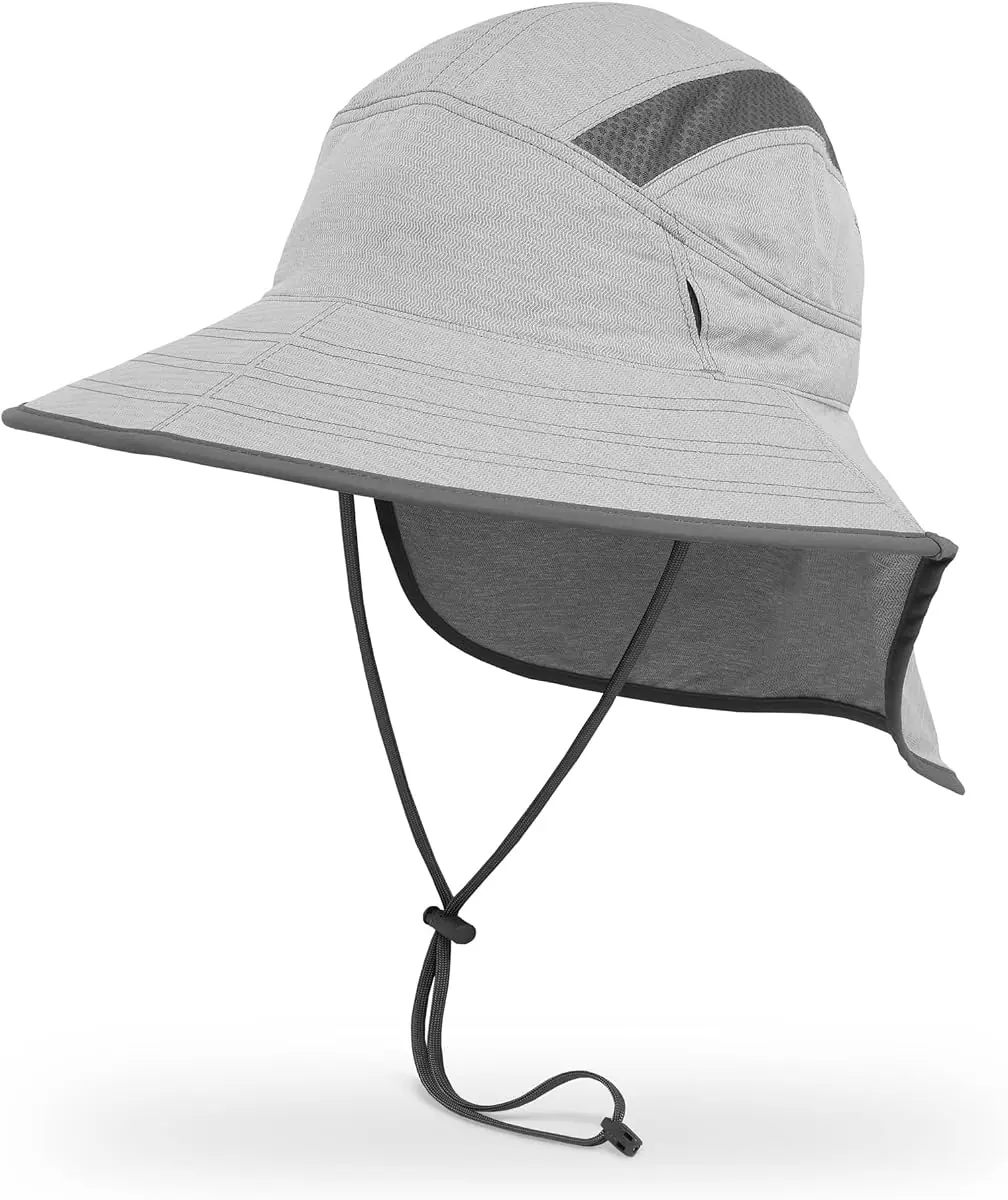
A hiking hat has one job, which is to put shade on the parts of you that burn first: nose, ears, cheeks and the back of your neck. Sunscreen covers the same skin for about two hours and then quits, usually while you're busy climbing. A brim doesn't wear off. On a long exposed day it's the only sun protection on your head still working at four o'clock.
Every hat on this page is rated UPF 40 or higher, so the rating tells you almost nothing about which to buy. The shape does. A three-inch brim shades your face and the tops of your ears, and a cape shades your neck when the sun is behind you, which on an out-and-back is half the day. A ball cap shades your nose and not much else.
So this page ranks on coverage first: brim width, then whether your neck is shaded. Airflow comes second, because a hat that cooks your head ends up clipped to your pack. Third is whether it stays put in wind and clears the top of a backpack. Weight and packability break ties. Amazon review counts decide nothing, and the hat with more ratings than the other seven combined finishes last.
Most of the hats these three reviewers rank highest are sold on Amazon. The Sunday Afternoons Ultra Adventure is OutdoorGearLab's Editors' Choice and Treeline Review's Best Overall. The Solbari Trekker is CleverHiker's Best Overall. The Tilley LTM6 is the price ceiling for a technical sun hat, and it's here too.
A few well-reviewed hats aren't. I didn't find REI's Sahara hats on Amazon, and I couldn't find the Kavu Chillba, Treeline's pick for sheer coverage, there at all. If one of those is the hat you want, buy it where it's sold.
My dad and I haven't worn these hats, so read this as research, not field notes. The ranking comes from the makers' published specs and from testing that CleverHiker, OutdoorGearLab and Treeline Review have put in print. Each price and rating was read on October 7, 2026, off one size and color. Hats sell as size-and-color listings, so yours may be priced differently.