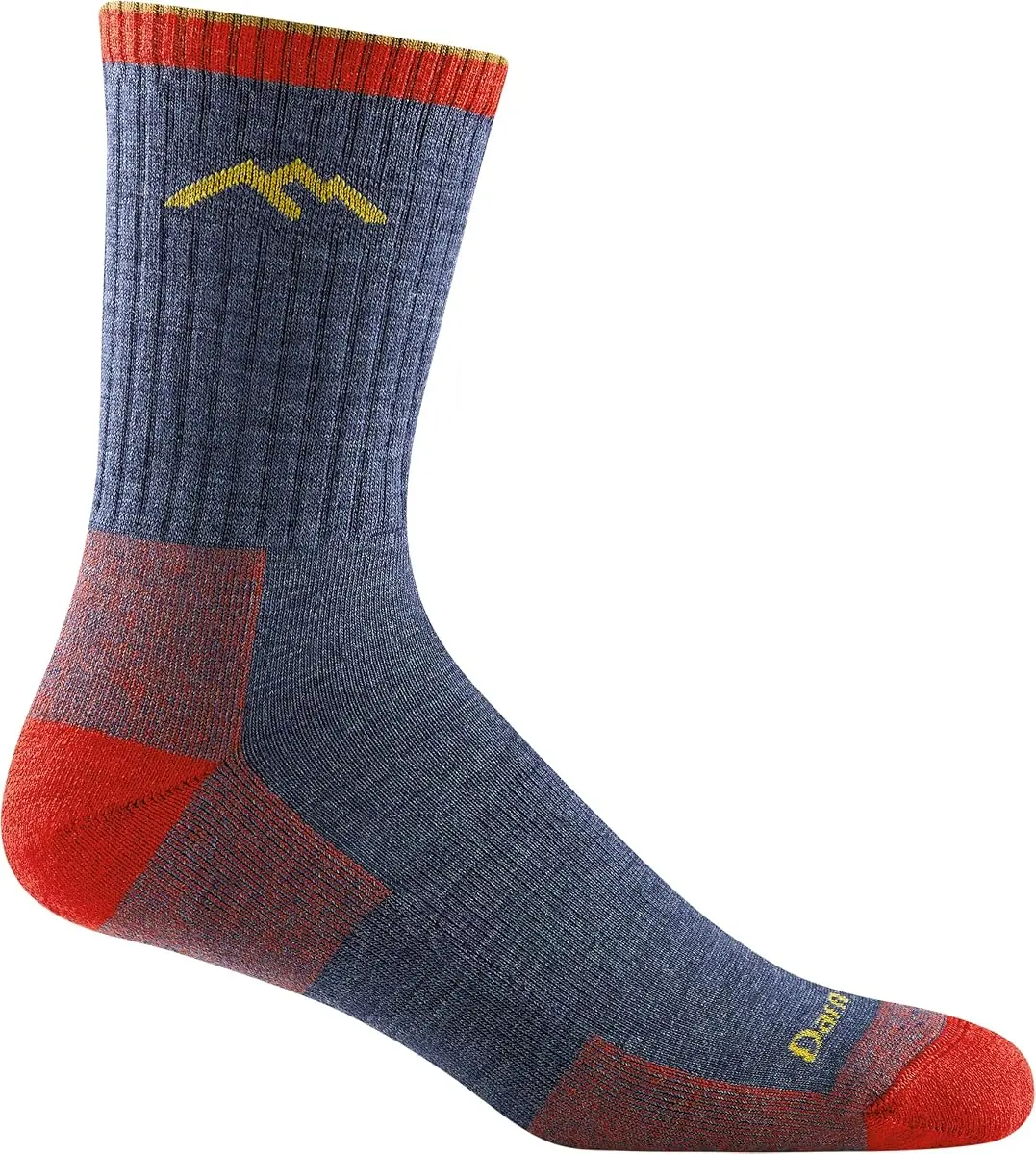
Socks are the cheapest thing in your pack and the one most likely to end a day early. A boot that doesn't quite fit is something you can walk off. A blister at mile four decides whether you finish. The sock sits between your skin and the shoe, and it's doing three things at once. It moves sweat off your foot, and it fills the space between foot and shoe.
The third job is the one nobody thinks about: it soaks up the sliding that would otherwise happen against your skin. Get any of them wrong and you'll know about it before lunch.
The single biggest thing you can do costs nothing: stop hiking in cotton. Cotton soaks up sweat and holds it against your skin, and wet skin under load is soft skin, which tears instead of sliding. Wool and synthetics both push moisture out into the fabric where it can evaporate. That's the whole reason merino runs this category. It's fine-diameter wool, soft enough to sit against skin without the itch of the stuff your grandmother knitted with, it holds some insulation when it's damp, and it resists smelling.
That last one matters more than it sounds like it should on a trip where you're carrying two pairs for five days. Synthetics dry faster and cost less to replace. Neither fiber wins outright, which is why almost everything below is a blend.
So the eight below are ranked on fit and how the sock behaves under a loaded foot, then on whether the cushion level matches the shoe you'd wear it in, then on material and moisture handling, then on how long it survives. Price breaks ties. Amazon review count sets none of it, and it would give you nonsense here if it did: the Smartwool Hike Classic finishes third on 1,256 ratings while the Injinji Trail Midweight sits fourth on 2,854.
A review count measures how much a listing has sold, not how good the sock is. On the money: this is one of the rare categories where the best product is also nearly the cheapest. Nothing above about $30 a pair buys you a better hiking sock, only a more specialized one. Sockwell's compression and Injinji's toe socks are what that specialization costs here, and the ceiling isn't much higher.
Past this page you're into waterproof socks like the Sealskinz Dunton at around $60, and medical-grade compression, which are different tools rather than better socks. Two socks the expert roundups rank highly aren't on Amazon at all. REI's own Co-op Merino Lightweight runs about $19 and Paka's alpaca Trail Crew about $25, so price those direct if either appeals.
Every price and rating here belongs to one specific listing, checked on August 19, 2026, and socks sell as size-and-color combinations where each combination is a separate listing with its own price, so your size will land somewhere else, sometimes by $10. My dad and I haven't worn all eight of these through a season, and I'm not going to pretend otherwise. The ranking comes from published specs, the manufacturers' own material data, and the testing other reviewers have put in print.