Best Blister Care for Hiking and First Aid Refills of 2026
The small, cheap things worth restocking before your next hike: blister tape, gel pads, moleskin, a pocket kit, ointment, sunscreen and wipes.
View the top picksBy Tom·Updated 30 October 2026 · Ranked from specs & buyer reviews
How to Choose
How to Choose Blister Care and First Aid Refills
Most hikes that go wrong go wrong in small ways. A heel starts burning at mile four. You scrape a knuckle on granite, and by the top of the ridge your nose is pink. The fixes are small and cheap, and they're exactly what a first aid kit runs out of first. Usually nobody notices until they reach for one.
This page is about those fixes: blister tape, gel pads, moleskin, a pocket-sized top-up kit, antibiotic ointment, sunscreen, lip balm and wipes. If you need the kit itself, our hiking first aid kit guide ranks seven of them. For ticks and mosquitoes, the bug spray guide covers repellent, so it isn't repeated here.
The ten picks are ranked on how much each one earns a spot in a blister-prone hiker's pack, with blister prevention first because stopping a blister beats treating one. The order comes from each maker's published details, the specs and uses these products are sold for, and what Amazon buyers report. My dad and I haven't put every one of these through a season, and I won't pretend we have.
The Checklist
What should you refill in a hiking first aid kit?
Refill a hiking first aid kit with blister supplies, bandages, wound-cleaning wipes and ointment, and any medication that has expired, then check sunscreen and lip balm at the same time. Go through it after every few hikes, and any time you've had it open on the trail.
Blister tape
Essential
A few pre-cut strips of rigid tape like Leukotape, stuck to wax paper so they stay clean and come off easily. Enough for both heels.
Hydrocolloid blister pads
Essential
Two or three gel pads in mixed sizes for a blister that has formed or torn. Swap any that have been squashed or opened.
Moleskin
Essential
A square or two of moleskin to pad a sore spot or cut into a ring around a blister, plus small scissors if your kit has none.
Bandages and gauze
Essential
Adhesive bandages in a few sizes and a couple of gauze pads. These are what a kit runs through fastest on ordinary hikes.
Antiseptic wipes and ointment
Essential
Wipes to clean a scrape and single-use antibiotic ointment packets to cover it. Check the dates on the packets.
Medication
Essential
Pain relief, an antihistamine and anything you take yourself. Replace what's expired, and ask a pharmacist or doctor if you're unsure what suits you.
Sunscreen and SPF lip balm
Nice to Have
A sunscreen stick and an SPF lip balm, kept in a hip belt or shoulder strap pocket so you'll actually reapply.
Wipes and a trash bag
Nice to Have
A few body wipes for hands and feet, and a zip-top bag to pack the used ones out.
The Options
Which kind of blister product do you need?
Blister products come in five kinds, and the difference between them is timing. Tape, balm and friction patches go on before anything hurts. Moleskin pads a spot that already does, and gel pads cover a blister that's already formed.
Rigid tape
$$Preventing blisters on a spot you know
Thin, strong tape that goes on before the hike and holds through sweat. Leukotape P is the usual choice.
Hydrocolloid pads
$$$Covering a blister that has formed
Gel pads that seal over a blister, cushion it and stay on for days. Compeed and Band-Aid both make them.
Moleskin
$Padding a hot spot, or a ring around a blister
Thick, soft adhesive padding you cut to shape. Cheap and versatile, but it lifts in a wet boot.
Friction patches
$$$A shoe that rubs in the same place
Low-friction patches that stick inside the shoe rather than on you. ENGO is the best known.
Anti-blister balm
$Toes and broad areas that tape can't cover
A stick you rub on before you put socks on, so skin slides instead of rubbing. Body Glide makes the common one.
Quick Picks
Top Three at a Glance
Short on time? Start with these top-rated blister care & first aid refills picks.
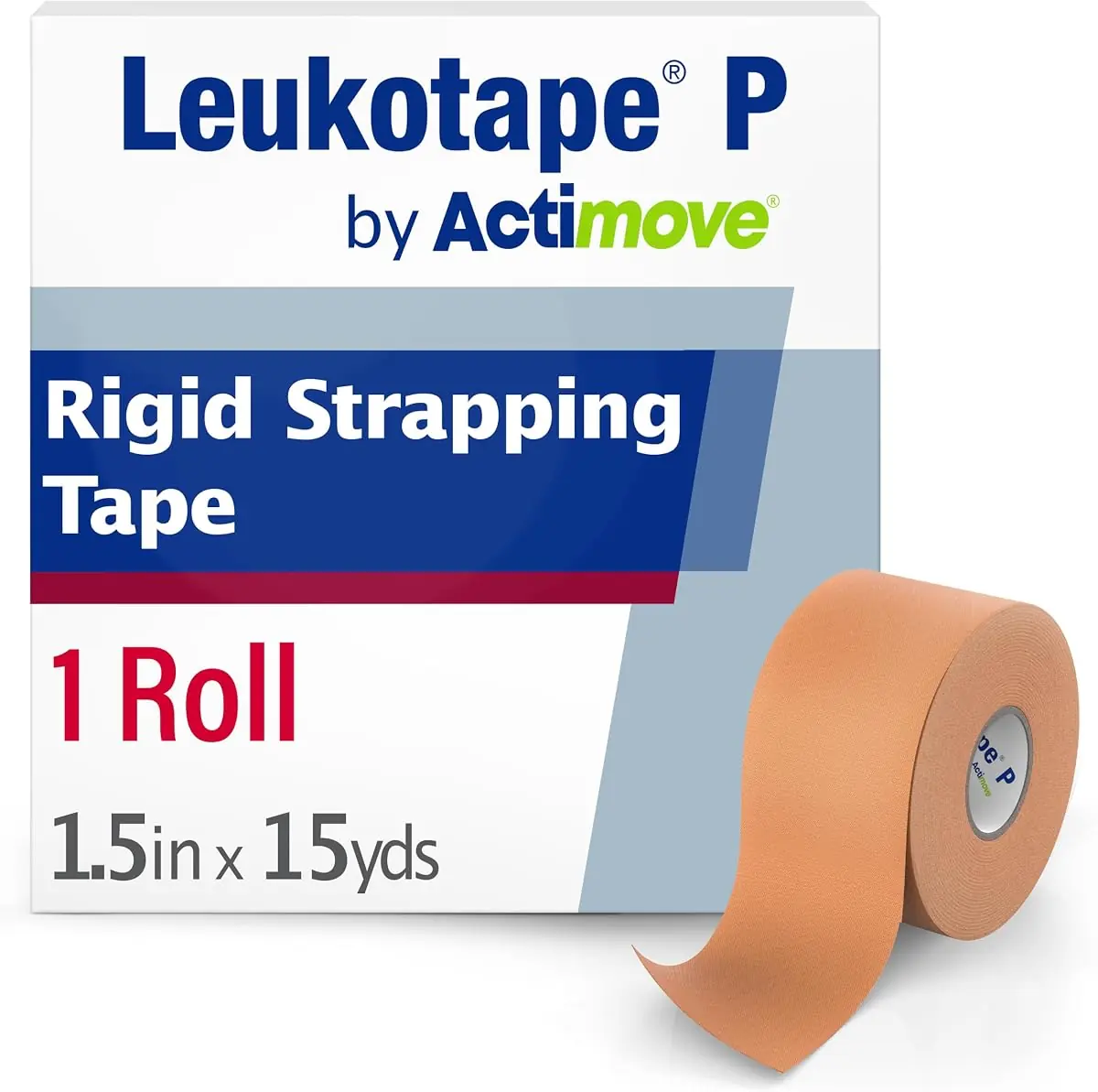
Leukotape P is the first thing I'd buy if blisters are your problem. It's a rigid sports tape with a zinc oxide adhesive, made for strapping joints, and it's a common pick for hikers because it barely stretches and its adhesive is built to grip.One roll lasts a long time. Cut strips at home, round the corners, and stick them to wax paper for the pack. Just don't put it straight onto an open blister: the adhesive grips hard enough to lift the skin, so cover the blister first.
Compeed is what I'd reach for once the blister has already happened. Each pad is a hydrocolloid gel that seals over the blister, cushions it and keeps dirt out, and Compeed's listing says it stays on for up to seven days.The mixed pack covers heels, toes and the side of the foot, and two packs of ten is a good stock for a kit plus a spare. The rule with any hydrocolloid pad is to leave it alone: let it come off by itself rather than peeling it to check.
Moleskin is the old standby, and this roll is the cheapest way to have plenty of it. It's thick, soft and adhesive-backed, and you cut it to whatever shape the spot needs, including the ring the American Academy of Dermatology describes for padding around a blister. It isn't as sticky as tape and lifts in a wet boot, so treat it as padding rather than your only protection. One roll is plenty for a whole family's kits.
Quick verdict: Leukotape P is the first thing I'd buy if blisters are your problem. It's a rigid sports tape with a zinc oxide adhesive, made for strapping joints, and it's a common pick for hikers because it barely stretches and its adhesive is built to grip.
One roll lasts a long time. Cut strips at home, round the corners, and stick them to wax paper for the pack. Just don't put it straight onto an open blister: the adhesive grips hard enough to lift the skin, so cover the blister first.
Why It Stands Out
Rigid, hand-tearable tape with a strong zinc oxide adhesive
Thin enough to lie flat under a sock
One roll covers a season of hot spots
Pros
Strong adhesive meant to hold through sweat
Thin enough to lie flat under a sock
Tears by hand, so no scissors needed on the trail
Cons
Too sticky for an open blister on its own
Can irritate sensitive skin
A full roll is heavy, so cut strips for the pack
Best Situations
Pre-taping heels before a long dayThru-hikes and multi-day tripsNew boots that haven't broken in yet
Quick verdict: Compeed is what I'd reach for once the blister has already happened. Each pad is a hydrocolloid gel that seals over the blister, cushions it and keeps dirt out, and Compeed's listing says it stays on for up to seven days.
The mixed pack covers heels, toes and the side of the foot, and two packs of ten is a good stock for a kit plus a spare. The rule with any hydrocolloid pad is to leave it alone: let it come off by itself rather than peeling it to check.
Why It Stands Out
Hydrocolloid gel that seals and cushions a formed blister
Stays on for up to seven days, per Compeed
Mixed sizes for heels, toes and fingers
Pros
Cushions the blister while it heals
Built to stay on for days, per Compeed
Twenty pads is enough for a kit and a top-up
Cons
Costs more per pad than moleskin
Edges can roll if a sock rubs them
Not for prevention; put it on once a blister has formed
Best Situations
A blister that has torn open mid-hikeMulti-day trips where you can't rest the footHeel blisters from new boots
Quick verdict: Moleskin is the old standby, and this roll is the cheapest way to have plenty of it. It's thick, soft and adhesive-backed, and you cut it to whatever shape the spot needs, including the ring the American Academy of Dermatology describes for padding around a blister. It isn't as sticky as tape and lifts in a wet boot, so treat it as padding rather than your only protection. One roll is plenty for a whole family's kits.
Why It Stands Out
A long roll you cut to any shape
Thicker padding than tape for a spot that already hurts
The cheapest blister supply on this page
Pros
Enough to stock several kits
Cuts into rings, strips or patches
Thin enough for most boots
Cons
Lifts at the edges in a wet boot
Needs scissors to shape
Not for covering an open blister
Best Situations
Padding a hot spot mid-hikeA ring around an intact blisterStocking several family kits at once
Quick verdict: ENGO works differently from everything else here. The patch sticks inside your shoe or onto the insole where it rubs, not on your skin, and its low-friction surface lets the sock slide instead of dragging skin with it.
ENGO says the patches are 0.015 inches thick and last up to 300 miles, which makes them the pick for a pair of boots you love except for one spot. They do take some trial and error to place, and a patch that's in the wrong place does nothing.
Why It Stands Out
Goes on the shoe, so it lasts far longer than anything stuck to skin
Up to 300 miles per patch, by ENGO's figure
Thin enough that ENGO says fit is unchanged
Pros
No adhesive on your skin
Lasts across many hikes
Trims to fit heel cups and insoles
Cons
Placement takes some trial and error
Does nothing for a blister that has already formed
Lower Amazon rating than the skin-side products here
Best Situations
Heel rub from a boot's heel counterTrail runners that rub on long runsFixing one pair of boots for good
Quick verdict: Body Glide Foot is a balm stick you rub on before your socks go on, leaving a non-greasy layer so skin slides instead of rubbing. It's useful where tape is awkward, like between and on top of toes, or across the ball of the foot.
It won't stop a blister on a spot that's already hot, and it wears off over a long day, so carry the stick and reapply at lunch. Body Glide says the formula is plant-derived and allergen free.
Why It Stands Out
Covers areas too awkward to tape
Goes on in seconds with no cutting
Small enough for a hip belt pocket
Pros
Non-greasy, so socks don't feel slick
Works on toes and the ball of the foot
Nothing to peel off later
Cons
Wears off over a long day
Prevention only, not treatment
Less help in a wet boot
Best Situations
Toe blisters on long descentsTrail runs where taping takes too longHot days with sweaty feet
Quick verdict: The .3 is the smallest kit in AMK's Ultralight/Watertight line, and it's not the same as the bigger kits our first aid kit guide ranks. Think of it as a refill you can carry, not a full kit: bandages, antiseptic wipes, alcohol swabs, die-cut moleskin, insect sting relief and a safety pin, sealed in AMK's waterproof DryFlex bag.
The two-pack is the point. Put one in each family member's daypack or a trail running vest, so the small stuff is covered even when the main kit is in someone else's bag. It has only a small rating pool on Amazon so far.
Why It Stands Out
The smallest kit in AMK's Ultralight/Watertight line
Waterproof DryFlex bag keeps the contents dry
Two kits, one for each pack
Pros
Fits a hip belt or vest pocket
Covers small cuts, stings and a hot spot
The bag reseals and can be refilled
Cons
Not a substitute for a full kit
No medication or trauma supplies
Few Amazon ratings so far
Best Situations
Kids' daypacksTrail runsA backup to the group's main kit
Quick verdict: Single-use ointment packets are one of the first things a kit runs out of, and a box of 25 refills several kits. Each 0.9-gram packet is enough for a scrape or a small cut once it has been cleaned.
Packets beat a tube in a pack because they can't burst open or dry out, and one can go in a wallet or a hip belt. Check the date on whatever is already in your kit while you're at it.
Why It Stands Out
Twenty-five single-use packets
The refill kits go through fastest
Packets don't leak like a tube can
Pros
Restocks several kits at once
Light and flat
Clean dose every time
Cons
Each packet is small
Packets have expiry dates to watch
Not for deep wounds
Best Situations
Scrapes on rock scramblesRestocking a family's kitsSmall cuts at camp
Quick verdict: A stick is the easiest sunscreen to carry and actually reapply on a hike: it can't leak in your pack and you don't end up with greasy hands on your trekking poles. This one is SPF 50, which is what the Skin Cancer Foundation recommends for extended outdoor activity like hiking, and Banana Boat labels it water and sweat resistant. It's a small stick, though, so use it on your face, ears, neck and the backs of your hands, not your whole body.
Why It Stands Out
SPF 50, the level the Skin Cancer Foundation names for hiking
Water and sweat resistant, per the label
Can't leak in a pack
Pros
Fits a hip belt pocket
No greasy hands
Easy to reapply every two hours
Cons
Too small for full-body coverage
Can go soft in a hot car
Still needs reapplying after heavy sweating
Best Situations
Exposed ridges and above treelineDesert hikesKids' faces at a trailhead
Quick verdict: Lips burn as easily as a nose and get forgotten more often. Sun Bum's balm is SPF 30 with aloe and vitamin E, which matches the SPF of at least 30 the American Academy of Dermatology suggests for lip balm.
The three-pack is the useful part: one for the pack, one for the car and one for a pocket, so there's always one within reach. Amazon pools this balm's ratings across its single sticks and multipacks.
Why It Stands Out
SPF 30 lip protection
Three sticks, so one is always within reach
Aloe and vitamin E for dry, windy days
Pros
Tiny and light
Pleasant enough that you'll reapply
Three sticks in one order
Cons
SPF 30, not 50
Flavored, which not everyone wants
Ratings pooled across several pack sizes
Best Situations
High-altitude and windy hikesSnow and bright rockLong summer days
Quick verdict: Tape and gel pads only stick to clean skin, and a big wipe is the quickest way to get feet clean at a trailside stop. These are large, unscented, alcohol-free wipes, and the resealable pack keeps them from drying out.
Surviveware calls them biodegradable and suggests burying them. Leave No Trace says to pack out hygiene products, and that's what I'd do: they break down slowly in dry or cold ground. Carry a zip-top bag for used ones.
Why It Stands Out
Large wipes for a quick clean-up before taping
Unscented and alcohol-free
Resealable pack
Pros
Big enough for feet, hands and face
Gentle on sensitive skin
Stays moist between uses
Cons
Still needs packing out
Heavier than a few individually wrapped wipes
Not antiseptic, so it's not for cleaning a wound
Best Situations
Cleaning feet before taping a hot spotHands before eatingMulti-day trips without a shower
Which blister product should you carry for each stage?
Carry one product for each stage of a blister, because each stage needs a different job done. Before the hike, tape or a balm goes on skin you know gives trouble. At the first hot spot, moleskin or tape takes the rubbing. Once a blister has formed or torn, a hydrocolloid pad covers it and lets it heal.
That's why the top three picks here are three different things rather than three versions of one. Leukotape prevents, Compeed treats, and moleskin pads. A hiker who carries only one of them has a gap at one stage, and a blister usually finds it.
Will it stay on a sweaty foot?
A blister product that peels off after an hour has done nothing, and a hot, damp boot is the hardest place for adhesive to hold. Leukotape's zinc oxide adhesive is the reason hikers carry it: it is made for strapping joints, and it grips skin hard.
Hydrocolloid pads like Compeed are built to stay on for days; Compeed's listing says up to seven. Moleskin is the weakest of the three in a wet boot and tends to lift at the edges. Whatever you use, clean and dry the skin first, because sweat and dirt are what make adhesive fail.
ENGO dodges the problem by not sticking to you at all. Its patch goes on the inside of the shoe, which is why it lasts so much longer than anything stuck to skin.
How much should you pack for a hike?
For a day hike, carry enough for one bad heel on each foot: a few pre-cut strips of tape, two or three gel pads and a small square of moleskin. That weighs almost nothing and fits in a zip-top bag in the lid of your pack.
On a multi-day trip, double it and add a small pair of scissors if your kit has none. A tip hikers pass around for tape is to cut strips at home and stick them onto wax paper or the backing from a label sheet, so you aren't wrestling a whole roll with cold fingers.
What runs out first in a hiking first aid kit?
The things you use on ordinary hikes run out first: blister supplies, adhesive bandages, antiseptic wipes and ointment. A kit can look full and still be empty of the one thing you need, because a packed bag hides the gaps.
Check yours after every few trips, and always after you've used it. Swap in fresh blister supplies, replace any ointment packets or medication past their date, and top up sunscreen. The checklist further down this page is the order I'd go through it in.
If you know where you blister
Rigid zinc-oxide tape
Tape the spot before the hike. Leukotape P is a popular choice for this, because it is a rigid tape with a strong adhesive that is meant to hold through sweat. Round the corners of each strip so the edges don't catch on your sock.
If the blister has already formed
Hydrocolloid gel pad
A Compeed pad seals over the blister and cushions it, and it stays put for days. Your only job after that is leaving it alone. Don't peel it off to check. Let it come off on its own, and put a fresh one on when it does.
If your shoe is the problem
Patch on the shoe, not the skin
When one pair of boots always rubs in the same spot, put the fix on the boot. An ENGO patch sticks inside the heel cup or on the insole right where it rubs, and it keeps working hike after hike. It's the pick for boots you'd otherwise love.
On the Trail
How do you deal with a hot spot on the trail?
A hot spot is the warm, tender patch that comes before a blister. Stopping then costs you a couple of minutes. Walking on through it can cost you days.
1
Stop at the first hot spot
Don't wait for the next viewpoint. The AAD's advice is to stop the activity as soon as you feel pain or see redness, because that's what turns into a blister.
2
Take the boot and sock off
Look at the spot. A red, warm patch is a hot spot. A raised bubble of fluid is a blister, and that changes what you put on it.
3
Clean and dry the skin
Wipe off sweat and grit and let the skin air-dry for a minute. Adhesive won't hold on damp, dirty skin.
4
Cover it with the right thing
Tape or moleskin over a hot spot. Moleskin cut into a ring around an intact blister. A hydrocolloid pad over one that has torn open.
5
Fix what caused it
Smooth out a wrinkled sock, shake out grit, retie the laces or change into a dry pair. Otherwise the rubbing just moves to the edge of the tape.
6
Check it again at your next break
Make sure the cover is still in place and the skin around it isn't getting sore. Replace tape that has rolled at the edges.
Plain English
Blister care words, explained
Hot spot
A warm, tender patch of skin that is being rubbed. It comes before a blister and is the moment to stop.
Hydrocolloid
A gel-forming dressing that seals over a wound, absorbs fluid and cushions it while it heals.
Stop as soon as you feel a hot spot, take off the boot and sock, and dry the skin. If no blister has formed, cover the spot with tape or moleskin. If one has, the American Academy of Dermatology's advice is to cover it loosely, or to cut moleskin into a ring and place it around the blister so the padding takes the pressure.
A blister that has torn open is broken skin. Clean it, then cover it with a hydrocolloid pad, which keeps it sealed while it heals.
Usually not. The AAD says to avoid popping or draining a blister because it could lead to infection, and that draining may only be necessary when one is large and very painful. If you do drain one, the AAD advises washing the area and not removing the roof of the blister, which protects the raw skin underneath.
For prevention, most hikers find tape better, because it is thin, lies flat under a sock and stays on in a sweaty boot. Moleskin is thicker and pads a sore spot better, which helps once something already hurts. Carry both if you can: tape for the hike, moleskin for the bad afternoon.
Don't stick Leukotape straight onto an open blister. The adhesive is strong enough to lift the skin when it comes off, so cover the blister with a gel pad or gauze first and tape over that.
Restock whatever you used, then anything that expires. In practice that means blister supplies, adhesive bandages, antiseptic wipes, antibiotic ointment and any pain or allergy medication past its date. Sunscreen and lip balm don't live in the kit, but they run out on the same schedule, so check them at the same time.
The Skin Cancer Foundation recommends SPF 50 or higher for extended outdoor activity, and names hiking specifically. It also says to reapply every two hours, and right after heavy sweating. A stick is easier than a lotion on a trail, since it doesn't leak and you can put it on without getting your hands greasy.
Read the label, too. Under the FDA's sunscreen labeling rule a product can only claim to be water resistant for 40 or 80 minutes, so "water resistant" tells you when to reapply, not that you can skip it.
Leave No Trace's guidance is to pack out toilet paper and hygiene products, and that includes wipes sold as biodegradable. They break down slowly in dry or cold ground, and animals dig them up. Carry a zip-top bag for used ones, whatever the packet says.
Twelve one-page checklists, one for each trip and season, with our pick for each item. Leave your email and the PDF is yours, plus a short note when a new guide goes up.
How We Choose Products
How These Picks Are Chosen
Reader-supported and free of paid placements. Every pick is ranked on published specs and Amazon buyer ratings, not on who pays us.
Spec Research
Each pick is compared on published specs, materials, design, and category fit across the major brands.
Practical Fit
Rankings factor in how well each product matches common hiking, backpacking, and trail running needs, not just popularity.
Amazon Buyer Ratings
Star ratings and review volume from verified Amazon buyers are factored in to reflect real-world satisfaction.
Value
A pick earns its spot by delivering useful performance for the money, whether budget or premium.
REFILLS PACKED. NOW CHECK THE KIT.
Refills top up a kit; they don't replace one. Our first aid kit guide ranks seven hiking kits on what they can treat against what they weigh.