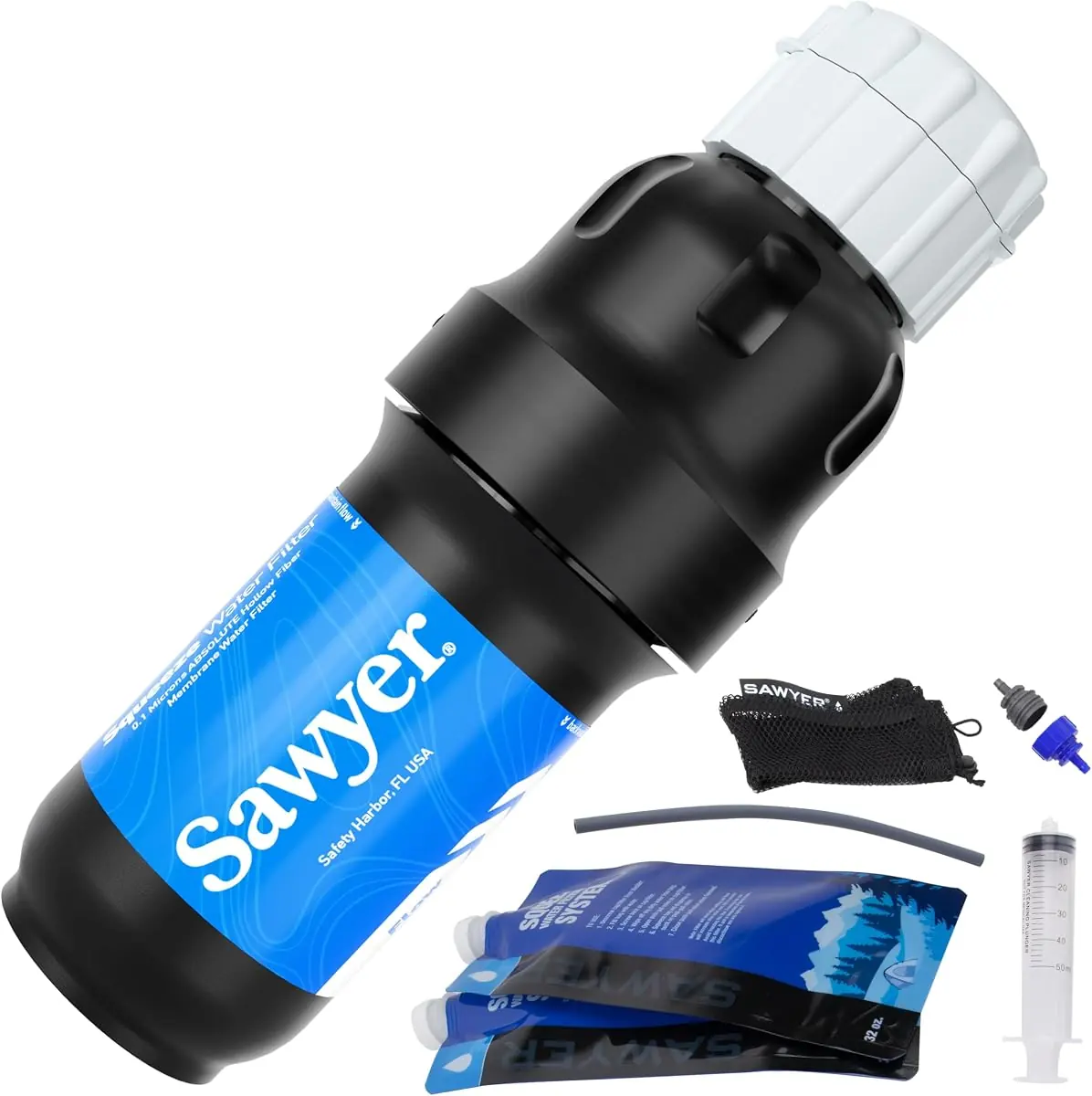
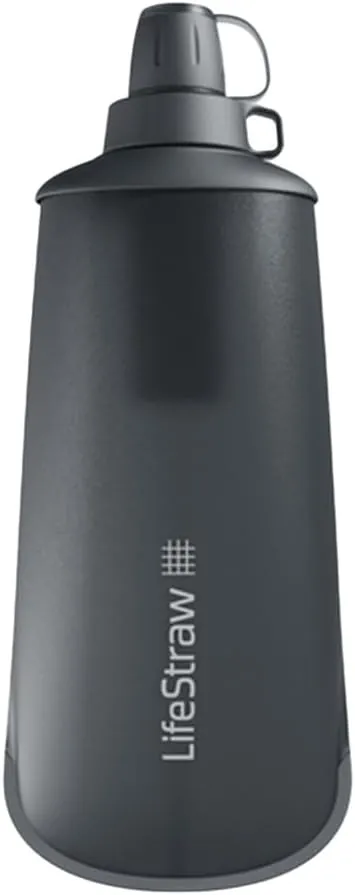
Water filters are the rare corner of backpacking gear where the best answer costs forty-odd dollars. Look at what the gear testers keep recommending and you land on the same small squeeze filters: Sawyer's Squeeze, Platypus's QuickDraw, Katadyn's BeFree. Those three run $43 to $80, they weigh two or three ounces, and nothing you can spend more on will make your water meaningfully safer on a trail in Colorado or Vermont.
That's unusual. In most categories on this site the good stuff sits at the top of the price range and we have to say so. Here the ceiling exists for a different reason, and it's worth knowing what that reason is before you spend past it.
What the money buys, when it buys anything, is either throughput or a different threat model. A gravity system like the Platypus GravityWorks costs several times what a Sawyer does and doesn't clean your water any better. It just hangs from a branch and makes six liters while you set up camp, which is the difference between a chore and a non-event when you're filtering for four people.
Pumps like the Katadyn Hiker Pro handle water a squeeze filter would choke on: an inch-deep seep, a silty desert tank, a lake you can't get a bag into cleanly. Then there's the ceiling. The MSR Guardian is the only device on this page that removes viruses, because its medium is 0.02 micron rather than 0.1 or 0.2. Everything else here lets viruses straight through, which is fine in the North American backcountry and not fine in much of the rest of the world.
The pump version costs even more; the gravity one here is the most expensive device on this page by a distance. That's the top of this category, and most people shouldn't buy it.
So the nine below are ordered on the things that decide whether you're still happy with a filter in year two: how fast it runs after a few hundred dirty liters, whether you can restore that flow at the stream with no tools, what it removes, and whether one cold night ends its life. Price breaks ties. Amazon review count doesn't break anything, which matters more here than usual, because this category is flooded with cheap marketplace filters carrying tens of thousands of ratings.
A rating count mostly measures how many units a listing has moved. It tells you a product is consistent. It doesn't tell you it's good. One honest caveat on the numbers: the Platypus QuickDraw listing most people have reviewed is the 1-liter system, and it's currently unavailable on Amazon, so we've linked the 2-liter kit and its 31 ratings instead. Everything here is ranked from published specs, manufacturer test protocols and the work other testers have put in print.
My dad and I haven't run all nine of these for a season, and I'm not going to pretend we have. Ratings, review counts and prices were read off the listings on August 4, 2026.