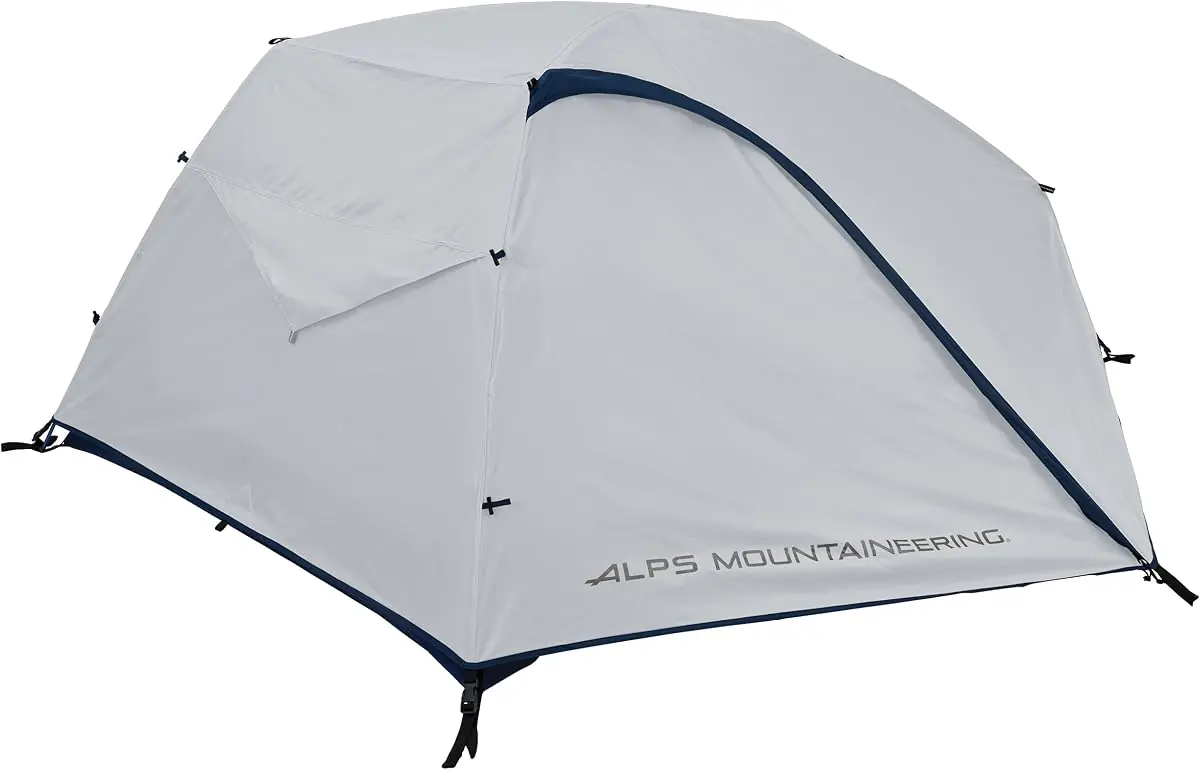
Two people and one tent is where backpacking gear gets expensive fastest. It's also where the price of admission has fallen the hardest. The tents everyone points at in this category are the Big Agnes Copper Spur HV UL2, the NEMO Dagger OSMO and MSR's Hubba Hubba LT, and they sit between $500 and $625. They earn it, too: 2 to 3 pounds all in, with fly fabric that stays taut in wind instead of going slack.
Their warranty departments still pick up the phone in year ten. None of them is on this page. Everything here costs a fraction of that, which is a different promise, and it's worth being straight about what the difference buys before you decide you don't need it. Mostly it buys weight off your back. After that it buys fabric that keeps its shape when it's soaked at 2am.
What's changed is the floor. A $120 tent in 2026 gets you an aluminum pole set, a properly waterproof bathtub floor, taped seams and, on several of these, two doors. Ten years ago that was a $300 tent. What you still give up is weight: expect 4 to 5 pounds where the expensive ones are 2 to 3. You give up some fabric quality too, since budget flies sag more when they're wet and the zippers want a gentler hand.
The poles are heavier, and they're usually the part that eventually breaks. For weekends at established campsites with a forecast you trust, that's a fair trade. It stops being one on a thru-hike or in real alpine weather, and if that's where you're headed, save up instead.
Four things separate these six, and none of them is the brand on the label. Weight, because you're the one carrying it. Whether it stands up on its own, because a freestanding tent goes up on a wooden platform and can be moved three feet after it's pitched, and a trekking-pole shelter can't. Doors count for more than the spec sheet suggests: one door means one of you climbs over the other every time either of you needs to get out at night.
Then floor area measured against that weight, because 30 square feet is the difference between two people sleeping and two people negotiating. They're ordered on those four rather than on Amazon review count, which is why the Lanshan 2 sits third with 8,720 ratings while the Kelty Late Start sits fifth with 91. Review volume mostly measures how long a listing has been up and how many units it moves, and at the budget end of this category it tracks whichever marketplace brand is advertising hardest.
Ratings, review counts and prices were read off the listings on August 4, 2026. My dad and I haven't slept a season in all six, and I'm not going to pretend we have. These are ranked from published specs, buyer feedback and the testing other people have put in print.