Skip to content
Best 1-Person Backpacking Tents of 2026 — hiking gear
Solo Tent Buying Guide

Best 1-Person Backpacking Tents of 2026

Eight solo shelters ranked on what you carry rather than on how well they sell. The two tents at the top have 7 Amazon ratings between them.

View the top picksUpdated 21 August 2026 · Ranked from specs & buyer reviews

If you buy through a link on this page we may earn a commission, at no extra cost to you. It never changes how anything is ranked. Prices were last checked on and move around; the figure on Amazon is the one that counts.

How to Choose

How to Choose a 1-Person Backpacking Tent

What makes a solo tent a different purchase from a two-person tent isn't the size. It's that nobody splits it with you. Two people sharing a 4 lb 8 oz tent each carry about 2 lb 4 oz, because one takes the fly and stakes and the other takes the inner and poles. Carry a 4 lb solo tent and you carry 4 lb. That one fact reorders the category.

A heavy one-person tent can sit heavier on your back than a good two-person tent you share, which is why plenty of experienced hikers who mostly walk alone spend more on shelter than on anything else in the pack.

It's worth knowing where the ceiling is, and being straight that this page doesn't reach it. The two tents at the top here, the Big Agnes Copper Spur UL1 and the MSR Hubba Hubba LT 1, are the best solo shelters you can actually buy on Amazon, and they are not the best in the category. The tents that win the dedicated one-person roundups are Dyneema trekking-pole shelters from cottage makers, priced $599 to $849: Durston's X-Mid Pro 1, Zpacks' Pivot Solo, Hyperlite's CrossPeak 1.

Not one of them sells on Amazon, so not one of them is here. What that tier buys over this page is another half pound off and a fabric that doesn't soak up water or stretch when it's wet. What it asks is that you pitch on trekking poles and seam-seal the thing yourself. Nearer the ground, what the top of this page buys over the bottom is about a pound and a third off your back, plus a fly that holds tension at 2am instead of going slack.

It doesn't buy you a dry night. The ALPS Lynx 1 at the bottom of this page, with taped seams and a real bathtub floor, keeps water out perfectly well. It just asks you to carry four pounds to do it.

So these eight are ordered on four things: what you actually carry, how much of the quoted floor you can really use, where the shelter can be pitched, and how it handles the water one sleeping body throws off in a very small volume. They're not ordered on Amazon review count, and this category shows why better than any other page on this site.

The premium tents barely sell on Amazon, because they move through REI and specialty shops, so the Copper Spur UL1 has 6 ratings and the Hubba Hubba LT 1 has exactly one, while the Lynx has 906 and the Naturehike Cloud Up 1 has 1,259. Rank on volume and you invert the page. Treat the thin pools on rows one, two, four and five as almost no signal either way.

Ratings, review counts and prices came off the listings on August 21, 2026, and the weights and dimensions are the manufacturers' published figures. My dad and I haven't slept a season in all eight, and I'm not going to pretend we have. These are ranked from published specs, buyer feedback and the testing other people have put in print.

Quick Picks

Top Three at a Glance

Short on time? Start with these top-rated 1-person tents picks.

Best Overall
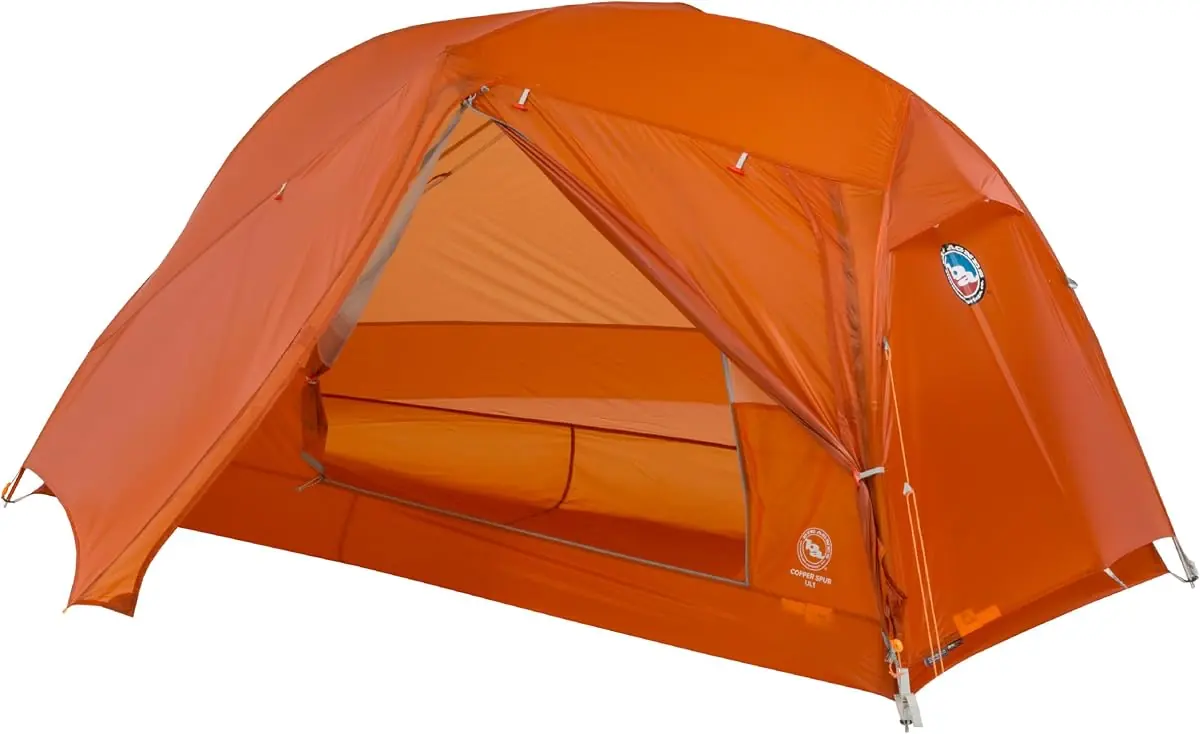
Big Agnes Copper Spur UL1 Backpacking Tent
4.6

Big Agnes Copper Spur UL1 Backpacking Tent

The lightest fully freestanding tent on this page, and the one I'd hand somebody who told me to just pick one. Roughly 2 pounds trail weight for 20 square feet, a 38-inch peak and an awning-style door you can prop open with a trekking pole. The 2025 rebuild moved it to Big Agnes' HyperBead fly fabric, which the brand rates 25% more waterproof and 50% stronger than what it replaced, with no PFAS in the coating.It's expensive, and it's the tent you buy when the weight matters more to you than the money does.

Check Price
Most Livable
MSR Hubba Hubba LT 1-Person Backpacking Tent
5

MSR Hubba Hubba LT 1-Person Backpacking Tent

The most livable tent here, and the reason is the floor plan rather than the floor area. It's 20 square feet like the Copper Spur, but on a true 88-by-32-inch rectangle, and the walls go up almost vertically, so the space at the edges is space you can actually use and a 4-inch pad doesn't ride up the sides. 2 lb 6 oz minimum and 2 lb 11 oz packed, on DAC NFL poles with a symmetrical hub that goes up the same way every time.If you're taller than six feet, or you sleep on a thick pad, buy this instead of the Big Agnes.

Check Price
Lightest
Six Moon Designs Lunar Solo Ultralight Tent
4.2

Six Moon Designs Lunar Solo Ultralight Tent

26 ounces and 26 square feet, which makes it the lightest tent on this page and the one with the most published floor, at the same time. That combination only exists because it's a single-wall pyramid pitched on one trekking pole, and every part of that description is also the price of admission. You have to carry a pole, and you have to get the pitch right.And the surface collecting your overnight condensation sits about a foot from your face. Its 4.2-star average is the lowest of the four-star tents here, and most of the criticism is about exactly that learning curve. Worth it if you're going far and you'll practice in the backyard first.

Check Price
Comparison Table

Every Pick, Side by Side

Compare all 8 picks
Best Overall
Best For
Carrying a real freestanding tent a long way
Difficulty
Intermediate
Price
$$$
Most Livable
Best For
Tall hikers and thick sleeping pads
Difficulty
Intermediate
Price
$$$
Lightest
Best For
The most floor space per ounce, if you already carry poles
Difficulty
Advanced
Price
$$$
Recommended #4
Best For
Ultralight weight without giving up a pole set
Difficulty
Advanced
Price
$$$
Recommended #5
Best For
Durability when weight isn't the priority
Difficulty
Beginner
Price
$$$
Recommended #6
Best For
The cheapest honest way into a trekking-pole shelter
Difficulty
Intermediate
Price
$$$
Recommended #7
Best For
The cheapest freestanding tent actually worth carrying
Difficulty
Beginner
Price
$$$
Recommended #8
Best For
Freestanding, with the footprint included, at the bottom of the page
Difficulty
Beginner
Price
$$$
The Lineup

8 Best 1-Person Tents, Compared

Detailed picks with verdicts, strengths, tradeoffs, and the situations where each one makes the most sense.

Best Overall
Big Agnes Copper Spur UL1 Backpacking Tent
4.6 (6 Amazon ratings)

Big Agnes Copper Spur UL1 Backpacking Tent

Quick verdict: The lightest fully freestanding tent on this page, and the one I'd hand somebody who told me to just pick one. Roughly 2 pounds trail weight for 20 square feet, a 38-inch peak and an awning-style door you can prop open with a trekking pole. The 2025 rebuild moved it to Big Agnes' HyperBead fly fabric, which the brand rates 25% more waterproof and 50% stronger than what it replaced, with no PFAS in the coating.

It's expensive, and it's the tent you buy when the weight matters more to you than the money does.

Why It Stands Out

  • About 2 lb trail weight, the lightest here that stands up without stakes
  • 20 sq ft of floor with a 38-inch peak, on DAC aluminum poles
  • HyperBead fly and floor, 15D nylon with 20D ripstop and a 1500mm PFAS-free coating
  • Awning-style door props open with a trekking pole for a covered entrance

Pros

  • Freestanding, so it pitches on platforms, slab and hard-packed sites
  • Six ounces under the Hubba Hubba LT 1 and more than a pound under every other freestanding tent here
  • Big Agnes handles warranty claims and still stocks spare parts years out
  • Fly holds tension when wet rather than going slack overnight

Cons

  • The most expensive tent here
  • The floor tapers from 38 inches at the head to 28 at the foot, which is where your bag ends up
  • One door and a 9 sq ft vestibule, less covered ground than the cheapest tent here gives you
  • 6 Amazon ratings, which is far too thin a pool to tell you anything

Best Situations

Long solo tripsRocky or platform pitchesShoulder-season weather
Difficulty
Intermediate
Price Range
$$$
Most Livable
MSR Hubba Hubba LT 1-Person Backpacking Tent
5 (1 Amazon ratings)

MSR Hubba Hubba LT 1-Person Backpacking Tent

Quick verdict: The most livable tent here, and the reason is the floor plan rather than the floor area. It's 20 square feet like the Copper Spur, but on a true 88-by-32-inch rectangle, and the walls go up almost vertically, so the space at the edges is space you can actually use and a 4-inch pad doesn't ride up the sides. 2 lb 6 oz minimum and 2 lb 11 oz packed, on DAC NFL poles with a symmetrical hub that goes up the same way every time.

If you're taller than six feet, or you sleep on a thick pad, buy this instead of the Big Agnes.

Why It Stands Out

  • True rectangular 88-by-32-inch floor, no taper, with near-vertical walls
  • 39-inch peak under near-vertical walls, so the headroom sits over the whole floor
  • 2 lb 6 oz minimum weight, 2 lb 11 oz packed, a narrow 5-ounce spread
  • Mostly mesh inner with kickstand vents on the fly to move condensation out

Pros

  • Fits a 4-inch insulated pad without the pad climbing the walls
  • Cheaper than the Copper Spur UL1
  • Symmetrical hub and pole system pitches quickly in bad light
  • MSR backs it with the spare parts and the warranty record to match the price

Cons

  • 6 ounces heavier than the Copper Spur UL1 at trail weight
  • Still more than four times the cheapest tent here
  • One side door and one vestibule
  • A single Amazon rating, so the 5.0 star figure carries no weight at all

Best Situations

Hikers over six feetThick insulated padsMulti-night solo trips
Difficulty
Intermediate
Price Range
$$$
Lightest
Six Moon Designs Lunar Solo Ultralight Tent
4.2 (42 Amazon ratings)

Six Moon Designs Lunar Solo Ultralight Tent

Quick verdict: 26 ounces and 26 square feet, which makes it the lightest tent on this page and the one with the most published floor, at the same time. That combination only exists because it's a single-wall pyramid pitched on one trekking pole, and every part of that description is also the price of admission. You have to carry a pole, and you have to get the pitch right.

And the surface collecting your overnight condensation sits about a foot from your face. Its 4.2-star average is the lowest of the four-star tents here, and most of the criticism is about exactly that learning curve. Worth it if you're going far and you'll practice in the backyard first.

Why It Stands Out

  • 26 oz all in, about six ounces under the lightest freestanding tent here
  • 26 sq ft of floor, the most published floor here, on a hexagon 48 inches across at its widest
  • 49-inch peak, the highest here and enough to sit up and actually get dressed
  • 20D silicone-coated polyester, which sags far less than silnylon when wet

Pros

  • Far cheaper than either of the top two tents, and lighter than both
  • Packs to roughly 11 by 4.5 inches, small enough to drop inside the pack
  • An 8.5 sq ft vestibule, which is a lot of covered ground for a 26-ounce tent
  • Six Moon Designs is a real cottage brand that supports what it sells

Cons

  • Single-wall, so condensation forms on the surface right beside you
  • Needs a 49-inch trekking pole and six stakes, and ships with neither
  • Not factory seam-sealed, so you seal it yourself before the first trip
  • Wants stakeable ground and a tight pitch, and sags if it doesn't get both
  • 4.2 stars from 42 ratings, the softest score of any tent here with a real review pool behind it

Best Situations

Thru-hiking and long trailsHikers who already use polesSoft ground
Difficulty
Advanced
Price Range
$$$
Recommended #4
NEMO Hornet OSMO 1P Ultralight Tent
3.4 (8 Amazon ratings)

NEMO Hornet OSMO 1P Ultralight Tent

Quick verdict: 1 lb 13 oz minimum weight with its own poles, 20.6 square feet of floor and a 39-inch peak, which is a hard combination to buy anywhere. The interesting part is the fabric. NEMO's OSMO poly-nylon is rated at four times the water repellency and three times less stretch when wet than what it replaced, which goes straight at the specific failure of light fly fabrics: going slack in overnight rain.

It's semi-freestanding rather than freestanding, so the foot end has to be staked out. Its 3.4-star Amazon average is the lowest here, from a pool of 8 ratings across the OSMO family, and that's thin enough that I wouldn't read it as a verdict either way.

Why It Stands Out

  • 1 lb 13 oz minimum, 2 lb 4 oz packed, while still carrying its own pole set
  • 20.6 sq ft of floor, a shade more than either of the two pricier freestanding tents
  • 39-inch peak, matching the Hubba Hubba LT 1
  • OSMO fabric is built specifically to resist the wet-sag that light flies suffer from

Pros

  • Ultralight weight without moving to a trekking-pole shelter
  • Flybar pole clip adds head room and spreads fly tension
  • The lightest tent here that still stands up on its own poles at the head
  • Recycled, PFAS-free fabric that meets flame-retardancy rules without added chemicals

Cons

  • Semi-freestanding, so the foot end must be staked to have a floor
  • Near the top of the page for a tent that still needs stakes to be usable
  • The floor tapers hard, 39 inches at the head down to 30 at the foot, and won't take a 25-inch pad
  • A 7.3 sq ft vestibule, the smallest published vestibule here, and the fly stops short of the ground on one side
  • 3.4 stars is the lowest average on this page, though only from 8 ratings
  • Light fabrics throughout, so it wants more care than the Elixir or the Lynx

Best Situations

Fast solo tripsWeight-first packingSoft ground for the foot end
Difficulty
Advanced
Price Range
$$$
Recommended #5
MSR Elixir 1-Person Backpacking Tent
5 (3 Amazon ratings)

MSR Elixir 1-Person Backpacking Tent

Quick verdict: The tent to buy if you want MSR build quality without MSR ultralight pricing, and you're honest with yourself that you aren't counting ounces. A 39-inch peak, 75D polyester throughout where the tents above it use 15D and 20D nylon, and a footprint in the box, so that's a $40 to $60 upsell you never have to think about.

Be clear about what it costs, though, because MSR revised this tent and the numbers went the wrong way: the current version is 4 lb 1 oz minimum and 5 lb 2 oz packed on an 18 sq ft floor, which makes it both the heaviest tent on this page and the one with the smallest published floor. You are buying toughness here, not room.

Why It Stands Out

  • 75D polyester fly and floor, three to five times the denier of the ultralight tents above it
  • 39-inch peak, the same headroom as the two most expensive tents here
  • Footprint included rather than sold separately
  • Freestanding on two 7000-series aluminum poles

Pros

  • Heavier fabrics and poles than anything else here, which is exactly why it lasts
  • One fewer accessory to order alongside it
  • Freestanding and very forgiving of a rushed pitch
  • The same MSR parts-and-warranty backing as the Hubba Hubba

Cons

  • 5 lb 2 oz packed, the heaviest tent on this page by over a pound
  • 18 sq ft is the smallest published floor here, on an 88-by-30-inch base
  • MSR's 2026 revision made it heavier and smaller than the version it replaced
  • Costs more than the Lunar Solo, which weighs 26 ounces to its 4 lb 1 oz
  • 3 Amazon ratings, so the 5.0 average means nothing yet

Best Situations

Weekend tripsRough or abrasive sitesBeginners who want a tent to last
Difficulty
Beginner
Price Range
$$$
Recommended #6
Six Moon Designs Skyscape Scout 1-Person Tent
4.4 (46 Amazon ratings)

Six Moon Designs Skyscape Scout 1-Person Tent

Quick verdict: 23 square feet, a hybrid double wall and the only two doors on this page, pitched on two trekking poles. It's the entry point to pole shelters. At 40 ounces it's heavier than the Lunar Solo because the fabric is plain 190T polyester rather than silpoly, and that same choice is why it's cheaper and more forgiving. Six Moon Designs cuts it long on purpose and aims it at tall hikers, which is unusual at this price.

One thing to budget for before it arrives: like the Lunar Solo, it ships unsealed, so you seam-seal it yourself before the first trip. Buy it to find out whether pole shelters suit you before you spend up for the Lunar Solo.

Why It Stands Out

  • 40 oz, still lighter than every freestanding tent here except the top two
  • Dual side entry, the only tent on this page with two doors
  • 23 sq ft of floor and 16 sq ft of vestibule across the two sides, the most published vestibule here
  • Hybrid double wall, so it manages condensation better than a true single-wall shelter

Pros

  • Substantially cheaper than the only other trekking-pole shelter here
  • Two vestibules, so wet gear and boots don't share a porch with your way out
  • More forgiving fabric than the ultralight cottage shelters
  • 4.4 stars from 46 ratings, more feedback than any tent here outside the two budget listings

Cons

  • Needs two trekking poles you already own, and six stakes, none of them included
  • Not factory seam-sealed, so there is a job to do before the first trip
  • 14 ounces heavier than the Lunar Solo for 3 sq ft less floor
  • Six Moon Designs publishes no peak height or floor width for it
  • Stock is often thin, so the listing goes in and out of availability

Best Situations

First pole shelterTall hikers on a budgetTrips where you carry poles
Difficulty
Intermediate
Price Range
$$$
Recommended #7
ALPS Mountaineering Lynx 1-Person Tent
4.7 (906 Amazon ratings)

ALPS Mountaineering Lynx 1-Person Tent

Quick verdict: A freestanding tent with 8.5mm aluminum poles, 20 square feet of floor on a 7-foot-6 by 2-foot-8 base, a 10-square-foot vestibule and a 36-inch peak. It's 3 lb 5 oz minimum and 4 lb 1 oz total, so it's heavy, and that's the whole trade. What that gets you is a tent that survives being pitched badly by somebody who's still learning, from a US brand you can actually reach when something tears.

No tent here with a serious number of ratings behind it scores higher. If you aren't sure solo backpacking is for you, start here.

Why It Stands Out

  • The cheapest tent here, and still fully freestanding
  • 10 sq ft vestibule, big enough for a full pack and wet boots
  • 20 sq ft of floor on a 7'6" by 2'8" base, packing to 17 by 5 inches
  • 4.7 stars across 906 ratings, the highest average of any tent here with more than ten reviews

Pros

  • Less than a quarter of what either of the two premium tents here costs
  • Poles and fabrics heavy enough that a gritty site doesn't worry you
  • 8.5mm aluminum poles rather than the fiberglass you usually get at this price
  • The deepest review pool here outside the Naturehike, so you know what you're getting

Cons

  • 4 lb 1 oz total, which is a lot to carry alone
  • 36-inch peak is the lowest here, so you dress half lying down
  • Heavier poles and fabrics than anything above it
  • Packs bulkier than the light tents, which matters in a small pack

Best Situations

First solo tentWeekend tripsTesting whether you like sleeping out alone
Difficulty
Beginner
Price Range
$$$
Recommended #8
Naturehike Cloud Up 1 Person Tent
4.3 (1,259 Amazon ratings)

Naturehike Cloud Up 1 Person Tent

Quick verdict: Naturehike publishes 3.57 pounds, which puts it half a pound under the Lynx 1's 4 lb 1 oz packed weight for about six dollars more, and it includes a footprint the Lynx doesn't. It's freestanding, single door, single vestibule, with a floor coating rated over 4000mm, and it ships with its own stakes and guylines. What you give up is room and long-term backup. It finishes last on the buying factors this page ranks on, not on its rating.

Why It Stands Out

  • 3.57 lb on the listing, against the Lynx 1's 4 lb 1 oz packed
  • Footprint included, not sold as an add-on
  • Freestanding on aluminum poles, with 14 stakes and 5 guylines in the box
  • Floor coating rated above 4000mm, well beyond what a three-season tent needs

Pros

  • Freestanding at this price, which is not a combination with many entries
  • Usually sells below its list price
  • Nothing else to buy before the first trip
  • 1,259 ratings, more than the other seven tents here have between them

Cons

  • Cramped once you're inside with your gear, and short for anyone over six feet
  • Quality control varies more between units than with an established brand
  • The listing quotes one weight and doesn't say whether it's trail or packed
  • No published floor or vestibule area either, so it's left out of the floor and vestibule comparisons on this page
  • No US warranty desk, so a failure in year three is your problem

Best Situations

Budget solo tripsWeight-conscious beginnersFair-weather weekends
Difficulty
Beginner
Price Range
$$$
Buying Guide

What to Check Before You Buy

Every ounce is yours, so check which weight you're being quoted

Tent makers publish two numbers and they aren't the same. Packed or packaged weight is everything in the box: fly, inner, poles, stakes, guylines, stuff sacks, sometimes a footprint. Trail weight, which some brands call minimum weight, counts only fly, inner and poles. The gap runs 5 to 17 ounces here, which is enough to reshuffle the ranking. The MSR Hubba Hubba LT 1 is 2 lb 6 oz minimum and 2 lb 11 oz packed.

The MSR Elixir 1 is 4 lb 1 oz minimum and 5 lb 2 oz packed, a 17-ounce spread. The ALPS Lynx 1 is 3 lb 5 oz minimum and 4 lb 1 oz total. Assume you'll carry trail weight plus the stakes and one stuff sack, so trail weight plus about 4 ounces, and ignore the footprint figure unless you've already decided you want one.

The practical bands: under 2 lb is real ultralight and you're paying for it, 2 to 3 lb is where the good freestanding tents sit, and over 3 lb is fine for weekends but starts to hurt on a long trip when there's nobody to hand half of it to.

"1-person" is the least standardized number in gear

Two-person tents cluster around 28 to 32 square feet. One-person tents on this page run from 18 to just over 26 square feet among the seven that publish a floor figure — Naturehike doesn't — and the width matters more than the area does. The Copper Spur UL1 is 20 square feet on a floor 88 inches long that tapers from 38 inches at the head to 28 at the foot, so the end your sleeping bag lands in is the narrow one.

The Hubba Hubba LT 1 is also 20 square feet, but laid out as a true 88-by-32-inch rectangle under near-vertical walls. That rectangle is why it feels roomier on an identical number: a tapered floor puts your gear where your feet are.

The Six Moon Designs Lunar Solo is 26 square feet, the most published floor here, three more than any of the other six, because a pyramid gets cheap floor area out at the edges where the walls slope in. Length is the spec to check if you're over six feet, since 88 inches leaves room for a pad plus a pack at your head and 82 inches doesn't.

Peak height decides whether you dress sitting up or lying down: 49 inches at the apex of the Lunar Solo and about 45 on the Skyscape Scout, 38 to 40 across the pole-and-clip tents, and 36 on the Lynx, which is the lowest here. Only the Lunar Solo's figure comes from Six Moon Designs itself, since it doesn't publish one for the Scout.

Freestanding, semi-freestanding or trekking-pole, and where each one can go

A freestanding tent holds its shape the moment the poles are in. You can pitch it on a wooden platform, on granite slab, on packed sand, or in a designated site trampled to concrete, and you can lift the whole thing and shift it three feet when you find the root under your hip. Five of these eight are freestanding. A semi-freestanding tent, which is what the NEMO Hornet OSMO 1P is, stands up at the head but needs the foot end staked out to have a floor at all.

It saves pole weight and gives up some of that flexibility. A trekking-pole shelter, the Lunar Solo and the Skyscape Scout here, skips almost all the pole weight by borrowing poles you already carry, which is how the Lunar Solo gets down to 26 ounces. The catch is that the pitch becomes your problem. It wants ground a stake will actually hold, and it wants that pitch tensioned right, or the fly sags onto you at 3am.

And if you don't already walk with poles, add $40 to $100 to the price and the saving is gone. Start freestanding unless you hike with poles already and know you want to go light.

Why a solo tent gets wetter inside than a two-person tent

One body does make less moisture than two. The problem is that the volume shrinks faster than the moisture does. A sleeping adult puts out roughly a pint of water overnight, and in a 20-square-foot tent with the fly sitting close to the inner, that water has nowhere to go but the coldest surface it can find. Which is why the wall count matters here.

Six of these are double-wall, so the condensation forms on the underside of the fly and the mesh inner keeps it off you and your bag. The Lunar Solo is single-wall, so the surface collecting the water is the inside of the tent itself, and living with that is a skill you have to learn. Most of what its 4.2-star rating is about is people learning it.

The Skyscape Scout splits the difference with what Six Moon Designs calls a hybrid double wall. If you're buying single-wall, buy it knowing the morning routine comes with the tent.

Your First Solo Tent
$110-$120

You want something that keeps water out and doesn't cost more than everything else in the pack put together. The ALPS Mountaineering Lynx 1 is freestanding, tough, and forgiving if you pitch it badly in the dark. Spend a little more on the Naturehike Cloud Up 1 only if you'd rather have the lighter listed weight and the included footprint than the tougher build.

Going Light Without Going Broke
$170-$270

The cheapest weight on this page is already in your hands, if you walk with poles. The Six Moon Designs Lunar Solo turns them into a 26-ounce shelter with 26 square feet of floor — more than any freestanding tent here publishes. The Skyscape Scout is the cheaper version of that bet, cut long for tall hikers, and it's what to buy if you've never pitched a pole shelter and don't want to find out on the pricier one.

Buy Once, Cry Once
$470-$500

At some point the nights add up and twenty-one ounces off your back is worth several hundred dollars. The Big Agnes Copper Spur UL1 gets to roughly 2 lb trail weight and still stands up on its own. The MSR Hubba Hubba LT 1 costs a little less and weighs 6 ounces more. What that buys is a true rectangular floor, which takes a 4-inch pad flat, corner to corner.

Full Catalog

Compare All 8 1-Person Tents

Want to browse beyond the ranked picks? Filter and sort the full 1-person tents listing below.

FAQ

Frequently Asked Questions

Around $110 to $120 buys a working freestanding shelter with aluminum poles, a taped bathtub floor and a real waterproof coating, at 3.5 to 4 pounds. That's enough for weekend backpacking, and plenty of people never move on from it. From $170 to $290 you're buying a lighter trekking-pole shelter — the Skyscape Scout at 40 ounces or the Lunar Solo at 26 ounces — or durability and a footprint, like the MSR Elixir 1.

Above $450 you're buying the last of the weight, and that curve is steep: the Copper Spur UL1 and Hubba Hubba LT 1 cost over four times the Lynx 1 to shed it. Whether that's worth it comes down almost entirely to how many nights a year you're out. Two or three trips a year, buy in the $110 to $170 band. Twenty nights a year and a bad back, the expensive tents earn it.

Glossary

The words on this page

Every term this guide leans on has its own page with a plain answer at the top.

Browse the whole glossary →
How We Choose Products

How These Picks Are Chosen

Reader-supported and free of paid placements. Every pick is ranked on published specs and Amazon buyer ratings, not on who pays us.

Spec Research

Each pick is compared on published specs, materials, design, and category fit across the major brands.

Practical Fit

Rankings factor in how well each product matches common hiking, backpacking, and trail running needs, not just popularity.

Amazon Buyer Ratings

Star ratings and review volume from verified Amazon buyers are factored in to reflect real-world satisfaction.

Value

A pick earns its spot by delivering useful performance for the money, whether budget or premium.

ONE TENT DOWN.
NOW WHAT GOES IN IT.

Sleeping bags, pads, stoves, filters and packs are all up already, and new guides go live as we finish them.

Browse All Guides