Best Ultralight Trail Running Poles of 2026 — hiking gear
Trail Running Pole Buying Guide

Best Ultralight Trail Running Poles of 2026

Five folding carbon pairs from $50 to $225. Ranked on folded length first, then weight, then whether the grip still holds up once your hands get sweaty.

View Top PicksUpdated 2 August 2026 · Ranked from specs & buyer reviews

If you buy through a link on this page we may earn a commission, at no extra cost to you. It never changes how anything is ranked.

How to Choose

How to Choose Trail Running Poles

Running poles and trekking poles look like the same product, and they aren't. A trekking pole gets sized once and then spends its life planted in the dirt with your weight on it. A running pole spends most of its life in the air. You deploy it and stow it half a dozen times in a day, and it has to fold small enough to ride on your back without you thinking about it. That's why folded length matters more here than almost anything else, and why a pair that's perfectly fine on a day hike will drive you nuts on a run.

Weight is the number everyone quotes and the one that trips people up. You'll see "under 200 grams" used as the ultralight bar. That's per pole, not per pair, and plenty of Amazon listings never say which they mean. Per pair, here is how it actually lays out. The lightest carbon running poles sold anywhere are around 160 to 190 grams, and they get there by not folding at all, which rules them out for most people. Folding carbon race poles run roughly 250 to 300 grams a pair, a good all-round carbon pole 300 to 350, and budget folding poles anywhere from 350 to 550. So the spread from the best to the cheapest is about double, not ten times, and anyone telling you otherwise is comparing one pole to two.

Pole marketing leans hard on energy savings, and the research behind that is genuinely mixed. Some of it goes the other way. Giovanelli and colleagues, publishing in the International Journal of Sports Physiology and Performance in 2022, titled their study "Pole Walking Is Faster but Not Cheaper During Steep Uphill Walking." Runners climbed about 2.5% faster with poles, but the metabolic saving was small enough to be statistically noisy, while perceived effort dropped a lot more. Going downhill it can cost you: Perrey and Fabre measured a 19% rise in oxygen uptake on a 15% descent with poles. What does hold up across studies is that poles take load off your legs and leave you less beaten up. Howatson's group found less strength loss and less soreness at 24 and 48 hours in walkers who used them. So buy poles to climb faster and to finish with legs that still work. Don't buy them because a listing promised you a percentage.

The five pairs below are ranked against each other on folded size, weight, grip and lock, using published specs, each brand's design choices, and what Amazon buyers report after living with them. I haven't run a thousand miles on all five, and I'm not going to pretend I have. Every star rating, review count and price was read off the listing on August 2, 2026, and every one of them was buyable that day. Several better-known Black Diamond and Leki listings were out of stock, so they got dropped rather than linked. Poles go on deal constantly, so check the current price before you buy. All five are sold as a pair.

Quick Picks

Top Three at a Glance

Short on time? Start with these top-rated trail running poles picks.

Best Overall
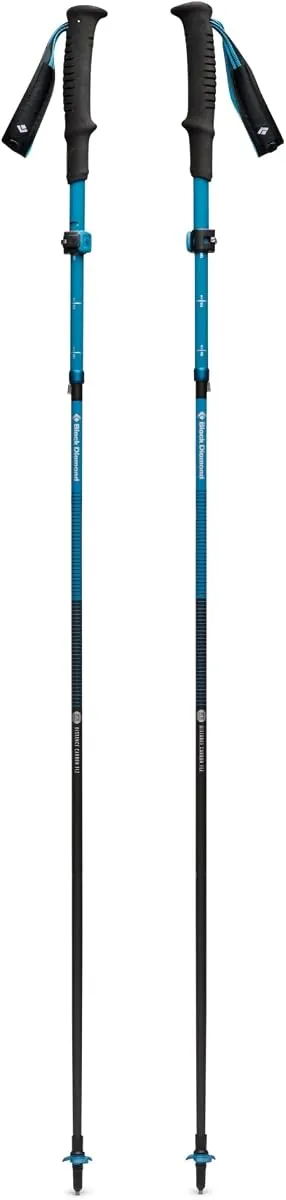
Black Diamond Distance Carbon Z Z-Poles
4.1

Black Diamond Distance Carbon Z Z-Poles

The pole the rest of the category gets measured against, and the lightest thing here by a clear margin. Amazon's listing puts the 110 cm pair at 9.6 ounces; OutdoorGearLab measured a pair at 8.7. It's fixed length, which is the whole idea. There's no lock to slip and nothing to adjust at hour nine. Buy this if you know your length and you want the least pole possible between your hand and the ground.

Check Price
Best Grip System
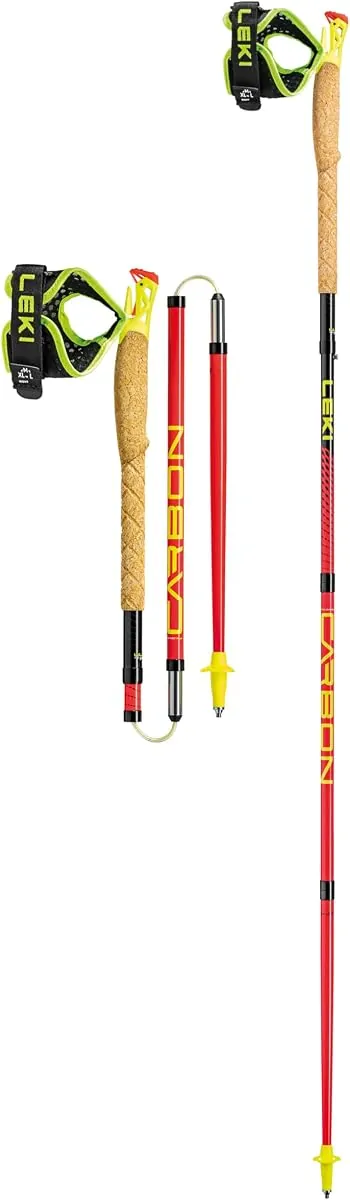
LEKI Ultratrail FX.One Trekking Poles
4.8

LEKI Ultratrail FX.One Trekking Poles

The best-rated pair on this page at 4.8 stars across 271 reviews, and the reason is the hand interface rather than the shaft. The Trail Shark system is a glove with a sewn-in loop that clicks into the grip head, so you can drop both poles at an aid station in about a second and clip back in without stopping. Cork grips instead of foam. If you stow and redeploy repeatedly on a long day, this is the pole that makes that painless.

Check Price
Best Adjustable
Black Diamond Distance Carbon FLZ Folding Poles
4.4

Black Diamond Distance Carbon FLZ Folding Poles

The Distance Carbon Z with a FlickLock section added, which buys you 15 cm of adjustment for about 70 grams. That's worth it if you pitch a trekking-pole shelter, want to shorten for a climb and lengthen for the descent, or split one pair between two people of different heights. Skip it otherwise. The fixed Carbon Z is lighter and cheaper.

Check Price
Comparison Table

Every Pick, Side by Side

Best Overall
Best For
Racing and fast days on marked trail
Difficulty
Intermediate
Price
$$$
Best Grip System
Best For
Long days spent stowing and redeploying
Difficulty
Intermediate
Price
$$$
Best Adjustable
Best For
Fastpacking, shelters and shared poles
Difficulty
Intermediate
Price
$$$
Recommended #4
Best For
A first pair of folding carbon poles
Difficulty
Beginner
Price
$$$
Recommended #5
Best For
Cheap folding carbon you won't mourn
Difficulty
Beginner
Price
$$$
The Lineup

5 Best Trail Running Poles, Compared

Detailed picks with verdicts, strengths, tradeoffs, and the situations where each one makes the most sense.

Best Overall
Black Diamond Distance Carbon Z Z-Poles
4.1 (183 Amazon ratings)

Black Diamond Distance Carbon Z Z-Poles

Quick verdict: The pole the rest of the category gets measured against, and the lightest thing here by a clear margin. Amazon's listing puts the 110 cm pair at 9.6 ounces; OutdoorGearLab measured a pair at 8.7. It's fixed length, which is the whole idea. There's no lock to slip and nothing to adjust at hour nine. Buy this if you know your length and you want the least pole possible between your hand and the ground.

Why It Stands Out

  • The lightest pair on this page, at roughly 270 grams for the 110 cm size
  • Fixed length means no locking hardware to slip or seize on you mid-run
  • Three-section Z-fold packs to about 16 inches, short enough for a vest quiver
  • Interchangeable carbide and non-scarring rubber tech tips come in the box

Pros

  • Deploys in one motion: pull the cord and the segments snap together
  • Black Diamond sells replacement tips and baskets years after purchase
  • Cheaper than the Leki here while being noticeably lighter

Cons

  • Foam grips and basic straps are the weak point next to Leki's cork and clip-in system
  • Fixed length is unforgiving: order the wrong size and you cannot fix it
  • 4.1 stars is the lowest premium rating here, and buyers who break carbon say so loudly

Best Situations

Trail racingFast day runsVertical kmWeight-first buyers
Difficulty
Intermediate
Price Range
$$$
Best Grip System
LEKI Ultratrail FX.One Trekking Poles
4.8 (271 Amazon ratings)

LEKI Ultratrail FX.One Trekking Poles

Quick verdict: The best-rated pair on this page at 4.8 stars across 271 reviews, and the reason is the hand interface rather than the shaft. The Trail Shark system is a glove with a sewn-in loop that clicks into the grip head, so you can drop both poles at an aid station in about a second and clip back in without stopping. Cork grips instead of foam. If you stow and redeploy repeatedly on a long day, this is the pole that makes that painless.

Why It Stands Out

  • Trail Shark clip-in strap: release and re-attach without threading a loop
  • Cork grip handles sweat better than foam and molds to your hand over a season
  • Folds to roughly 14 inches, the most compact packed size in this lineup
  • Highest rating and largest premium review base here: 4.8 stars over 271 reviews

Pros

  • Load spreads across the whole lower hand rather than a strap edge
  • Extended grip section lets you choke down on a steep pitch without stopping
  • Leki's tips and parts are widely available years later

Cons

  • The most expensive pair here at $219.95, and $40 more than the lighter Black Diamond
  • Published weights land between roughly 310 and 370 grams a pair, so it is not the lightest
  • Treeline Review's testers reported chafing and blisters from the glove in humidity
  • The glove is a separate item you have to remember to bring

Best Situations

Ultra racingAll-day mountain runsSweaty handsFrequent stowing
Difficulty
Intermediate
Price Range
$$$
Best Adjustable
Black Diamond Distance Carbon FLZ Folding Poles
4.4 (26 Amazon ratings)

Black Diamond Distance Carbon FLZ Folding Poles

Quick verdict: The Distance Carbon Z with a FlickLock section added, which buys you 15 cm of adjustment for about 70 grams. That's worth it if you pitch a trekking-pole shelter, want to shorten for a climb and lengthen for the descent, or split one pair between two people of different heights. Skip it otherwise. The fixed Carbon Z is lighter and cheaper.

Why It Stands Out

  • Adjusts across 95 to 110 cm, so one pair covers two runners or two terrain profiles
  • Still genuinely light for an adjustable carbon pole at around 340 grams a pair
  • External FlickLock lever: visible, one-handed, and fixable with a small screw
  • Works as tent poles for a trekking-pole shelter, which the fixed version cannot

Pros

  • Folds to roughly 14 inches despite the extra adjustable section
  • Carbide tips and adjustable straps included
  • The only pole here that solves both the shelter and the shared-pair problem

Cons

  • At $225, the most expensive pair on this page
  • Only 26 ratings, the thinnest review base on this page
  • Heavier and pricier than the fixed Carbon Z for a feature many runners never use
  • Foam grips, not cork

Best Situations

FastpackingTrekking-pole sheltersShared polesMixed terrain
Difficulty
Intermediate
Price Range
$$$
Recommended #4
Trekology Trek-Z Prima 3K Carbon Fiber Trekking Poles
4.6 (114 Amazon ratings)

Trekology Trek-Z Prima 3K Carbon Fiber Trekking Poles

Quick verdict: Carbon shafts, cork grips and a 15-inch tri-fold for fifty dollars, rated 4.6 across 114 reviews. At 220 grams per pole it's roughly 170 grams a pair heavier than the Black Diamond, which is about the weight of a gel and a half. If you've never run with poles and don't yet know whether you'll like it, this is the sane way to find out without spending two hundred dollars on the answer.

Why It Stands Out

  • Cork grip at a price where almost everything else is foam
  • Adjusts 100 to 120 cm, so you can learn what length you actually want
  • Folds to 15 inches, close enough to the premium poles to stow the same way
  • Ships with carbide tips, rubber feet, mud baskets, snow baskets and a stuff sack

Pros

  • A quarter the price of the Leki for the same basic format
  • Adjustability makes it forgiving if you're between sizes
  • Metal flip-locks rather than the internal twist locks that fail on cheap poles

Cons

  • 440 grams a pair is a long way off race weight
  • Carbon at this price still snaps, and Trekology's spares support is thinner than the big brands'
  • 114 reviews is a modest base next to the established poles here

Best Situations

First polesWeekend trail runsFastpacking on a budgetHiking too
Difficulty
Beginner
Price Range
$$$
Recommended #5
Cascade Mountain Tech Carbon Fiber Folding Trekking Poles
4 (281 Amazon ratings)

Cascade Mountain Tech Carbon Fiber Folding Trekking Poles

Quick verdict: The cheap folding carbon default, and it's on this page because it's genuinely buyable, not because it's good. It carries the biggest review base here at 281 ratings and the lowest average at 4.0 stars, which is the pattern you get from a pole that mostly works and occasionally doesn't. Worth it if you run rocky ground where you expect to break something, or if fifty dollars is already a stretch.

Why It Stands Out

  • Folding carbon with a cork grip and quick-adjust lever locks at $69.99
  • Comes with carbide tips, rubber feet, mud baskets, snow baskets and a case
  • Cheap enough that snapping one on talus is an annoyance, not a disaster

Pros

  • The most reviewed pole in this guide, so you know what you're getting into
  • Cascade's replacement parts are cheap and easy to find
  • Doubles fine as a hiking pole, which most race poles don't do comfortably

Cons

  • 4.0 stars is the lowest rating on this page, and the complaints cluster on lock slip
  • Heaviest option here and the least refined lock action
  • Packed length is longer than the premium Z-poles, so it sits less neatly on a vest

Best Situations

Budget buyersRocky terrainBackup polesHiking and running
Difficulty
Beginner
Price Range
$$$
Buying Guide

What to Check Before You Buy

Folded length decides whether you'll actually carry them

Telescoping poles collapse to somewhere around 24 to 26 inches. Folding Z-poles break into three linked segments and come down to about 14 to 15 inches. Only the second number fits in a running vest's rear pocket or a pole quiver, which is most of the reason folding poles took over trail running. A pole you have to carry in your hands for the flat miles is a pole you'll leave at home. Every pair on this page folds, and the ones near 14 inches sit on a vest more cleanly than the ones near 16.

Fixed length is the racing default, and that's on purpose

Dropping the adjustment mechanism saves weight and gets rid of the part most likely to slip under load. It also takes away a decision you'd otherwise be making mid-climb. Andrew Skurka puts the cost of adjustability at roughly three ounces and twenty dollars a pair and says it isn't worth it for ultrarunning. The catch is that you have to get the length right at checkout, because you can't fix it later. Adjustable folding poles earn their keep in a few cases: you want to shorten five to ten centimeters for a sustained climb, you pitch a trekking-pole shelter, or two people share one pair.

Sizing: elbow at a right angle, then pick a philosophy

Stand in your running shoes on flat ground, put the tip down beside your foot and hold the grip. Your forearm should sit parallel to the ground with your elbow at about 90 degrees. Then the manufacturers disagree by a full size: Mountain King multiplies your height in centimeters by 0.67, while Leki's retail charts use 0.70. A runner of 5 foot 8 lands on 115 cm by one and 120 cm by the other, and poles only come in 5 cm steps, so treat it as a range rather than an answer. Skurka sizes up. Jason Koop suggests beginners start on the short side. If you can't decide, that's the argument for buying adjustable first.

The grip and strap are what your hands argue with all day

There are three systems and they behave very differently. A conventional wrist strap is the loop you come up through from underneath, then press down onto. Leki's Trail Shark is a separate glove with a sewn-in loop that clicks into the grip head, so you can release both poles at an aid station in about a second and clip back in without breaking stride. Treeline Review's testers also reported chafing and blisters with it in humidity, and it's one more thing you have to remember to bring. Strapless is the third option, and it suits people who take their hands out on descents anyway. Grip material splits the usual way: cork handles sweat and molds to your hand, foam is lighter and cheaper but goes slick when wet.

Racing Marked Trails
$150-$225

Fixed-length carbon Z-fold, under about 300 grams a pair. There's no lock to slip and nothing to adjust when you're leaning on it at hour nine. Get the length right before you order, because you're stuck with it.

Fastpacking & Shared Poles
$200-$225

Adjustable folding carbon. It costs about three ounces and twenty dollars more than a fixed pole. What you get back is five to ten centimeters of terrain tuning, plus a pole that pitches a trekking-pole shelter and can be shared by two people of different heights.

First Pair & Rocky Descents
$50-$70

Buy cheap and find out whether you're a pole person at all. Budget folding poles weigh 100 to 250 grams more a pair, which is less than a candy bar, and breaking one on a talus field costs you fifty dollars instead of two hundred.

Full Catalog

Compare All 5 Trail Running Poles

Want to browse beyond the ranked picks? Filter and sort the full trail running poles listing below.

Best Ultralight Trail Running Poles of 2026 — All Products

5 Products
FAQ

Frequently Asked Questions

Usually, though the rules differ in ways that trip people up, so read your race's regulations instead of assuming. UTMB Mont-Blanc makes poles optional but requires you to carry them for the entire race if you start with them. You can't pick them up partway through, and the penalty is measured in hours rather than minutes. Western States went the other direction: after decades of banning poles outright, its performance rules now allow them anywhere on the course and let you drop or collect them at crewed aid stations. Two of the biggest hundred-milers in the sport have opposite rules.

How We Choose Products

How These Picks Are Chosen

Reader-supported and free of paid placements. Every pick is ranked on published specs and Amazon buyer ratings, not on who pays us.

Spec Research

Each pick is compared on published specs, materials, design, and category fit across the major brands.

Practical Fit

Rankings factor in how well each product matches common hiking, backpacking, and trail running needs, not just popularity.

Amazon Buyer Ratings

Star ratings and review volume from verified Amazon buyers are factored in to reflect real-world satisfaction.

Value

A pick earns its spot by delivering useful performance for the money, whether budget or premium.

GOT YOUR POLES.
NOW THE REST.

Boots, day packs and budget trekking poles are already up. New guides go live as I finish them.

Browse All Guides
See Top Picks