Skip to content
Best Hiking Binoculars of 2026 — hiking gear
Hiking Binoculars Buying Guide

Best Hiking Binoculars of 2026

Eight pocket and compact binoculars small enough to carry all day, ranked on weight first, then brightness for the size, eye relief, field of view and weatherproofing.

View the top picksUpdated 25 September 2026 · Ranked from specs & buyer reviews
How to Choose

How to Choose Binoculars for Hiking

With hiking binoculars I'd worry about weight before optics. The glass that shows you a hawk on a snag or the route up the next ridge only helps if it's in your pocket, and most binoculars are built for someone standing next to a car.

So this page only ranks binoculars small enough to carry all day: pocket 8x25s and 10x25s that weigh under 13 ounces, and compact 8x28 to 8x32 models that weigh a little over a pound at most. We ranked them on weight and size first, then on how bright and sharp they are for that size, then on eye relief, field of view and weatherproofing. My dad and I haven't bench-tested any of them.

The order comes from each maker's published specs, independent reviews from Audubon's All About Birds and Field & Stream, and what Amazon buyers report after using them. Review counts only back up the order. The Nocs has the most ratings here and finishes seventh, because its short eye relief shuts out anyone hiking in glasses.

One note on the ceiling. Swarovski's CL Pocket is on this list, and it sits at the very top of what a pocket binocular costs, alongside Zeiss's Victory Pocket and Leica's Ultravid, which are not. Expect roughly $900 to $1,100 at that tier. The money buys a brighter image that stays sharp out to the edges. It doesn't buy a lighter binocular: the CL Pocket weighs more than the Zeiss Terra ranked above it.

Quick Picks

Top Three at a Glance

Short on time? Start with these top-rated hiking binoculars picks.

Best Overall
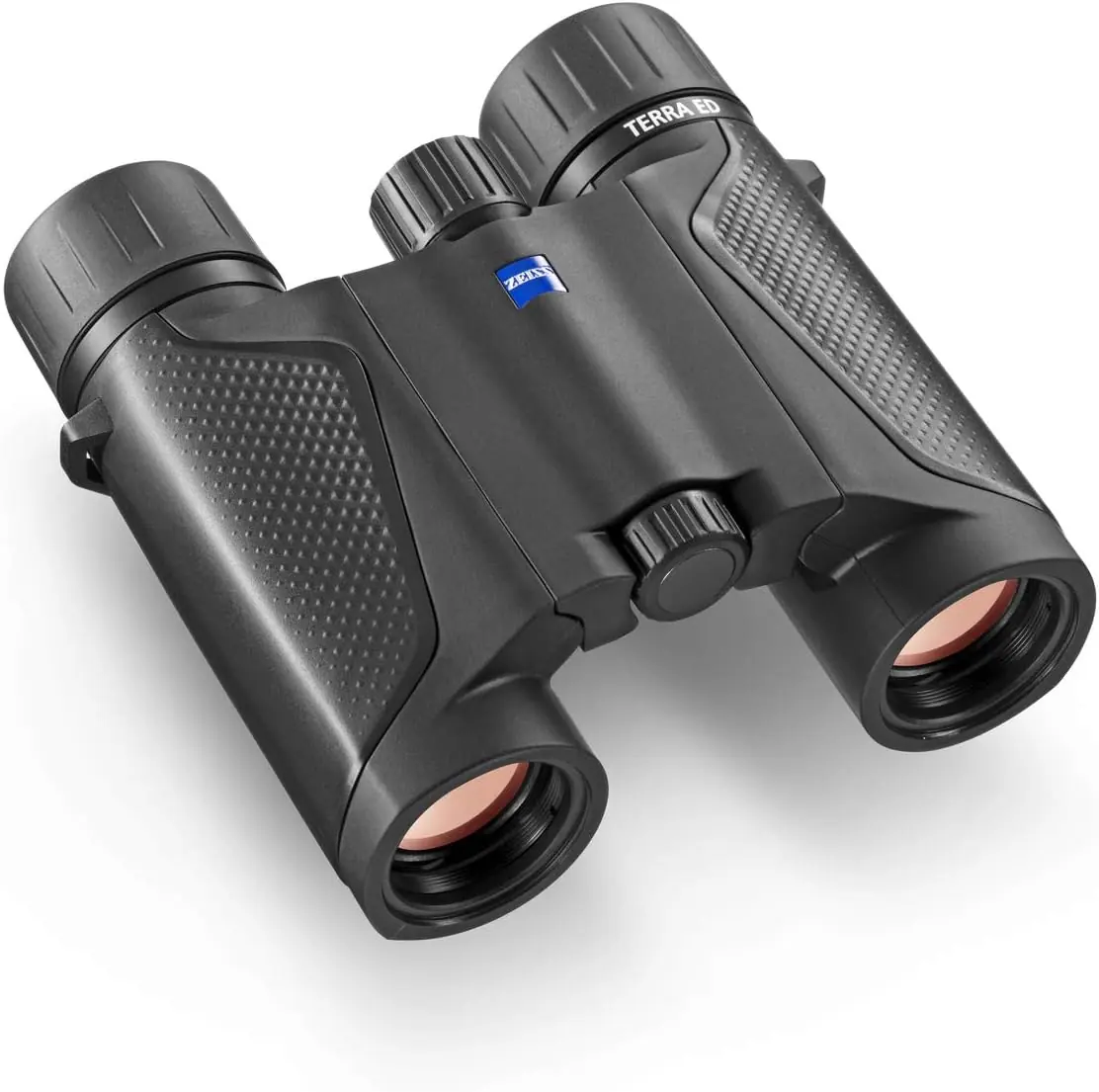
Zeiss Terra ED Pocket 8x25
4.5

Zeiss Terra ED Pocket 8x25

The Terra ED Pocket is the binocular I'd hand to anyone asking for one pair to take hiking. It weighs 10.9 ounces, folds small enough for a jacket pocket, and still carries Schott ED glass with Zeiss's hydrophobic coating on the outer lenses.Its specs are strong everywhere a hiker looks: 16mm of eye relief for glasses, a 6.2-foot close focus for butterflies and flowers, and a 357-foot field of view. The limit is the 25mm objective, which dims earlier at dusk than the compacts further down.

Check Price
Best Premium
Swarovski Optik CL Pocket 8x25
4.8

Swarovski Optik CL Pocket 8x25

The CL Pocket is what a pocket binocular looks like with no budget. Optics reviewers, including Audubon's All About Birds, keep putting Swarovski's small binoculars at the top for sharpness, and the specs back the build: 12.2 ounces, 17mm of eye relief and waterproofing rated to 4 meters. It also costs more than twice as much as anything else here and weighs a little more than the Zeiss. The linked listing includes Swarovski's Wild Nature field bag in green.

Check Price
Best Value
Vortex Diamondback HD 8x28
4.7

Vortex Diamondback HD 8x28

The Diamondback HD 8x28 is the value pick because it gets you most of what a premium compact does for a fraction of the price. It weighs 14 ounces, has the longest eye relief here at 18mm and focuses down to 6 feet. Its 3.5mm exit pupil is a touch brighter than a 25mm pocket model's.Vortex's unconditional lifetime warranty covers it whatever happened, which counts for a lot on something that gets dropped on rock. The one real miss for a hiker is size: it won't fold as small as the pocket picks.

Check Price
Comparison Table

Every Pick, Side by Side

Compare all 8 picks
Best Overall
Best For
Most hikers who want real glass in a pocket
Difficulty
Beginner
Price
$$$
Best Premium
Best For
Hikers who want the best image in a pocket size
Difficulty
Intermediate
Price
$$$
Best Value
Best For
The best view per dollar for a hiker
Difficulty
Beginner
Price
$$$
Recommended #4
Best For
Low light and the widest view with ED glass
Difficulty
Intermediate
Price
$$$
Recommended #5
Best For
The widest view on the page for less money
Difficulty
Beginner
Price
$$$
Recommended #6
Best For
The lightest pair with the most reach
Difficulty
Intermediate
Price
$$$
Recommended #7
Best For
A tough budget pocket pair for hikers without glasses
Difficulty
Beginner
Price
$$$
Recommended #8
Best For
The brightest view for the least money
Difficulty
Beginner
Price
$$$
The Lineup

8 Best Hiking Binoculars, Compared

Detailed picks with verdicts, strengths, tradeoffs, and the situations where each one makes the most sense.

Best Overall
Zeiss Terra ED Pocket 8x25
4.5 (351 Amazon ratings)

Zeiss Terra ED Pocket 8x25

Quick verdict: The Terra ED Pocket is the binocular I'd hand to anyone asking for one pair to take hiking. It weighs 10.9 ounces, folds small enough for a jacket pocket, and still carries Schott ED glass with Zeiss's hydrophobic coating on the outer lenses.

Its specs are strong everywhere a hiker looks: 16mm of eye relief for glasses, a 6.2-foot close focus for butterflies and flowers, and a 357-foot field of view. The limit is the 25mm objective, which dims earlier at dusk than the compacts further down.

Why It Stands Out

  • 10.9 oz and folds small enough for a jacket pocket
  • Schott ED glass cuts color fringing
  • 16mm eye relief works with glasses
  • 6.2 ft close focus for flowers and insects

Pros

  • Lighter than any other 8x binocular with ED glass here
  • Zeiss's limited lifetime warranty in the US
  • Focuses closer than most of the pocket models here

Cons

  • A 3.1mm exit pupil fades at dusk and under thick canopy
  • Costs a good deal more than the Vortex compact
  • Less reach on distant ridges than the 10x Athlon

Best Situations

Day hikes where the binocular rides in a hip-belt or chest pocketBackpacking trips where every ounce countsSpotting wildflowers and birds at close range
Difficulty
Beginner
Price Range
$$$
Best Premium
Swarovski Optik CL Pocket 8x25
4.8 (19 Amazon ratings)

Swarovski Optik CL Pocket 8x25

Quick verdict: The CL Pocket is what a pocket binocular looks like with no budget. Optics reviewers, including Audubon's All About Birds, keep putting Swarovski's small binoculars at the top for sharpness, and the specs back the build: 12.2 ounces, 17mm of eye relief and waterproofing rated to 4 meters. It also costs more than twice as much as anything else here and weighs a little more than the Zeiss. The linked listing includes Swarovski's Wild Nature field bag in green.

Why It Stands Out

  • Swarovski's HD glass and coatings in a pocket body
  • Waterproof to 4 m, about 13 ft
  • 17mm eye relief with twist-in eyecups
  • 10-year warranty on the instrument

Pros

  • Still pocket-sized at 12.2 oz
  • The deepest published waterproof rating on this page
  • Folds flat and ships with a field bag

Cons

  • Far more money than any other pick
  • Only 19 Amazon ratings on the linked listing
  • 8.2 ft close focus is longer than the Zeiss

Best Situations

Hikers who already carry premium gear and use binoculars every tripWildlife trips to parks like Yellowstone or DenaliA binocular meant to last decades
Difficulty
Intermediate
Price Range
$$$
Best Value
Vortex Diamondback HD 8x28
4.7 (343 Amazon ratings)

Vortex Diamondback HD 8x28

Quick verdict: The Diamondback HD 8x28 is the value pick because it gets you most of what a premium compact does for a fraction of the price. It weighs 14 ounces, has the longest eye relief here at 18mm and focuses down to 6 feet. Its 3.5mm exit pupil is a touch brighter than a 25mm pocket model's.

Vortex's unconditional lifetime warranty covers it whatever happened, which counts for a lot on something that gets dropped on rock. The one real miss for a hiker is size: it won't fold as small as the pocket picks.

Why It Stands Out

  • 18mm eye relief, the longest here
  • 6 ft close focus
  • Vortex's unconditional lifetime warranty
  • 3.5mm exit pupil for a little more low-light margin

Pros

  • Priced well under the Zeiss and the Monarch M7
  • Comfortable with or without glasses
  • Tripod-adaptable if you want to glass from camp

Cons

  • Vortex's HD glass isn't marketed as ED
  • 14 oz, and the body won't fold into a pocket
  • No published waterproof depth rating

Best Situations

A first real pair of binoculars for hikingHikers who wear glassesFamilies sharing one binocular on day hikes
Difficulty
Beginner
Price Range
$$$
Recommended #4
Nikon Monarch M7 8x30
4.8 (50 Amazon ratings)

Nikon Monarch M7 8x30

Quick verdict: The Monarch M7 is the pick for hikers who are out at the edges of the day. Its 8x30 layout gives a 3.8mm exit pupil, and its 435-foot field of view is one of the widest on this page, which makes finding a bird in a tangle of branches much easier.

It pairs that with ED glass and a waterproof rating of 1 meter for 10 minutes. What you give up is weight, since 16.4 ounces is more than any pocket pick, and the 15.1mm eye relief is just enough for most glasses.

Why It Stands Out

  • ED glass with dielectric prism coatings
  • 435 ft field of view at 1,000 yards
  • 3.8mm exit pupil for dawn and dusk
  • Waterproof to 1 m for 10 minutes

Pros

  • Bright, wide view that's easy to aim
  • Locking diopter that won't get knocked out of place
  • Usually sold below its list price

Cons

  • 16.4 oz is a real step up from a pocket binocular
  • 15.1mm eye relief is on the short side for thick frames
  • Too big for most hip-belt pockets

Best Situations

Sunrise hikes and evening wildlife watchingForest trails where the light is dim at middayBirding hikes where fast target finding matters
Difficulty
Intermediate
Price Range
$$$
Recommended #5
Nikon Prostaff P7 8x30
4.8 (80 Amazon ratings)

Nikon Prostaff P7 8x30

Quick verdict: The Prostaff P7 is the budget cousin of the Monarch M7, and on paper it beats it in one way: its 456-foot field of view is the widest on this page. It shares the M7's 8x30 layout and 3.8mm exit pupil, so the view stays just as bright at dusk.

What Nikon leaves out at this tier is ED glass, so expect more color fringing on high-contrast edges. At 17.1 ounces it's also one of the heavier picks, and the 8.2-foot close focus is long for flowers.

Why It Stands Out

  • 456 ft field of view, the widest here
  • 3.8mm exit pupil
  • Phase-corrected roof prisms
  • 15.4mm eye relief

Pros

  • Wide, easy-to-aim view for the price
  • Brighter at dusk than any pocket binocular
  • Locking diopter and water-repellent lens coating

Cons

  • No ED glass
  • 17.1 oz, second heaviest on the page
  • 8.2 ft close focus

Best Situations

Hikers who want a wide, bright view on a mid-range budgetScanning open slopes for elk or bighornCar-to-trail day hikes where weight matters less
Difficulty
Beginner
Price Range
$$$
Recommended #6
Athlon Optics Midas G2 UHD 10x25
4.6 (39 Amazon ratings)

Athlon Optics Midas G2 UHD 10x25

Quick verdict: The Midas G2 UHD 10x25 is the only 10x binocular here and the lightest pick of all at 8.8 ounces. If what you look at on a hike is far away and holds still, like a ridge you might climb tomorrow or goats on a cliff band, the extra power helps.

It comes with the trade-offs 10x always brings: a narrower 284-foot view, more visible hand shake and a 2.5mm exit pupil that dims first. Athlon lists close focus around 5.2 feet, though All About Birds measured closer to 6.3.

Why It Stands Out

  • 8.8 oz, the lightest binocular on this page
  • 10x magnification for distant detail
  • ED glass and dielectric prism coating
  • Athlon's no-fault lifetime warranty

Pros

  • Disappears in a pocket
  • More reach than any 8x here
  • 15.5mm eye relief

Cons

  • 10x shows every tremor when you're out of breath
  • Narrowest field of view on the page
  • 2.5mm exit pupil is the dimmest in low light

Best Situations

Ultralight trips where ounces decide the kitGlassing far ridgelines and routesBracing on a trekking pole for a steadier view
Difficulty
Intermediate
Price Range
$$$
Recommended #7
Nocs Provisions Standard Issue 8x25
4.5 (527 Amazon ratings)

Nocs Provisions Standard Issue 8x25

Quick verdict: The Standard Issue is the budget pocket pick, and it's built for abuse: rubber armor all over, an IPX7 waterproof rating, and Nocs's no-questions lifetime warranty. At 11.85 ounces it weighs about an ounce more than the Zeiss. For kids and hikers in contacts, it's a fine first pair.

It ranks seventh for one reason. Nocs lists 10mm of eye relief, which is too short to see the full image through glasses. Close focus is long too, though that matters less on a hike: Nocs says 13 feet, and All About Birds found it longer still.

Why It Stands Out

  • IPX7 waterproof rating
  • Lifetime warranty with no questions asked
  • Rubber armor over the whole body
  • 11.85 oz

Pros

  • The cheapest binocular on this page
  • Rugged enough to hand to a kid
  • Comes in several colors, so it's easy to find in a pack

Cons

  • 10mm eye relief is too short for glasses
  • 13 ft close focus, by Nocs's own figure
  • No ED glass

Best Situations

A first binocular for a young hikerRough trips where it may get dropped or soakedHikers who don't wear glasses
Difficulty
Beginner
Price Range
$$$
Recommended #8
Celestron Nature DX 8x32
4.4 (380 Amazon ratings)

Celestron Nature DX 8x32

Quick verdict: The Nature DX 8x32 is the budget way to get a big exit pupil. Its 4mm exit pupil is the largest on this page, so on paper it has more low-light margin than anything here, and 17.5mm of eye relief suits glasses.

The trade is weight. At 18 ounces it's the heaviest binocular on this page, and it has no ED glass. Close focus is a useful 6.5 feet, and it makes most sense for someone who wants one pair for the trail and the backyard feeder.

Why It Stands Out

  • 4mm exit pupil, the largest here
  • 17.5mm eye relief
  • 6.5 ft close focus
  • Phase-coated BaK-4 roof prisms

Pros

  • Bright view for the money
  • Good with glasses
  • Celestron's limited lifetime warranty

Cons

  • 18 oz, the heaviest on the page
  • No ED glass, so edges fringe in bright light
  • Doesn't fold small

Best Situations

Hikers on a tight budget who hike early or lateOne pair for the trail and homeShort hikes where weight matters less
Difficulty
Beginner
Price Range
$$$
Buying Guide

What to Check Before You Buy

Is 8x or 10x better for hiking?

For most hikers, 8x is better. Every tremor of your hands is magnified along with the view, so a 10x image shakes more when you're breathing hard at the top of a climb. Audubon recommends 8x-class binoculars for general use for that reason, and seven of the eight picks here are 8x. An 8x also shows a wider slice of the world, which makes a bird or a cairn easier to find and to follow once it moves.

10x earns its place when you mostly look at distant, still things: a far ridgeline, sheep on a cliff, a route across a talus field. The Athlon Midas 10x25 is here for that job, and it's also the lightest binocular on the page.

Should you get a pocket 25mm or a compact 30mm binocular?

Pick a 25mm pocket binocular if weight and size decide whether you bring it at all, and a 28 to 32mm compact if you often hike at dawn, at dusk or under a thick forest canopy. The difference is the exit pupil, the beam of light that reaches your eye, and you find it by dividing the objective size by the magnification.

An 8x25 gives you a 3.1mm exit pupil, an 8x30 about 3.8mm and an 8x32 4mm. In daylight your own pupil is small and you won't see a difference. In twilight it opens to 5mm or more, and the bigger exit pupil looks noticeably brighter. You pay for that in weight: the pocket picks here run from under 9 ounces to about 12, while the compacts run 14 to 18 and won't fold small enough for a hip-belt pocket.

How much eye relief do you need if you wear glasses?

If you hike in glasses, look for at least 15mm of eye relief, and 16 to 18mm is more comfortable. Eye relief is how far behind the eyepiece your eye can sit and still see the whole image. Glasses push your eye back, and with too little eye relief you see a small circle ringed in black.

Seven of the eight binoculars here publish 15mm or more, and most of them have eyecups that twist down for glasses wearers. The exception is the Nocs Standard Issue, which Nocs lists at 10mm. It's a fine binocular for someone who hikes in contacts or with bare eyes, and a frustrating one for anyone else.

What does waterproof mean on a binocular?

It means the body is sealed with O-rings and the inside is filled with dry nitrogen or argon, so rain can't get in and the lenses can't fog from the inside when you walk from a cold summit into warm air. Every binocular on this page is sold as waterproof and fogproof.

What they don't share is a tested depth. Swarovski rates the CL Pocket waterproof to 4 meters, about 13 feet. Nikon rates the Monarch M7 to 1 meter for 10 minutes, and Nocs publishes an IPX7 rating under the IEC 60529 standard, which means 1 meter for 30 minutes.

Zeiss gives the Terra ED a pressure rating rather than a depth, and the rest simply say waterproof. For a hiker that difference rarely matters, since rain and a stream crossing are the realistic tests, but a published rating is a claim the maker has put its name to.

Want it in a pocket every hike
8x25, under 13 oz

Get a pocket 8x25. The Zeiss Terra ED Pocket folds small enough for a jacket pocket, weighs 10.9 ounces and has ED glass, so it's the one to buy if you only ever get one pair. If money is no object, the Swarovski CL Pocket is the step up, with the image optics reviewers rate highest at this size.

Hike at dawn, dusk or in forest
3.8-4mm exit pupil

Get a compact 8x30 or 8x32. The Nikon Monarch M7 pairs ED glass with a very wide 435-foot field of view and a 3.8mm exit pupil that holds up when the light goes. The Vortex Diamondback HD 8x28 is lighter and much cheaper, and its 3.5mm exit pupil gives up only a little of that.

Mostly scanning far ridges
10x, 8.8 oz

Get the Athlon Midas G2 UHD 10x25. It brings distant slopes closer than any 8x here and weighs less than every other pick. The extra shake that comes with 10x mostly goes away if you brace it on a trekking pole or a rock.

Full Catalog

Compare All 8 Hiking Binoculars

Want to browse beyond the ranked picks? Filter and sort the full hiking binoculars listing below.

Best Hiking Binoculars of 2026 — All Products

8 Products
FAQ

Frequently Asked Questions

For most hikers, the Zeiss Terra ED Pocket 8x25. It weighs 10.9 ounces and folds small enough for a jacket pocket. It also has ED glass, which cuts the color fringing cheaper glass shows around branches and rock edges. On a tight budget, get the Vortex Diamondback HD 8x28. With no budget at all, the Swarovski CL Pocket 8x25 is the one optics reviewers rate highest at this size.

Glossary

The words on this page

Every term this guide leans on has its own page with a plain answer at the top.

Browse the whole glossary →
How We Choose Products

How These Picks Are Chosen

Reader-supported and free of paid placements. Every pick is ranked on published specs and Amazon buyer ratings, not on who pays us.

Spec Research

Each pick is compared on published specs, materials, design, and category fit across the major brands.

Practical Fit

Rankings factor in how well each product matches common hiking, backpacking, and trail running needs, not just popularity.

Amazon Buyer Ratings

Star ratings and review volume from verified Amazon buyers are factored in to reflect real-world satisfaction.

Value

A pick earns its spot by delivering useful performance for the money, whether budget or premium.

SPOTTED THE ROUTE.
NOW KNOW WHERE YOU ARE.

A binocular shows you the ridge. A GPS watch tells you which one it is. The watch guide ranks the ones with real maps and battery for a long day.

See GPS Watches