Best Bear Canisters of 2026 — hiking gear
Bear Canister Buying Guide

Best Bear Canisters of 2026

Six hard-sided canisters, ranked on where each one is legal first, then on how much food you get for every ounce you carry.

View Top PicksUpdated 2 August 2026 · Ranked from specs & buyer reviews

If you buy through a link on this page we may earn a commission, at no extra cost to you. It never changes how anything is ranked.

How to Choose

How to Choose a Bear Canister

Almost every piece of gear you buy is a matter of taste. A bear canister isn't. In the places that require one, a ranger can turn you around at the trailhead for carrying the wrong container, and it's the park that publishes the list of what counts, not the manufacturer. So the first question about any canister isn't how light it is or how much it holds. It's whether the agency running the ground you're walking on has put that exact model on its list. Get that wrong and the rest of the spec sheet doesn't matter.

Two certifications do most of the work. IGBC certification comes from the Interagency Grizzly Bear Committee, which puts a container in front of captive grizzlies at the Grizzly and Wolf Discovery Center in West Yellowstone or the bear center at Washington State University and requires it to survive an hour of a determined bear working on it. SIBBG was the Sierra equivalent for black bears. It's no longer active, though its stamp is still printed on plenty of canisters and still quoted in listings. In its place, individual parks now publish their own allowed-container lists. Yosemite's names about a dozen specific models and runs shorter than the IGBC list, so a canister can be grizzly-certified and still not be on it.

Once legality is settled, the trade is volume against weight, and the spread is narrower than it looks. The mainstream hard-sided canisters all land between roughly 7 and 12 liters and between 2 and 3.5 pounds empty, which is a lot of weight for something that carries nothing itself. Above that sits a premium tier this page doesn't cover, because Amazon doesn't sell it: Wild Ideas' carbon fiber Bearikades run about $255 to $400 direct from the maker, and Grubcan's carbon and Kevlar canister is around $500, or rentable by the day. All that money buys is weight, somewhere between half a pound and a pound less for the same volume. Nothing else changes. If you'll use a canister a handful of nights a year, the plastic ones below do the identical job for a fifth of the price. Out for a month a season and counting grams, the carbon tier starts to make sense.

The six below are ranked on approval first, then on how much food each holds per ounce you carry, and last on how pleasant it is to open with cold hands. That ordering comes from published specs, each park's own allowed list, and what Amazon buyers report after living with them. I haven't personally had a bear work on all six overnight, and I'm not going to pretend I have. Every star rating, review count and price was read off the listing on August 2, 2026, and all six were in stock that day. One quirk worth flagging: Amazon sells the BearVault sizes as variants of a single listing and pools the reviews across all of them, so the BV500 and BV450 rows below carry the same 4.7 from 2,252 ratings. Read that as one signal about BearVault, not two.

The Anatomy

What You're Actually Buying

A bear canister is a simpler object than almost anything else in your pack. It's a tube, a lid and a lock, which means the few decisions that exist all matter. Here's what each part does, and which ones you'll notice on the trail.

The body and what it's made of

Essential

Polycarbonate is the clear stuff: light for its strength, and you can see what's inside, which saves unpacking the whole thing to find breakfast. ABS polymer is the opaque black alternative, slightly heavier, no visibility, and the material New York's rules push you toward because a bear that can see food works at it longer. A few use proprietary polymer blends. All of them get chosen for the same reason: rigid enough not to crush, and smooth enough that a bear finds nothing to bite down on.

The lid and its locking system

Essential

The single part you'll have an opinion about. Tool-free lids use tabs you depress while turning, which is quick and needs nothing but a thumbnail. Coin-operated lids use recessed screws you turn with a coin, a key or a screwdriver, which is slower but works in gloves and can't be defeated by a clever bear's incisor. Neither is wrong. Pick the one that suits your hands and your park's history.

Smooth sides and rounded edges

Essential

Every approved canister is deliberately shaped so a bear has nothing to grip or lever or fit its jaws around. That's why they're all roughly 8 to 9 inches in diameter, wider than a black bear can comfortably bite, and why none of them have handles, straps or lash points molded on. Anything sticking out is something a bear can work with.

The volume, in liters or cubic inches

Essential

Quoted both ways and rarely converted for you, which makes comparison shopping annoying. The math: 440 cubic inches is 7.2 liters, 614 is 10, 700 is 11.5, 716 is 11.7. Manufacturers translate these into days of food using their own optimistic assumptions, so treat the day figures as marketing and the liters as fact.

The carry case

Nice to Have

Some canisters ship with a fabric sleeve and straps so you can lash the thing to the outside of a pack. Useful if your pack is too small to swallow a canister, dead weight if it isn't. Carrying a canister outside your pack also puts it where it can catch on branches and where it's harder to keep dry, so most people who can fit it inside do.

The lid as a seat, and other small mercies

Nice to Have

A canister is the only flat, dry, rigid surface in most backcountry camps, and a good one is rated to be sat on. It also works as a table, a windbreak for a stove, and a washbasin. None of this is a reason to pick one canister over another. It is a reason not to resent carrying one.

The Formats

Which Kind of Container Suits Your Trip

Bear-resistant food storage comes in three shapes, and only one of them is legal everywhere a canister is required. Knowing which is which saves buying the wrong thing twice.

Hard-sided plastic canister

$65-$120Anywhere a canister is required

The default, and the only one that satisfies every rule on this page. A rigid cylinder of polycarbonate or ABS, 7 to 12 liters, 2 to 3.5 pounds empty, with a locking lid. Heavy for what it does and impossible to compress as your food runs out, but it's the format every park's allowed list is built around. If you're buying one container and you don't yet know where you'll take it, buy this.

Carbon fiber canister

$255-$500Frequent trips where weight is the priority

Same shape, same rules, roughly half a pound to a pound lighter for a given volume. Wild Ideas' Bearikade and Grubcan's carbon-and-Kevlar model are the two names, both sold direct rather than through Amazon, and Grubcan rents by the day. The Bearikade Weekender and Expedition MKII sit on Yosemite's allowed list. Worth it if you're out often enough that a pound beats a few hundred dollars.

Soft-sided bear bag

$90-$135Areas that explicitly allow them

An Ursack is a bag of high-strength fabric you tie to a tree, weighing a few ounces instead of a few pounds and packing flat as you eat. The Major and AllMitey are IGBC-certified and accepted in a growing list of areas. But New York's regulation names non-rigid containers as not satisfying the rule, and the Sierra parks' lists are lists of canisters. Treat this as a second container for the trips that allow it, not a replacement for your first one.

Quick Picks

Top Three at a Glance

Short on time? Start with these top-rated bear canisters picks.

Best Overall
BearVault BV500 Journey
4.7

BearVault BV500 Journey

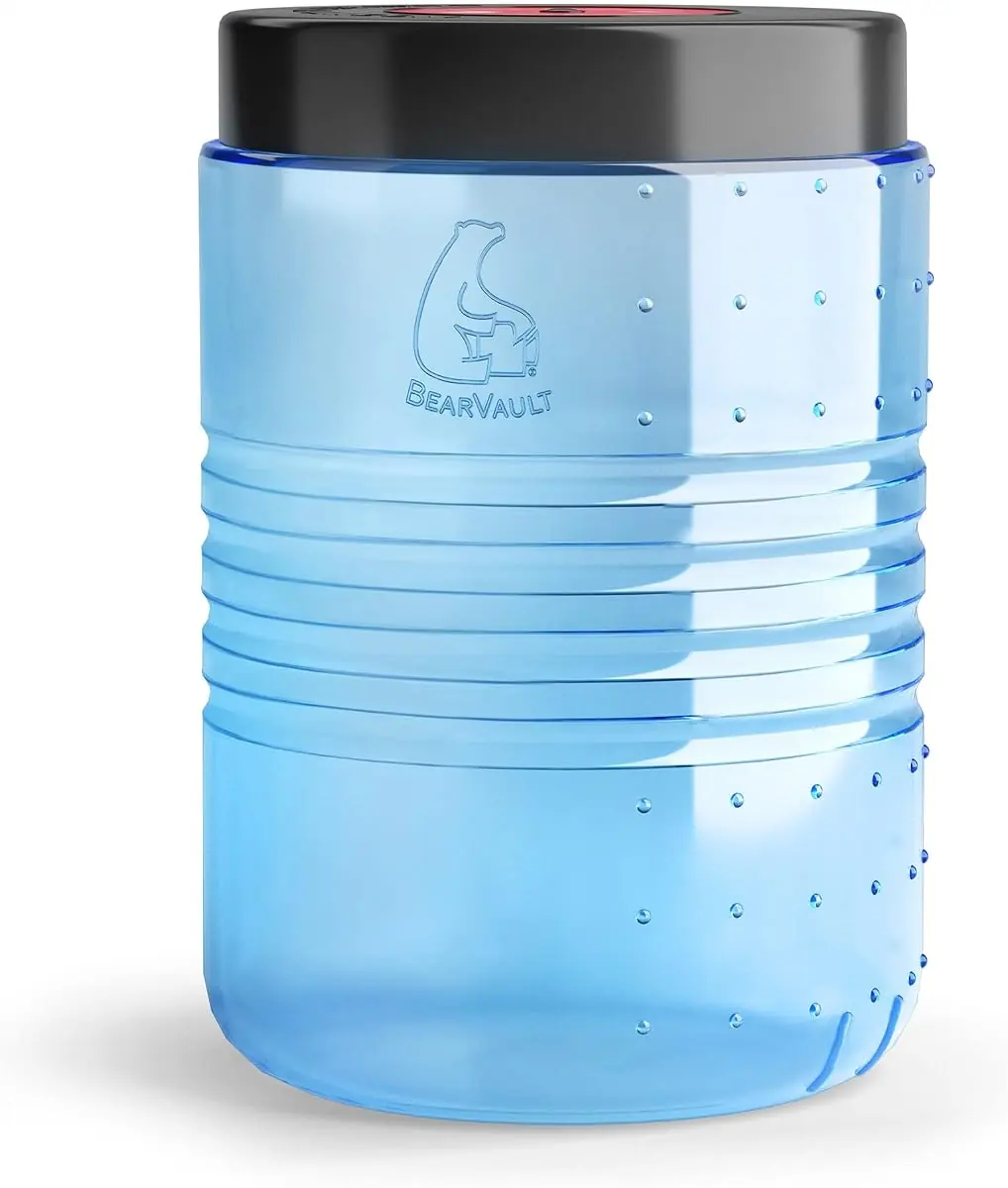
Reportedly the canister you see most on the John Muir Trail, though that's trail reputation, not a headcount. What's measurable is the arithmetic: 11.5 liters for 2 pounds 9 ounces is the best volume-per-ounce on this page, and it's named on Yosemite's allowed list. Clear sides mean you can find breakfast without unpacking dinner.

Check Price
Toughest Build
Backpackers' Cache 812
4.6

Backpackers' Cache 812

The original park-service canister and still the one to buy for the Eastern High Peaks. Opaque ABS, stainless-steel locks, no visible food to motivate a bear, and a coin-operated lid nothing has learned to open. It's heavier than it needs to be, and that's the trade for the toughest build here.

Check Price
Lightest Load
BearVault BV450 Jaunt
4.7

BearVault BV450 Jaunt

The BV500 shortened. Same diameter, same lid, same approvals, 4.3 liters less food and half a pound less to carry. For three or four nights solo this is the right size, and buying the bigger one instead is the most common way people end up hauling air.

Check Price
Comparison Table

Every Pick, Side by Side

Best Overall
Best For
A week of food, almost anywhere canisters are required
Difficulty
Beginner
Price
$$$
Toughest Build
Best For
The Adirondacks, and anyone who wants the toughest option
Difficulty
Beginner
Price
$$$
Lightest Load
Best For
Long weekends where a full-size canister is dead weight
Difficulty
Beginner
Price
$$$
Recommended #4
Best For
The most food you can legally carry in one container
Difficulty
Intermediate
Price
$$$
Recommended #5
Best For
The cheapest canister that is still on the list
Difficulty
Beginner
Price
$$$
Recommended #6
Best For
Trips where your food volume shrinks as the days pass
Difficulty
Intermediate
Price
$$$
The Lineup

6 Best Bear Canisters, Compared

Detailed picks with verdicts, strengths, tradeoffs, and the situations where each one makes the most sense.

Best Overall
BearVault BV500 Journey
4.7 (2,252 Amazon ratings)

BearVault BV500 Journey

Quick verdict: Reportedly the canister you see most on the John Muir Trail, though that's trail reputation, not a headcount. What's measurable is the arithmetic: 11.5 liters for 2 pounds 9 ounces is the best volume-per-ounce on this page, and it's named on Yosemite's allowed list. Clear sides mean you can find breakfast without unpacking dinner.

Why It Stands Out

  • 700 cubic inches, about 11.5 liters, which is a week solo or a long weekend for two
  • Named on Yosemite's published allowed-containers list as BearVault 500
  • IGBC-certified, so it also covers grizzly country where a canister is required
  • Transparent polycarbonate, so you can see what's inside without emptying it
  • The wide mouth takes a full-size food bag rather than making you decant everything

Pros

  • Best volume-to-weight ratio of the six at 11.5 L for 2 lb 9 oz
  • Tool-free lid opens in seconds with a thumbnail
  • Flat lid is rated to sit on, which is the only chair in most camps
  • Deepest Amazon review base on this page, at 2,252 ratings pooled across BearVault's sizes

Cons

  • Tool-free tabs are genuinely fiddly with cold or wet hands
  • New York's DEC steers people away from clear canisters in the Eastern High Peaks
  • At 8.7 inches across it won't fit inside packs much under 50 liters

Best Situations

JMT and PCT resuppliesWeek-long solo tripsTwo people, long weekend
Difficulty
Beginner
Price Range
$$$
Toughest Build
Backpackers' Cache 812
4.6 (531 Amazon ratings)

Backpackers' Cache 812

Quick verdict: The original park-service canister and still the one to buy for the Eastern High Peaks. Opaque ABS, stainless-steel locks, no visible food to motivate a bear, and a coin-operated lid nothing has learned to open. It's heavier than it needs to be, and that's the trade for the toughest build here.

Why It Stands Out

  • 614 cubic inches, about 10 liters, which is roughly six person-days
  • Named on Yosemite's allowed list as Model 812 Backpackers' Cache
  • ABS polymer body with stainless-steel locks rather than a molded plastic catch
  • Opaque, which is the direction New York's DEC points people in the High Peaks
  • Coin-operated lid works in gloves and offers a bear nothing to press

Pros

  • The safest read of New York's Eastern High Peaks guidance
  • Smooth, rounded and handle-free, with nothing for a bear to grip or lever
  • 531 Amazon ratings at 4.6, the deepest non-BearVault base here
  • Simple enough that there is nothing on it to break

Cons

  • 2 lb 12 oz for 10 liters is a worse ratio than the BV500's
  • You need a coin, key or screwdriver every single time you open it
  • Opaque body means unpacking to find anything

Best Situations

Adirondack High PeaksSierra permitsTrips with heavy bear traffic
Difficulty
Beginner
Price Range
$$$
Lightest Load
BearVault BV450 Jaunt
4.7 (2,252 Amazon ratings)

BearVault BV450 Jaunt

Quick verdict: The BV500 shortened. Same diameter, same lid, same approvals, 4.3 liters less food and half a pound less to carry. For three or four nights solo this is the right size, and buying the bigger one instead is the most common way people end up hauling air.

Why It Stands Out

  • 440 cubic inches, about 7.2 liters, which is three to four days solo
  • Named on Yosemite's allowed list as BearVault 450
  • 2 lb 1 oz, the lightest fully approved canister here
  • Same diameter as the BV500, so it packs the same way in the same packs
  • Clear polycarbonate and the same tool-free lid as its bigger sibling

Pros

  • Half a pound lighter than the BV500 for shorter trips
  • Shorter body fits horizontally in smaller packs than the BV500 will
  • Approved everywhere the BV500 is
  • Cheapest way into the BearVault system

Cons

  • 7.2 liters runs out fast if you eat well or share it
  • Same cold-hands problem with the tool-free tabs
  • Amazon pools its reviews with every other BearVault size

Best Situations

Three-night tripsRae Lakes LoopSharing food across two canisters
Difficulty
Beginner
Price Range
$$$
Recommended #4
Counter Assault Bear Keg
4.6 (163 Amazon ratings)

Counter Assault Bear Keg

Quick verdict: The biggest canister on Yosemite's list at 716 cubic inches, and the heaviest thing here by a clear margin at about three and a half pounds. That extra pound over the BV500 buys about a fifth of a liter of extra space, which is a bad trade unless you specifically need the biggest one made.

Why It Stands Out

  • 716 cubic inches, about 11.7 liters, the largest capacity on this page
  • Named on Yosemite's allowed list as The Bear Keg
  • Listing states IGBC and SIBBG approval, covering both grizzly and Sierra black bear testing
  • High-visibility yellow, which is the one canister you will find again in the dark
  • Proprietary polymer blend rather than standard polycarbonate

Pros

  • Largest approved volume here
  • Bright yellow is genuinely easier to relocate 100 feet from camp
  • Long history of both grizzly and black bear approval

Cons

  • Roughly 3.5 lb empty per published retail specs, about a pound more than the BV500
  • That pound buys only 0.2 L more than the BV500 holds
  • At 13.75 inches tall it is awkward in a mid-size pack

Best Situations

Two-person weekGroup food carriesGrizzly country
Difficulty
Intermediate
Price Range
$$$
Recommended #5
UDAP No-Fed-Bear
4.4 (326 Amazon ratings)

UDAP No-Fed-Bear

Quick verdict: Sixty-five dollars for a canister Yosemite names on its own allowed list, which makes it the cheapest legal way onto this page. It's opaque, coin-locked and 8 liters, which is enough for four to six days. The only real cost is that it's a little heavier per liter than the BearVaults.

Why It Stands Out

  • About 8 liters, or 2.1 gallons, which the maker rates at four to six days of food
  • Named on Yosemite's allowed list as UDAP No-Fed-Bear
  • IGBC-certified for grizzly country
  • 2.4 lb bare, which is competitive with canisters costing $25 more
  • Coin-operated metal fastener rather than a plastic catch

Pros

  • The cheapest fully approved canister here at $64.99
  • Opaque body suits areas that discourage clear plastic
  • Metal fastener opens in gloves
  • 8 inches by 10 inches is an easy shape to pack

Cons

  • 8 L for 2.4 lb is a worse ratio than the BV500's 11.5 L for 2 lb 9 oz
  • Needs a coin or key every time
  • 326 ratings at 4.4 is a thinner and slightly softer base than the top picks

Best Situations

First canisterFour to six day tripsBudget Sierra permits
Difficulty
Beginner
Price Range
$$$
Recommended #6
BearVault BV ONE
4.4 (52 Amazon ratings)

BearVault BV ONE

Quick verdict: The cleverest canister here, and the one you may not be able to use. It telescopes from 4.7 to 8.3 liters so it shrinks as you eat, and at 1 lb 15.6 oz it's the lightest on this page. But it isn't yet on Yosemite's or Sequoia and Kings Canyon's allowed lists, so in the Sierra it currently isn't an option.

Why It Stands Out

  • Expands and collapses between roughly 4.7 and 8.3 liters as your food runs down
  • 1 lb 15.6 oz, the lightest canister on this page
  • IGBC-certified (listing cites IGBC #255500)
  • Center access with an optional divider, so you're not digging from one end
  • Soft-touch buttons and smooth threads, which is BearVault's answer to the cold-hands complaint

Pros

  • Only canister here that shrinks as the trip goes on
  • Lightest of the six
  • Easiest lid to work of any BearVault

Cons

  • Not on Yosemite's or Sequoia and Kings Canyon's allowed lists, so it is not legal there
  • $120 makes it the most expensive canister on the page
  • 52 ratings is the thinnest review base here, because it's a new product

Best Situations

Grizzly country outside the SierraShort tripsPacks where volume is tight
Difficulty
Intermediate
Price Range
$$$
Buying Guide

What to Check Before You Buy

Check the park's list, not the certification sticker

IGBC certification and a park's approval are two different things, and people conflate them constantly. Yosemite publishes an allowed-containers list naming specific models: the Backpackers' Cache 812, BearVault 450 and 500, the Counter Assault Bear Keg, the Bare Boxer Contender and Champ, Lighter1's Big Daddy and Lil' Sami, the UDAP No-Fed-Bear, and the Bearikade Weekender and Expedition MKII. Newer models take time to appear on it, which is why certification on its own tells you nothing about whether you can legally carry the thing in Yosemite. Sequoia and Kings Canyon publish their own list too. Look yours up before you order, not the night before you leave, and remember that soft-sided sacks like the Ursack are a separate argument that most Sierra units simply don't accept.

Volume per ounce is the number that separates them

Everything here weighs between about 2 and 3.5 pounds empty and holds between roughly 7 and 12 liters, and the useful figure is the ratio between the two. The BV500 carries 11.5 liters for 2 pounds 9 ounces. The Bear Keg carries a little more, 11.7 liters, for about a pound extra. That pound buys you nothing but thicker walls. Figure out how many days you need first. Most people budget a liter to a liter and a half per person per day, which makes a 7-liter canister a long weekend and an 11-liter one a week solo or a long weekend for two. Then take the lightest approved canister that covers it. Buying more volume than you need is the most common way people end up carrying an extra pound for nothing.

How it opens matters more at 6am than it does in the store

There are two systems. Tool-free lids, which BearVault uses, have tabs you press with a thumbnail while turning. They're fast and there's nothing to lose, and they're awkward with cold or wet hands, which is why BearVault ships a small plastic key and why people file the tabs down. Coin-operated lids, which the Backpackers' Cache and the UDAP use, need a coin, a key or a screwdriver turned in a couple of recessed screws. Slower every single time, but they work in gloves and a fingernail gets you nowhere. That second point isn't academic: the Adirondack bear that made canisters famous, Yellow-Yellow, opened tool-free BearVault lids repeatedly, which is a large part of why New York's rules read the way they do.

Shape decides whether it fits your pack at all

A canister is a rigid cylinder in a soft bag, and it's the one item that dictates how everything else packs. Roughly 8 to 9 inches across is standard, which fits horizontally inside most 50-liter-and-up packs and jams awkwardly in anything smaller. Taller and narrower rides better vertically. Shorter and wider stacks better under a lid. Clear-sided canisters let you find the coffee without unpacking, which sounds trivial until it's dark. The opaque ones, black ABS or yellow polymer, are what New York's DEC steers people toward in the High Peaks, on the grounds that a bear that can see food inside works harder to get at it. Measure your pack's interior width before you buy, not after.

One Sierra Trip A Year
$65-$90

A weekend or a Rae Lakes loop, once or twice a season. Buy the cheapest canister on your park's list that holds your days of food. It'll be plastic, about two and a half pounds, and it will outlive the pack you carry it in.

A Week Out, Or Two People
$90-$105

Seven days solo, or four days for two, is where you need 11 liters and up. It's also where the weight penalty starts to bite, so take the lightest approved canister at that volume rather than the biggest one you can find.

Adirondack High Peaks
$89-$105

New York requires a rigid canister from April 1 to November 30, and the DEC steers people away from clear plastic because bears there have repeatedly defeated it. An opaque, coin-locked canister is the safe read of that guidance.

Getting Started

Your First Trip With A Canister

The canister itself is easy. What trips people up is everything around it: how you pack, how you shop, and where the food spends the night. All of that is much easier to sort out at the kitchen table than at a trailhead.

  1. 1

    Check your specific unit's list before you order

    Not the IGBC list, and not a gear roundup, including this one. The park, forest or wilderness area you hold a permit for publishes its own list of allowed containers, and that's the one a ranger checks. Yosemite and Sequoia and Kings Canyon both post theirs. If your route crosses more than one unit, you need a container that satisfies all of them, which usually means the strictest.

  2. 2

    Open and close it at home, several times

    Tool-free lids have a knack, and finding it in your kitchen beats finding it in the rain. If it's a coin-operated lid, decide now what you're using. A spare quarter taped inside the pack lid is the classic answer, and a multitool works too. Then check that whatever you chose isn't the only one you have.

  3. 3

    Repackage everything before it goes in

    Cardboard boxes, retail bags and rigid packaging waste an enormous amount of space. Decant into zip bags, crush the bars flat, squeeze the air out of everything. The difference between a lazy pack and a careful one is routinely a full day of food, and it costs you nothing.

  4. 4

    Do a dry run into your actual backpack

    A canister is a rigid cylinder about 8 to 9 inches across and it dictates everything around it. Load it, then load it into your pack, and find out whether it sits horizontally low down, vertically against your back, or not at all. You want to learn that it doesn't fit while you're still standing in your kitchen.

  5. 5

    Everything with a smell goes in, including the trash

    Toothpaste, sunscreen, lip balm, repellent, sanitizer, medication, and every wrapper you generate. Trash is what people forget, and by the third day it's the strongest-smelling thing you own. Keep a dedicated bag for it from the first morning so it isn't a scavenger hunt at bedtime.

  6. 6

    Stash it 100 feet away, on flat ground, untethered

    Away from your tent and from where you cooked, somewhere level, not near water or a drop-off. Don't tie anything to it. A rope is a handle, and the whole design is about denying a bear one. A bear that can't open it will still push it around, so flat ground is what stops your food ending up in a lake.

The Jargon

Bear Canister Terms In Plain English

IGBC
The Interagency Grizzly Bear Committee, which tests bear-resistant products against captive grizzlies and certifies the ones that survive about an hour of determined effort. The committee states plainly that certification does not mean bear-proof.
SIBBG
The Sierra Interagency Black Bear Group, which tested canisters against Sierra black bears. No longer active, though its stamp is still on canisters that earned it. The Sierra parks now publish their own allowed lists instead.
Bear-resistant vs bear-proof
Nothing sold is bear-proof, and manufacturers who say otherwise are overselling. Bear-resistant means a bear can't get in within a defined test window. Individual bears have defeated certified canisters, which is why the certification is a floor rather than a guarantee.
Approved list
The specific models a given park or wilderness allows. Shorter than the IGBC list, published per unit, and the thing a ranger actually checks. A new canister can be certified for a season or more before it appears on one.
Tool-free lid
A lid you open by pressing tabs with a thumbnail while turning. Fast, with nothing extra to carry, and awkward with cold or gloved hands. BearVault's system, and the one the Adirondack bear Yellow-Yellow learned to defeat.
Coin-operated lid
Recessed screws turned with a coin, key or screwdriver. Slower every time you open it, works fine in gloves, and offers a bear nothing to press. Used by the Backpackers' Cache and the UDAP No-Fed-Bear.
Cubic inches
The unit American canister makers quote volume in. Divide by about 61 for liters: 440 cubic inches is 7.2 L, 614 is 10 L, 700 is 11.5 L, 716 is 11.7 L.
Ursack
A bear-resistant fabric sack tied to a tree rather than a rigid canister. IGBC-certified in its Major and AllMitey forms and accepted in some areas, but explicitly not a substitute where hard-sided storage is required.
Avoid These

Five Mistakes People Make Buying Their First Bear Canister

  • Assuming IGBC certification means it's allowed everywhere. It's a test result, not a permit. Yosemite's allowed list is shorter than the IGBC list, and a newly released canister can be certified for a season before any park adds it.
  • Buying on volume alone and carrying the extra pound all season. Figure out your days of food first. Most people need 7 to 10 liters, not 12, and the difference is close to a pound of dead weight on every single trip.
  • Forgetting that the trash goes in too. Wrappers are the smelliest thing in your kit by day three, and a canister packed exactly full of food has nowhere to put them. Leave room from the start.
  • Not checking it fits the pack before the trip. A canister is a rigid cylinder around 8 to 9 inches across, and packs under about 50 liters often won't take one internally. That's a trailhead crisis and a five-minute kitchen test.
  • Tying a cord to it so it's easier to find. It makes it easier for a bear to carry off, too, which is exactly why approved canisters have no handles or attachment points. Set it on flat ground 100 feet out and leave it alone.
Explore Individual Gear

Once you know which setup fits your situation, dig into the full guide library for in-depth picks and buying advice:

Full Catalog

Compare All 6 Bear Canisters

Want to browse beyond the ranked picks? Filter and sort the full bear canisters listing below.

Best Bear Canisters of 2026 — All Products

6 Products
FAQ

Frequently Asked Questions

The big ones are Yosemite's wilderness, parts of Sequoia and Kings Canyon, the Adirondack Eastern High Peaks in New York from April 1 to November 30, and stretches of the Pacific Crest and John Muir trails that pass through those units. Beyond that the pattern is patchy and it changes: Rocky Mountain, North Cascades, Olympic and a growing list of national forests require them in specific zones or seasons rather than park-wide. There's no national rule and no master list, so the only reliable move is to check the specific wilderness or ranger district you have a permit for, on its own website, in the season you're going.

How We Choose Products

How These Picks Are Chosen

Reader-supported and free of paid placements. Every pick is ranked on published specs and Amazon buyer ratings, not on who pays us.

Spec Research

Each pick is compared on published specs, materials, design, and category fit across the major brands.

Practical Fit

Rankings factor in how well each product matches common hiking, backpacking, and trail running needs, not just popularity.

Amazon Buyer Ratings

Star ratings and review volume from verified Amazon buyers are factored in to reflect real-world satisfaction.

Value

A pick earns its spot by delivering useful performance for the money, whether budget or premium.

FOOD SORTED.
PACK IT NEXT.

Day packs, boots and trekking poles are all up now, and my dad and I are working through the rest of the backpacking kit the same way. New guides go live as we finish them.

Browse All Guides
See Top Picks